


Trading Smart: A Review of SmartSwap, the P2P Service
Following Binance’s exit from Russia, a portion of its clients moved to new platforms instead of the CommEX exchange.
One alternative for Russian users has become the SmartSwap service. We outline the platform’s features and test exchanging cryptocurrencies for fiat via smart contracts.
What SmartSwap Is
SmartSwap is a non-custodial service for buying and selling crypto assets for fiat via smart contracts. The platform supports Bitcoin, Ethereum, BNB Chain, Tron and Tether (TRC-20, ERC-20, BEP-20).
On the main page of the service there are links to the smart contracts. Bitcoin operations are performed using a special script:
“At the moment of initialization of the trade, a unique address on the blockchain is created, combining two secrets — one for the buyer, the other for the seller, as well as the hashes of their public keys. In the script from which the trade address is formed, their hashes are used.”
“To access the balance of the address to which bitcoins for the deal are transferred, only one of the secrets and the corresponding private key is needed,” the SmartSwap team comments.
During the trade, the seller holds only the buyer’s secret, and the buyer holds the seller’s secret. SmartSwap holds both secrets but cannot independently control the balance of the trade address.
In the script, only the hashes of the buyer’s and seller’s public keys are written, which excludes the possibility of abuse by SmartSwap or attackers in case of a potential platform breach. Thus, all participants are protected from unauthorized access to the reserved assets:
“In the event of a successful trade, SmartSwap transfers the corresponding secret to the buyer, removing the seller’s secret in the process. The buyer, possessing the secret and the private key, can access the purchased bitcoins. In case of a cancellation of the trade, the interface transfers the corresponding secret to the seller, removing the buyer’s secret. The seller, with the secret and the corresponding private key, can reclaim the reserved assets.”
In November, Cyberscope conducted a security audit of SmartSwap’s smart contracts and Bitcoin script SmartSwap.
Users store funds on the platform’s internal non-custodial wallet or external ones like MetaMask and TronLink.
To register on SmartSwap, you only need to authenticate via a Telegram account and set a password. To access trading features, you must verify your phone number.
Telegram is the sole authentication method in the service, so the developers advise paying attention to the security of your messaging app and enable two-factor authentication.
SmartSwap’s Internal Wallet
After logging in and creating a password, SmartSwap will offer to connect an external wallet or create a non-custodial wallet using the SmartSwap interface. The service supports MetaMask, TronLink, Trust Wallet and the WalletConnect protocol.
The internal non-custodial wallet will generate a mnemonic phrase (seed), which is required to restore access to funds. It should be written on paper and stored in a safe place. The SmartSwap blog published a detailed guide on storing the mnemonic phrase.
Users have the following options to recover access to their funds:
- no password — import the mnemonic phrase into the wallet and set a new password;
- no seed — sign in to SmartSwap using the password and recover the mnemonic phrase. To do this, go to the account profile, click “Settings for internal wallet” and “Export mnemonic”;
- no password and no seed — the wallet is lost forever. You can contact support and detach it from the account, then create a new one or attach an external wallet.
If you change your Telegram profile, simply import the mnemonic phrase from the new account. You will lose your transaction history, but access to crypto assets remains.
How a Trade Works
After logging in to SmartSwap, linking/creating a wallet and confirming the phone number, a user can proceed to P2P trading. Trades proceed in the following order:
- The seller creates a listing; the buyer responds to it;
- The parties agree to the deal terms;
- The seller provides the buyer with bank details;
- The buyer makes and confirms the monetary transfer;
- The seller transfers the cryptocurrency to the buyer.
Smart contracts help minimise fraud, but in the event of a dispute either party may contact arbitrators — an independent team specialising in dispute resolution. They request payment receipts and other information to help complete the trade or deter fraud.
The SmartSwap blog also publishes step-by-step guides to trading cryptocurrencies and cross-chain swaps.
SmartSwap specialists regularly host streams on trading on the platform. Educational materials are also available on YouTube, TikTok, Instagram, VK and the platform’s Telegram channel.
Buying cryptocurrency on SmartSwap
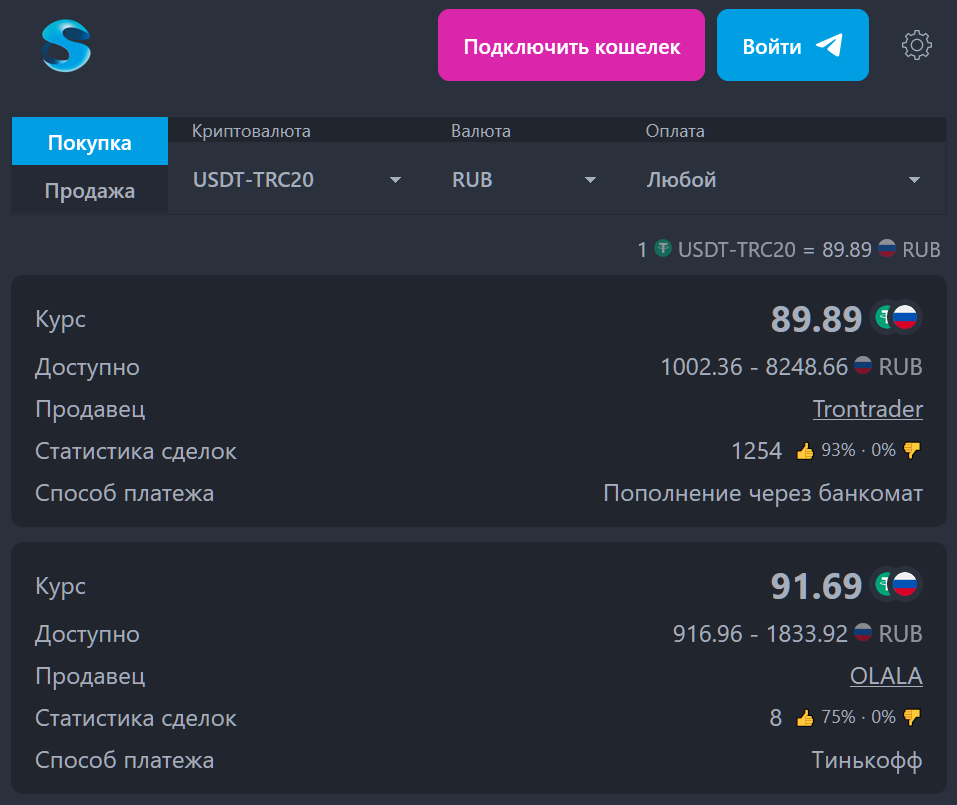
We tested SmartSwap’s performance — bought Tether (USDT) on the Tron network for rubles. The US dollar rate at the time of writing was 88.70 rubles.
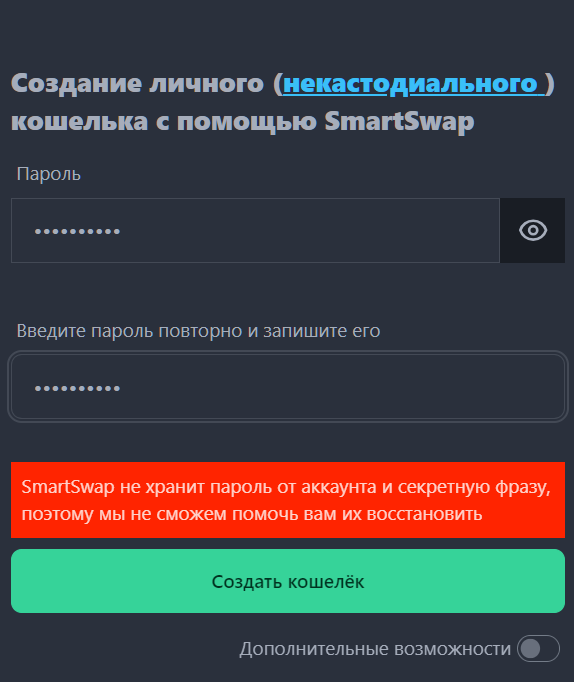
We decided not to use external wallets like MetaMask, and to test the internal one. We authenticated via the Telegram bot, pressed the “Create Wallet” button and set a password.
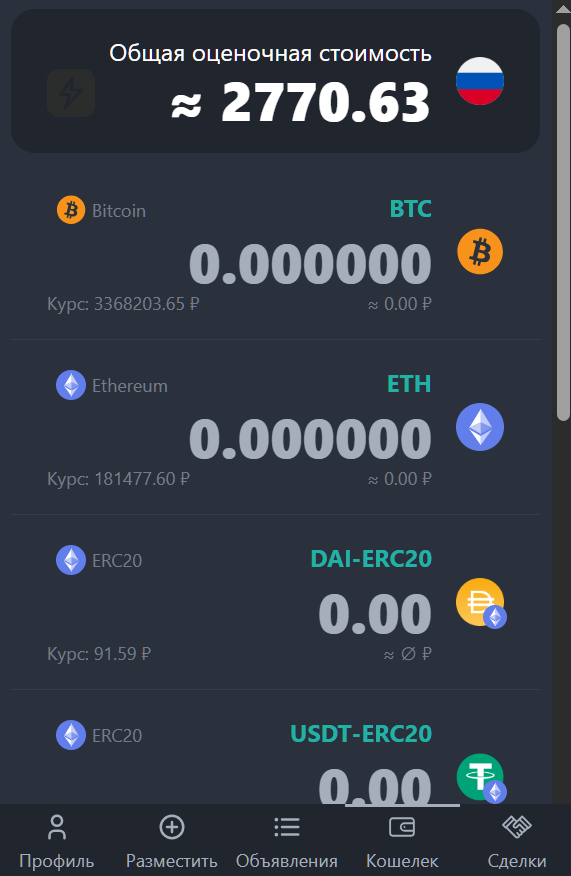
The platform generated a seed and verified that we had written it correctly. It then redirected to the wallet.
At the bottom of the SmartSwap interface is a control panel. A user can change profile settings, place a deal, view available listings, go to the wallet, and review deal statistics.
We verified the phone number via the Telegram bot to access trading features. After that, we responded to an advertisement selling USDT for rubles via the Tinkoff card.
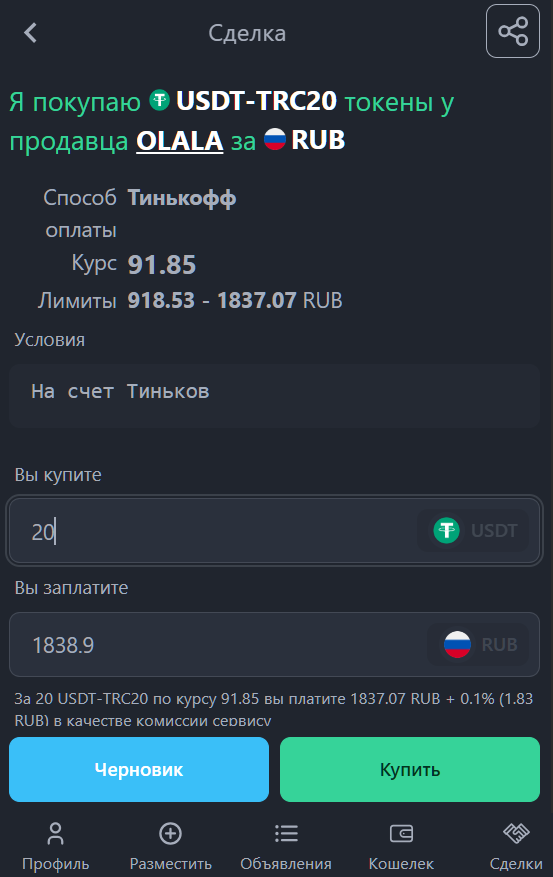
SmartSwap charges 0.1% of the trade amount. Additionally, users pay network fees themselves (in our case, Tron). Tokens are needed if you sell cryptocurrency or refund funds to the seller.
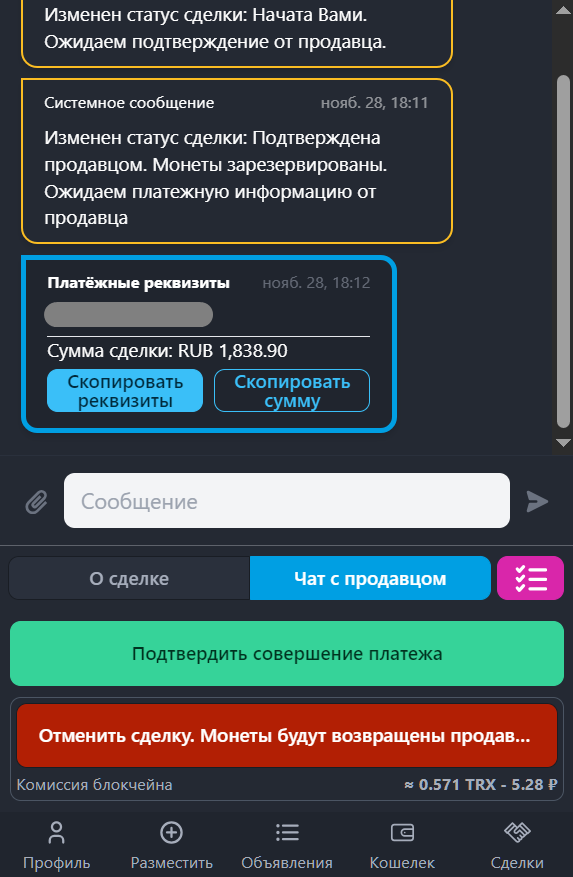
The seller responded within a minute of opening the trade and sent the USDT immediately after a transfer to the card.
The buyer transferred the funds. The platform offered to finish the trade or bring in an arbitrator to resolve a dispute.
Telegram-bot sent notifications for all events in trades. They can be disabled or configured in the Profile section.
Conclusions
SmartSwap offers convenient Telegram-based authentication, and supports popular crypto assets, including Bitcoin, Ethereum, BNB, Tron and the stablecoin Tether.
All trades on the platform are executed via smart contracts, which helps minimise fraud by participants and reduce the risks of assets being blocked by regulators or SmartSwap staff.
At present, it is not possible to assess the security of SmartSwap’s non-custodial wallet; however this is not a problem if you use WalletConnect, MetaMask or Trust Wallet.
Рассылки ForkLog: держите руку на пульсе биткоин-индустрии!