


Turing Award Bestowed for Quantum Informatics Achievements for the First Time
Gilles Brassard and Charles Bennett receive 2025 Turing Award for quantum informatics achievements.
Gilles Brassard and Charles Bennett have been named the recipients of the 2025 Turing Award for their “pivotal role in establishing the foundations of quantum informatics and transforming secure communication and computational systems.”
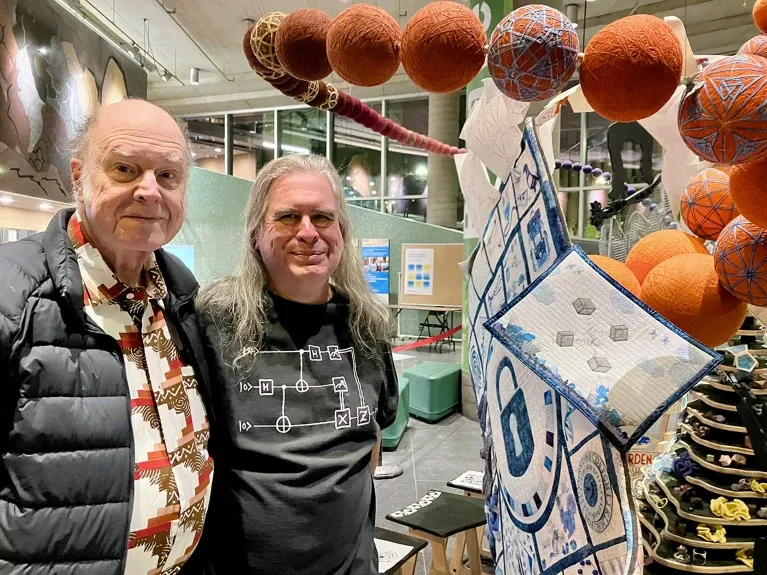
The scientists will share the $1 million prize from the Association for Computing Machinery (ACM). This marks the first time since 1966 that the award has been given for achievements in the quantum field.
“Bennett and Brassard are globally recognized as the founders of quantum information science—a field at the intersection of physics and computer science that views quantum-mechanical phenomena not merely as properties of matter but as resources for processing and transmitting information,” stated the ACM press release.
Brassard is a computer scientist at the University of Montreal in Canada, while Bennett is a physicist at IBM’s research center in New York, USA.
In 1984, the colleagues introduced the first practical key distribution protocol for quantum cryptography—BB84.
Their paper demonstrated a mechanism that allows two parties to establish a shared secret encryption key with security guaranteed by the laws of physics. The method, utilizing a stream of photons, is effective even against potential attackers with unlimited computational power.
Unlike Shor’s Algorithm, BB84 provides information-theoretic security without computational assumptions, relying on the fundamental property of quantum information: it cannot be copied or measured without disturbance.
In 1993, Bennett and Brassard, along with a group of scientists, made another breakthrough by developing the concept of quantum teleportation. This technique is based on the phenomenon of quantum entanglement, where two particles share a single quantum state even when separated by a significant distance.
Today, quantum teleportation is used for transferring data within and between quantum computers.
“People thought [quantum informatics] was a bit crazy. It never occurred to them that quantum effects could be used for things that classical methods cannot achieve,” Bennett told Nature.
In April 2025, the quantum computing company Origin Quantum applied its advanced technology for breast cancer diagnosis and drug development.
Рассылки ForkLog: держите руку на пульсе биткоин-индустрии!