



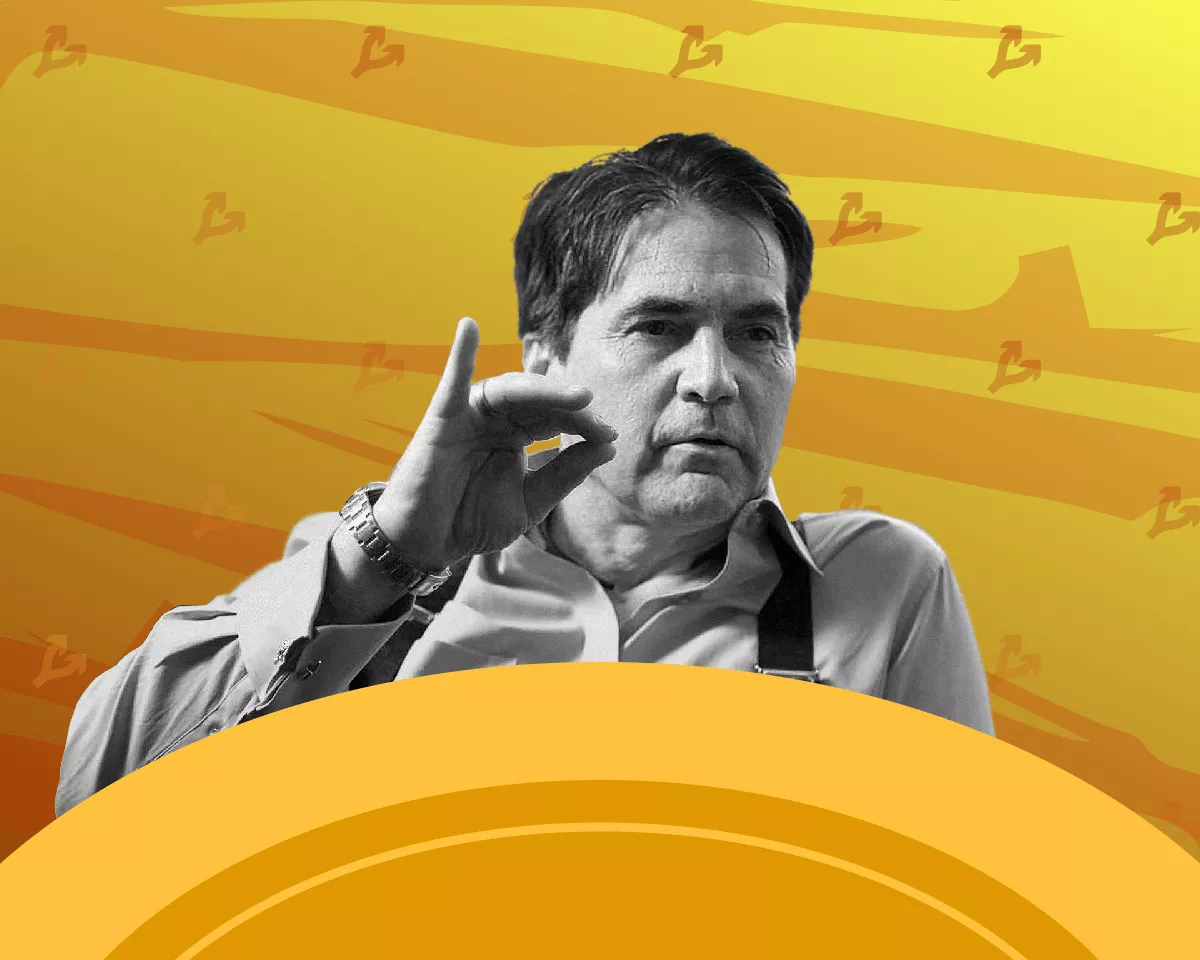
The Cryptocurrency Open Patent Alliance (COPA) won the first hearing in the case against the self-styled Bitcoin creator, Craig Wright. The court denied the defendant’s motion to exclude certain documents from the case materials and allowed the plaintiff to amend the claim.
COPA just won its first hearing against Craig: https://t.co/fThCdz5Xjj. Interesting read. Why did he try to get the court to block that evidence though?🤔
— COPA (@opencryptoorg) December 22, 2021
In April 2021, COPA filed a lawsuit against Wright in the High Court of London. The case arose from Wright’s claims of authorship in the Bitcoin white paper and his demand to remove the document from public sources.
In September COPA asked the court to amend the claim to include allegations of document forgery. The evidence Wright provided in support of his authorship is at issue.
Judge Paul Matthews noted that the plaintiff, in compliance with certain rules of adversarial procedure, does indeed have the right to interpret the defendant’s actions in this way.
In particular, this concerns an email that Wright allegedly sent to his former partner Dave Kleiman. According to Wright, the document confirms that he is the author of the Bitcoin concept.
However, in records reviewed by an American court earlier, it is asserted that the sender’s domain (@information-defense.com) was created only on 23 January 2009, although the message itself is dated 2008.
Wright’s defence explained the discrepancy as data being moved from one server to another.
In December, a Miami jury ruled that Wright must pay $100 million in damages to W&K Info Defense Research for the conversion of misappropriated bitcoins. COPA cites this proceeding, and the defendant hence sought to exclude certain assertions from the case materials.
“Findings or orders issued in the Kleiman case have no bearing on the current case and are inadmissible,” said Wright’s defence.
Judge Paul Matthews rejected this argument. In his ruling he wrote:
“In my view, these issues form the basis for a discussion that must be conducted to verify the defendant’s assertions that he truly is Satoshi Nakamoto”.
CoinGeek founder Calvin Ayre noted that the judge’s ruling is not a win for COPA—the organisation merely incurred additional costs to include in the claim the point that should have been there from the outset.
it was not a win…you guys will end up paying fees for the piece you dropped at the last minute before the hearing that was the real reason for the hearing and Craig has no big deal with the stuff that you are enabled to keep in.
— Calvin Ayre (@CalvinAyre) December 23, 2021
“This is not a win at all. You guys ended up paying the fee for the portion of the allegations you put forward at the last minute before the hearing. That was the real reason for the hearing, and Craig has no involvement in what you were allowed to keep,” Ayre wrote.
In 2019 Wright registered copyright in the white paper and the Bitcoin source code. Later, the US Copyright Office clarified that it had not recognised him as the creator of the digital gold, Satoshi Nakamoto.
In January 2021 Wright accused the websites Bitcoin.org and Bitcoincore.org of copyright infringement and demanded that the white paper be removed. Lawyers for Ontier, representing his interests, sent a similar letter to Square, on whose site a copy of the document is hosted.
The owner of Bitcoin.org, Cobra, refused to comply with the demand. On 1 February he said he had received death threats from someone linked to the Bitcoin SV community.
In June, the High Court of London backed Ontier, as Cobra declined to defend, choosing to remain anonymous.
The owner of Bitcoin.org is ordered not to allow downloading or any other use of the document in the United Kingdom. He is also required to pay the costs associated with the proceedings.
Follow ForkLog’s news on VK.