




The United States emerges as the undisputed leader in cryptocurrency scams. This conclusion was reached by analysts from 5Money and Storible.
The study covered the period from January 2022 to October 2024 and included 1544 companies. For each, a range of data was collected, including the biographies of the founders.
Analysts deemed projects as failures if they had liquidity of less than $50,000 and daily trading volumes below $1,000, with official accounts on X silent for over three months and websites inaccessible.
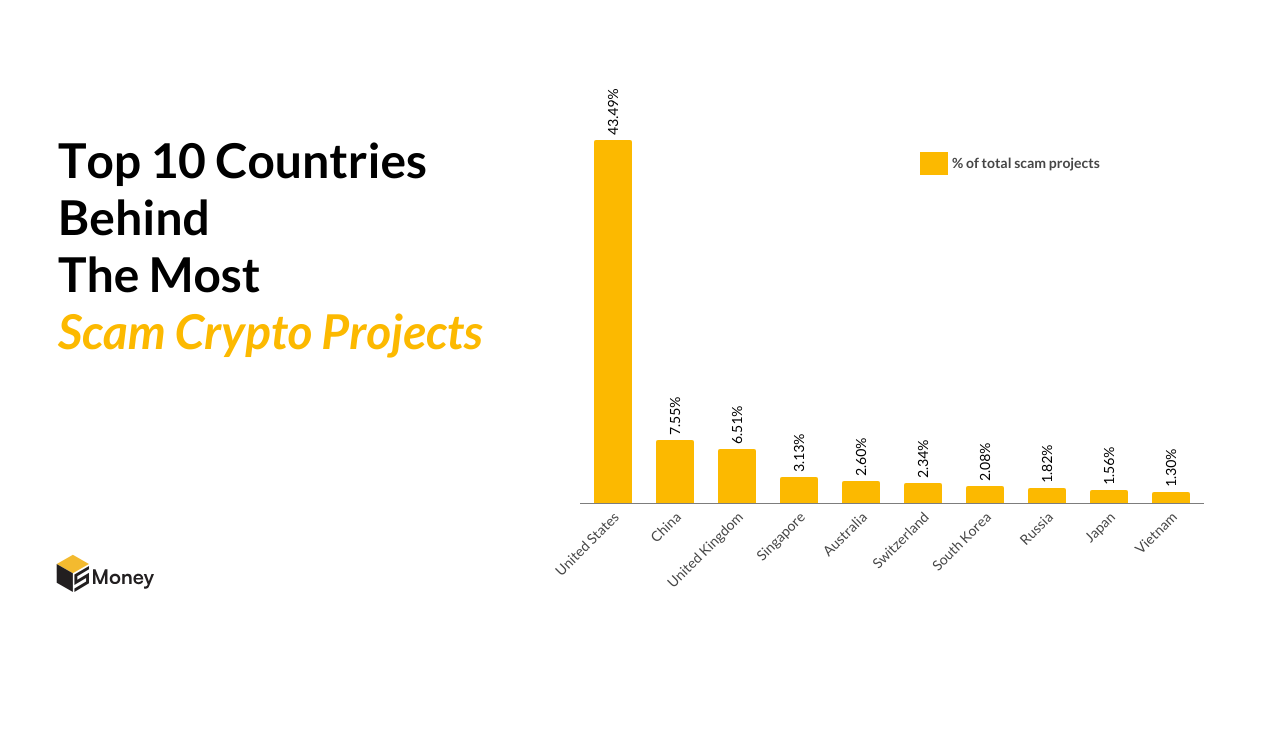
According to the report, 43% of all fraudulent schemes originated from the United States. China ranked second with 7.55%, followed by the United Kingdom with 6.51%.


The same trio leads in the number of failed initiatives: developers from the United States were involved in 33.36% of such launches, China in 7.63%, and the United Kingdom in 7.22%.
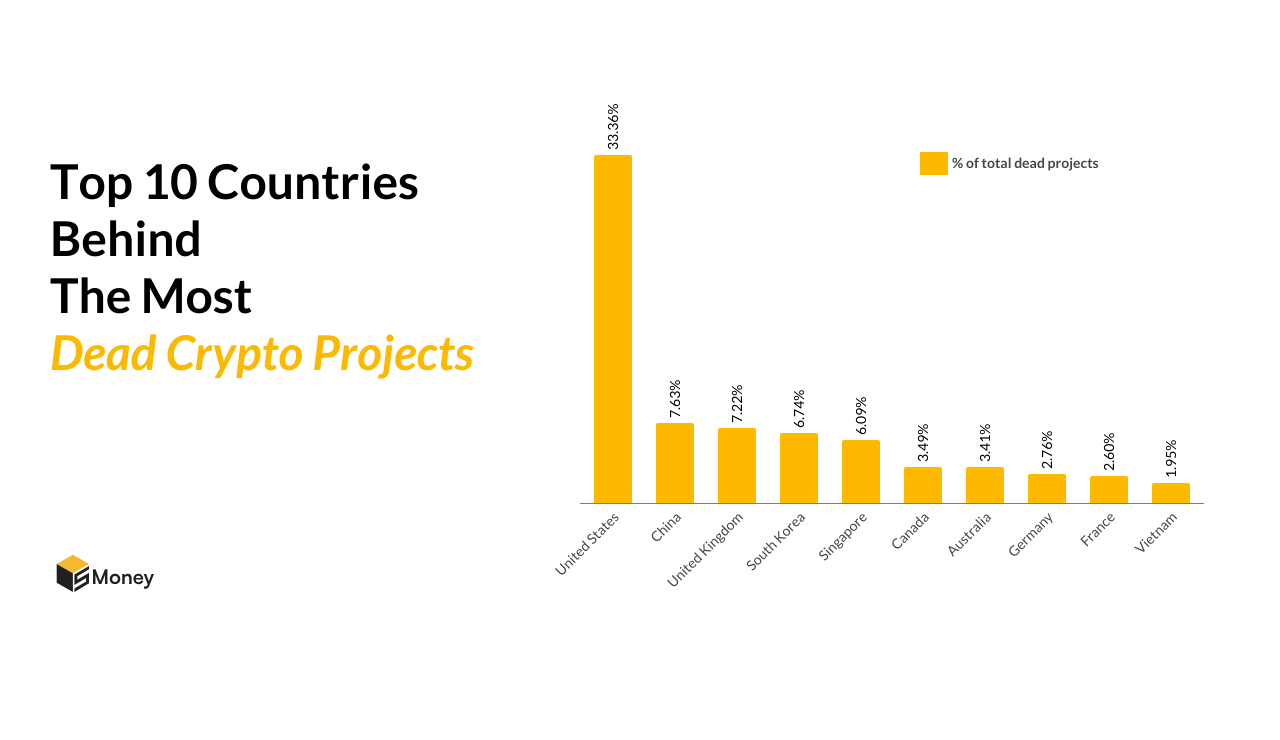
The leadership of these three countries in the rankings, considering the absolute number of projects, is partly explained by the fact that they accounted for the majority of launches.
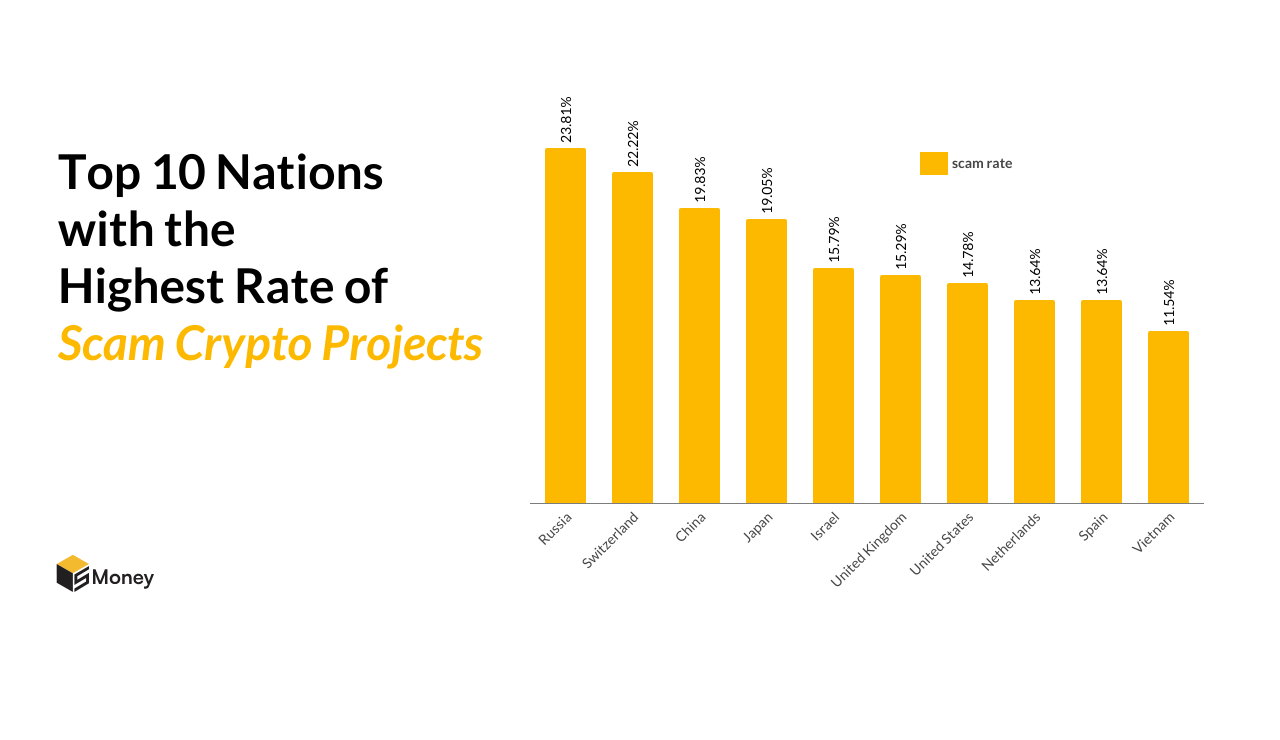
When recalculated as a share of failures and scams from the total number of crypto initiatives in the country, the situation looks different.
Russia topped the ranking for the share of scams, with 24% of projects turning out to be fraudulent. Switzerland ranked second with 22.22%, and China third with 19.83%.
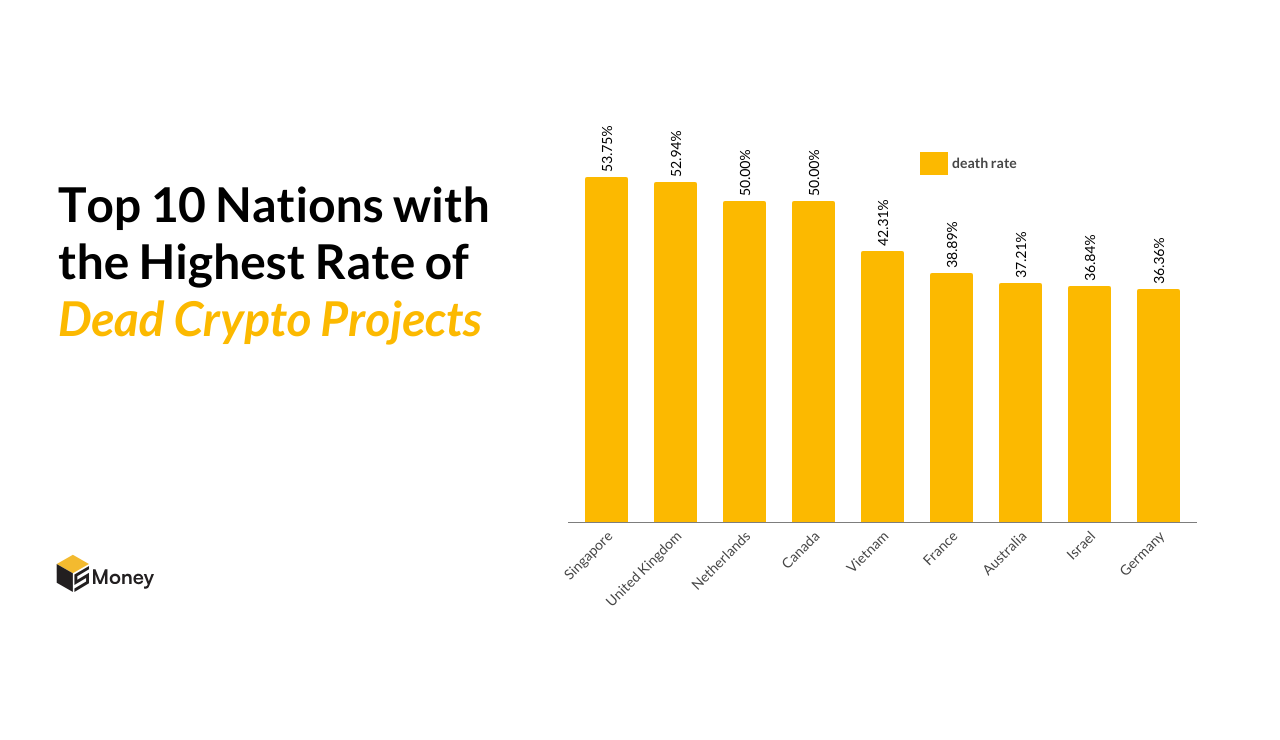
South Korea was the country where most projects failed, with the majority of initiatives not succeeding and a failure rate of 59%. Singapore ranked second with 53.75%, and the United Kingdom third with 52.94%. In the Netherlands and Canada, exactly half of the crypto projects survived.
The results of this study align with a joint report from AlphaQuest and Storible. It showed that out of 12,000 projects launched since 2020, over 70% have already closed. Of these, 60% ceased operations in 2023.
Over 90% of the failed projects faced low liquidity and trading volumes, indicating a loss of investor interest.
For the same reason, about 60% of crypto projects launched before 2019 closed.
In the third quarter of 2024, venture funding inflows into crypto startups decreased by 20% compared to the previous period, according to Galaxy Digital.