




Annual inflation in the US accelerated to 3.4% in December, surpassing the consensus forecast of 3.2% and the previous month’s figure of 3.1%.
On a monthly basis, the consumer price index rose by 0.3%, a rate three times faster than in November. This figure also exceeded economists’ expectations of 0.2%.


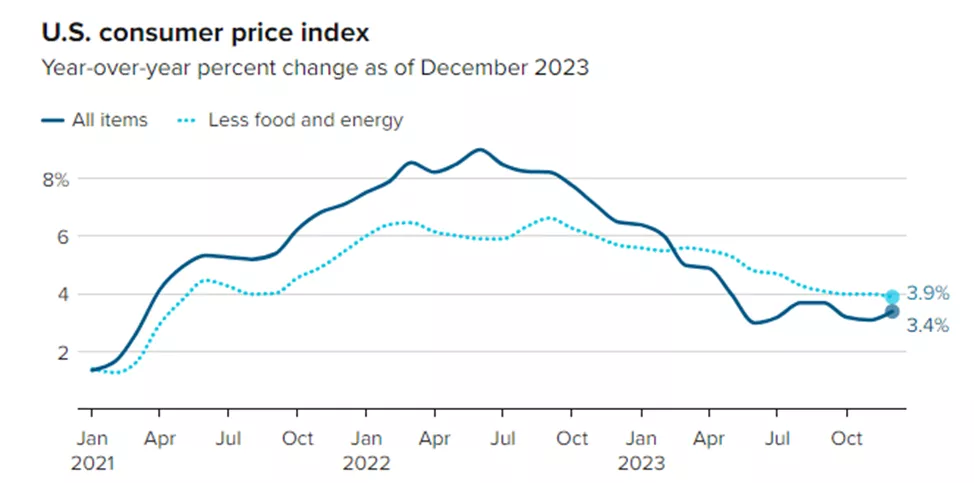
The index excluding food and energy prices increased by 0.3% from the previous month and by 3.9% compared to December last year. The previous month’s figures were 0.3% and 4%, respectively.
Analysts had anticipated a slowdown in annual rates to 3.8% and expected monthly rates to remain at 0.3%.
“Unexpectedly high consumer price index data shows that the path to a long-term return to 2% inflation is rocky, and the last mile may be difficult,” commented Bloomberg economist Anna Wong.
The disappointing macroeconomic data did not affect expectations of a Federal Reserve rate cut in March. The futures market believes in such a scenario with a probability of 63.3% compared to 64.7% the day before.


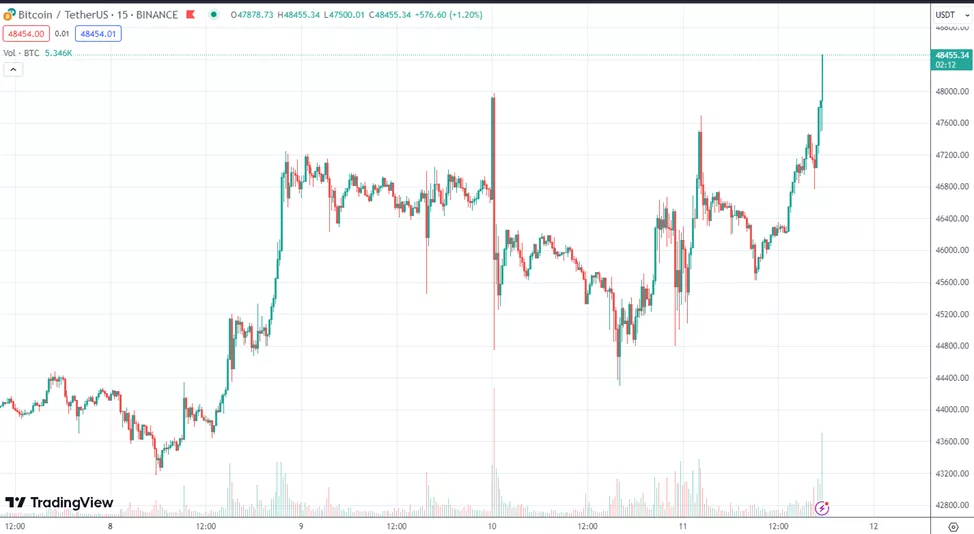
The inflation report led to a strengthening of the US dollar and slowed the growth of stock futures and gold prices. Bitcoin ignored the macro data, reaching a new high since March 2022, exceeding $48,000.

Market participants are focused on the start of trading for SEC-approved spot Bitcoin ETFs.
During the pre-market session on January 11, ahead of its Nasdaq debut, the price of BlackRock’s product (IBIT) exceeded its NAV by 25.6%.
On the evening of January 10, the SEC announced the approval of 11 applications for spot exchange-traded funds based on the first cryptocurrency.
The approved issuers include Bitwise, Grayscale, Hashdex, BlackRock, Valkyrie, BZX, Invesco, VanEck, WisdomTree, Fidelity, and Franklin Templeton.