




The market supply of the stablecoin USDT from Tether decreased by $1.5 billion in February, according to Bloomberg, citing data from Artemis Analytics.


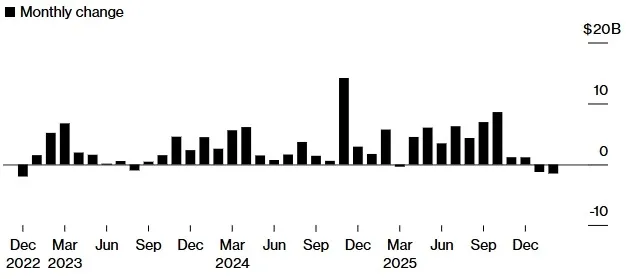
In January, the coin’s market capitalization also fell by $1.2 billion.
If the trend continues, USDT could record its largest supply drop since December 2022 by the end of the winter month. Back then, following the collapse of the FTX crypto exchange led by Sam Bankman-Fried, investors withdrew $2 billion from Tether’s flagship asset.
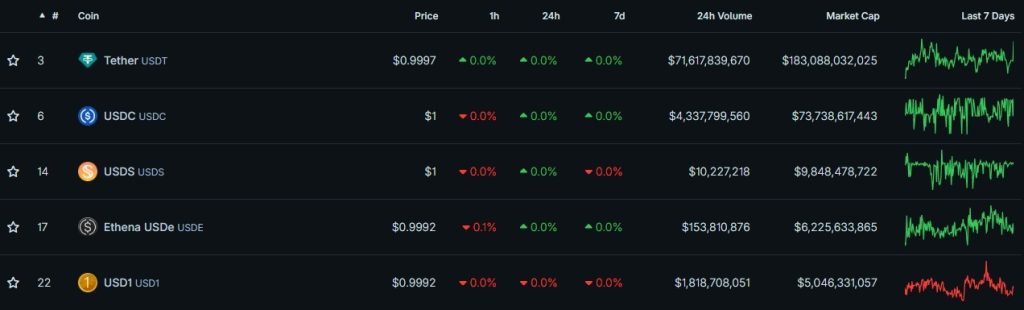
The total capitalization of the stablecoin segment increased from $302.9 billion to $304.6 billion in February. The supply of USDT’s main competitor, USDC from Circle, rose by nearly 5% since the beginning of the month to $75.7 billion.
Tether’s coin maintains dominance in the segment with a capitalization of approximately $183 billion. The figure peaked at around $187 billion in early January. However, by the end of 2025, USDC surpassed USDT in on-chain transaction volume — $17.3 trillion versus $12.9 trillion.
The stablecoin sector received a significant boost in 2025 thanks to the friendly policies of U.S. President Donald Trump, who prioritized stablecoins. In July, the president signed the Genius Act, establishing regulatory frameworks for pegged tokens.
At the end of January, Tether introduced a federally regulated stablecoin, USAT, for the U.S. market. According to CoinGecko, the asset’s capitalization remains stable at a modest ~$20 million. In comparison, the supply of the Trump family’s World Liberty Financial stablecoin, USD1, launched in May 2025, has already surpassed $5 billion. Blockstreet co-founder Kyle Clemmer believes that by the end of Donald Trump’s second term in 2028, USD1 will dominate the segment, overtaking USDT and USDC.


By the end of 2025, Tether’s net profit exceeded $10 billion. The company accumulated a reserve of 148 tonnes of physical gold, according to Jefferies.