



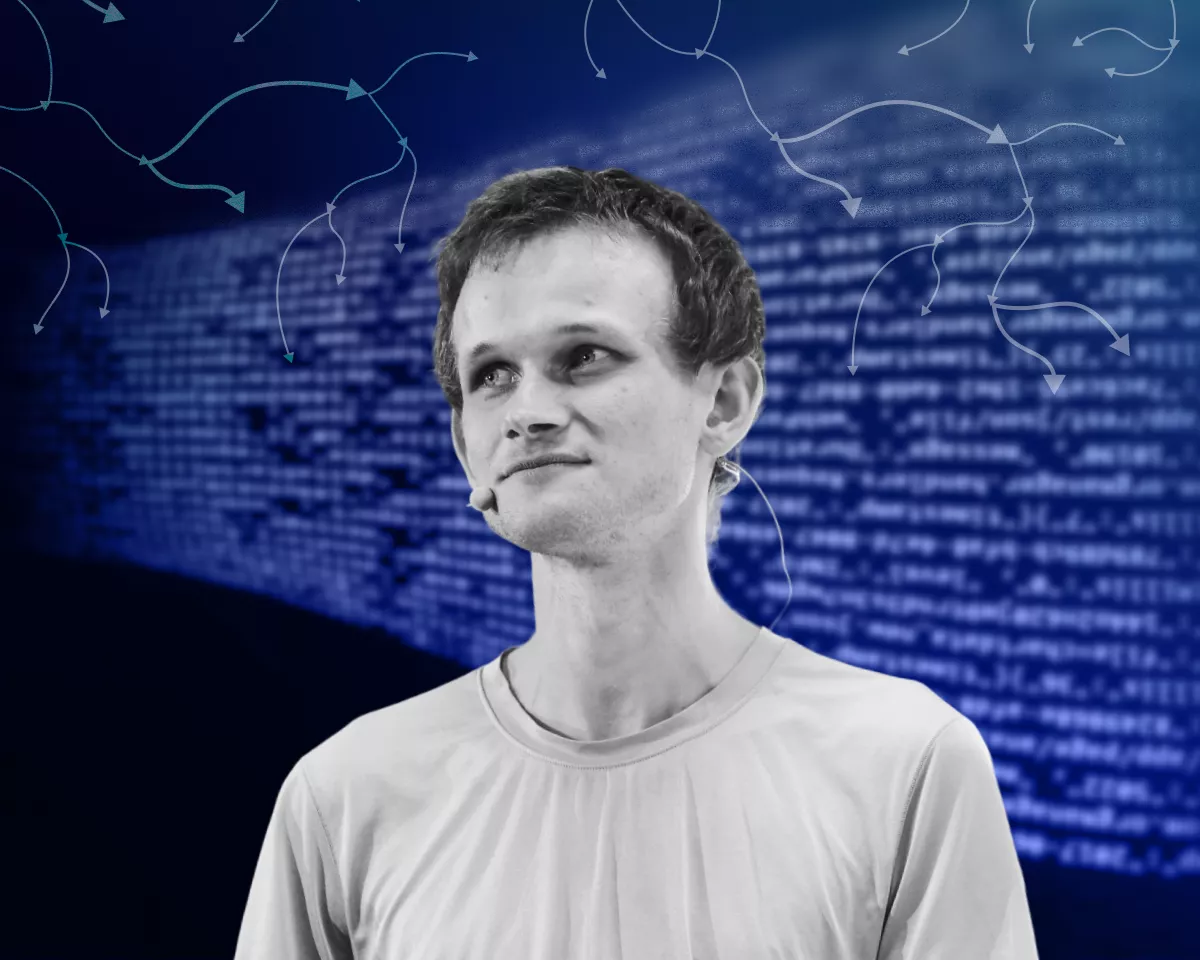
Ethereum co-founder Vitalik Buterin responded to criticism regarding the complexity of user interaction with second-layer networks, attributed to the fragmentation of the space.
Camila Russo, founder of the DeFi media platform The Defiant, stated that while she is a supporter of Ethereum and a community participant, the team needs to stop downplaying the negative user experience in the L2 ecosystem.
“If you are a crypto native, it’s bad. Moreover, it’s painful. That’s if you are already a cryptocurrency user. If you are a newcomer… it’s unacceptable. Simply unusable,” she wrote.
The expert noted that Ethereum is a multichain system. An investor’s coin of interest might be on one chain, while the necessary application for farming an airdrop is on another. Businesses like The Defiant are forced to receive stablecoins from clients on three different protocols, Russo continued with examples.
“So no, the argument ‘just use one blockchain and everything will be smooth’ is not a solution. The vision of multiple chains working smoothly within one umbrella ecosystem is also not the answer. The experience must be smooth across all L2s and the main network. Otherwise, it won’t work,” she concluded.
She also questioned why existing solutions like account abstraction are not being utilized while waiting for necessary technical solutions in this area. According to her, the team should stop convincing themselves that “it’s not that bad.”
“People, Ethereum enthusiasts, should not feel the need to justify the shortcomings of the present. Justifying the present is a natural urge when you feel powerless to build the future. But we are building it,” Buterin replied.
The Problem Exists, as Do Solutions
He referred to the “The Surge” section of Ethereum’s roadmap, which he elaborated on in the second part of an essay about the protocol’s potential future.
“One of the main problems of the L2 ecosystem today is that users find it difficult to navigate. Moreover, the simplest ways to do so often raise trust issues again: centralized bridges, RPC clients, and so on,” Buterin acknowledged in the article.
In his view, overcoming the challenges of second-layer interaction requires first and foremost the unification of:
- addresses, where the blockchain (L1, Optimism, Arbitrum, and others) will become part of them;
- payment requests through the implementation of standardized messages;
- cross-chain swaps via a unified protocol;
- light clients, so users can verify any blockchain;
- key storage wallets.
Among the more “radical” improvements, he mentioned a “common token bridge,” which would enable exchanges between L2s without resorting to L1, and synchronous composition of inter-network calls.
“Many of the above examples face the standard dilemmas of when and which layers to standardize. Too early—you risk cementing the worst solution. Too late—you may create unnecessary fragmentation,” Buterin noted.
In some cases, implementing the correct approach will take “quite a few” years, he added.
Ultimately, Russo acknowledged that the Ethereum team has developed enough solutions to overcome the problem, has interaction experience, and Buterin is capable of coordinating the work.
Ofc the better interoperability is the better Ethereum will be, but even jf Ethereum did not have L2s the same issue would exist…you might want to use an app on Solana or Avalanche or Coinbase chain (which in this hypo would just be its own chain instead of an L2) and you would…
— _gabrielShapir0 (@lex_node) October 28, 2024
“Of course, the better the interoperability, the better Ethereum will be, but even if there were no L2s, the same problem would exist: to use an app on Solana, Avalanche, or Base (which in this hypothetical case would be L1), you would need to create a bridge. It would be even worse if most networks were first-level,” commented MetaLeX Labs co-founder Gabriel Shapiro.
At the Shanghai Blockchain Week 2024 conference, Buterin identified the lack of a unified Ethereum ecosystem as one of the main pressing issues.