




Ethereum co-founder Vitalik Buterin, during a conference in Taiwan, stated that centralization has become a primary issue for the network’s PoS mechanism, particularly concerning staking services.
According to him, Lido, Coinbase, and Binance have acquired an “excessive market share.”


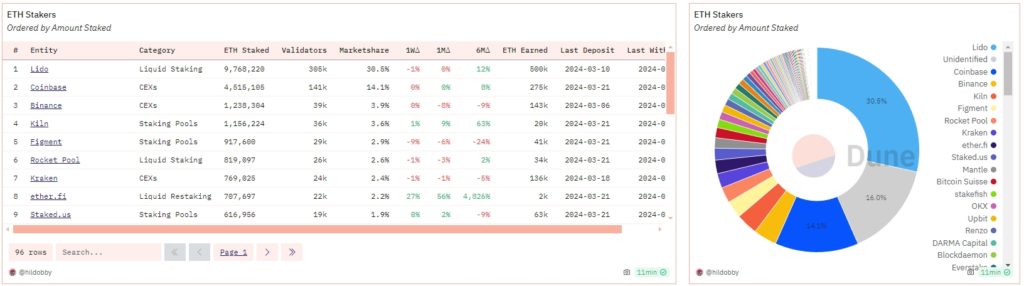
The amount of cryptocurrency locked in the leading liquid staking platform is 9.8 million ETH, representing 30.5% of the total. Coinbase and Binance services collectively account for 18%.
Buterin mentioned the category of “lazy stakers.” These users hold the minimum amount of 32 ETH (the threshold for validators) but prefer using various tools instead of independently supporting the network.
“Even if individual staking becomes as simple as possible, […] many people will not participate,” Buterin acknowledged.
He noted that the team appealed to “social responsibility, virtue, and other factors beyond economic ones,” but the problem persists.
“We urged people not to jump into Lido, to use different clients. Many did, which is beneficial for network security, but overdoing the opposite is dangerous for the ecosystem,” Buterin stated.
He supported the concept of Rainbow Staking, introduced in February by Barnabé Monnot from the Ethereum Foundation. This staking economy architecture aims to motivate participation from all categories of service providers, both “individuals” and “professionals.”
Among the developer’s main ideas is the establishment of the existing division into “operators” and “delegators,” as well as the introduction of “heavy” and “light” service classes with varying levels of responsibility and income.


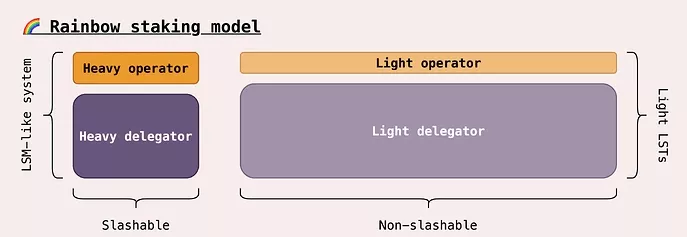
“In the long term, the key question is this: there are clearly people who have a lot of ETH but are lazy. What is their approach to participation? If we do not provide a realistic answer, they will gladly just throw all their money into a centralized system […]. A good answer, I think, will be the ability to build a very secure and reliable staking design based on economics,” Buterin believes.
In February, Coin Metrics experts concluded that existing narratives about the threat of Ethereum being overtaken by staking platforms like Lido are misplaced.