


Vitalik Buterin Advocates for Democratizing Solo Staking
Ethereum co-founder Vitalik Buterin, in the fourth part of his essay on the network’s “potential future,” explored ways to democratize user participation in blockchain operations.
Possible futures of the Ethereum protocol, part 4: The Vergehttps://t.co/ij3wtBByeY
— vitalik.eth (@VitalikButerin) October 23, 2024
According to the programmer, launching a fully verifying node should be technically accessible to the widest possible audience.
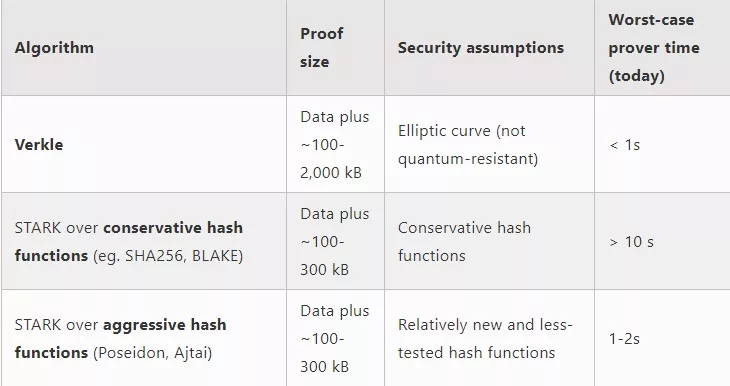
Initially, this was to be achieved by moving Ethereum’s state storage to Verkle trees, which allow for more compact proofs. Then, the possibility of using ZK-SNARK verification emerged.
Currently, an Ethereum client operator is required to store hundreds of gigabytes of network state data to verify blocks, with this volume growing by approximately 30 GB annually, Buterin noted.
“This reduces the number of users who can run fully verifying Ethereum nodes: while hard drives large enough to store the blockchain state and even years of history are quite accessible, the computers people typically buy generally lack sufficient memory,” he emphasized.
The solution could be stateless verification technology, which would allow blocks to be verified without the full state. Instead, they would be accompanied by “witnesses” providing key values and cryptographic proofs that the data is correct.
Each potential implementation path has its advantages and disadvantages, requiring compromises and further research, Buterin acknowledged.
“Solving the state data problem significantly simplifies solo staking. This becomes much more valuable if technologies to reduce the minimum deposit, like Orbit SSF, become available,” stated the Ethereum co-founder.
In the first part of his essay, Buterin discussed ways to encourage individual staking. He then examined the risks of centralizing the Proof-of-Stake mechanism and proposed possible solutions.
Рассылки ForkLog: держите руку на пульсе биткоин-индустрии!