



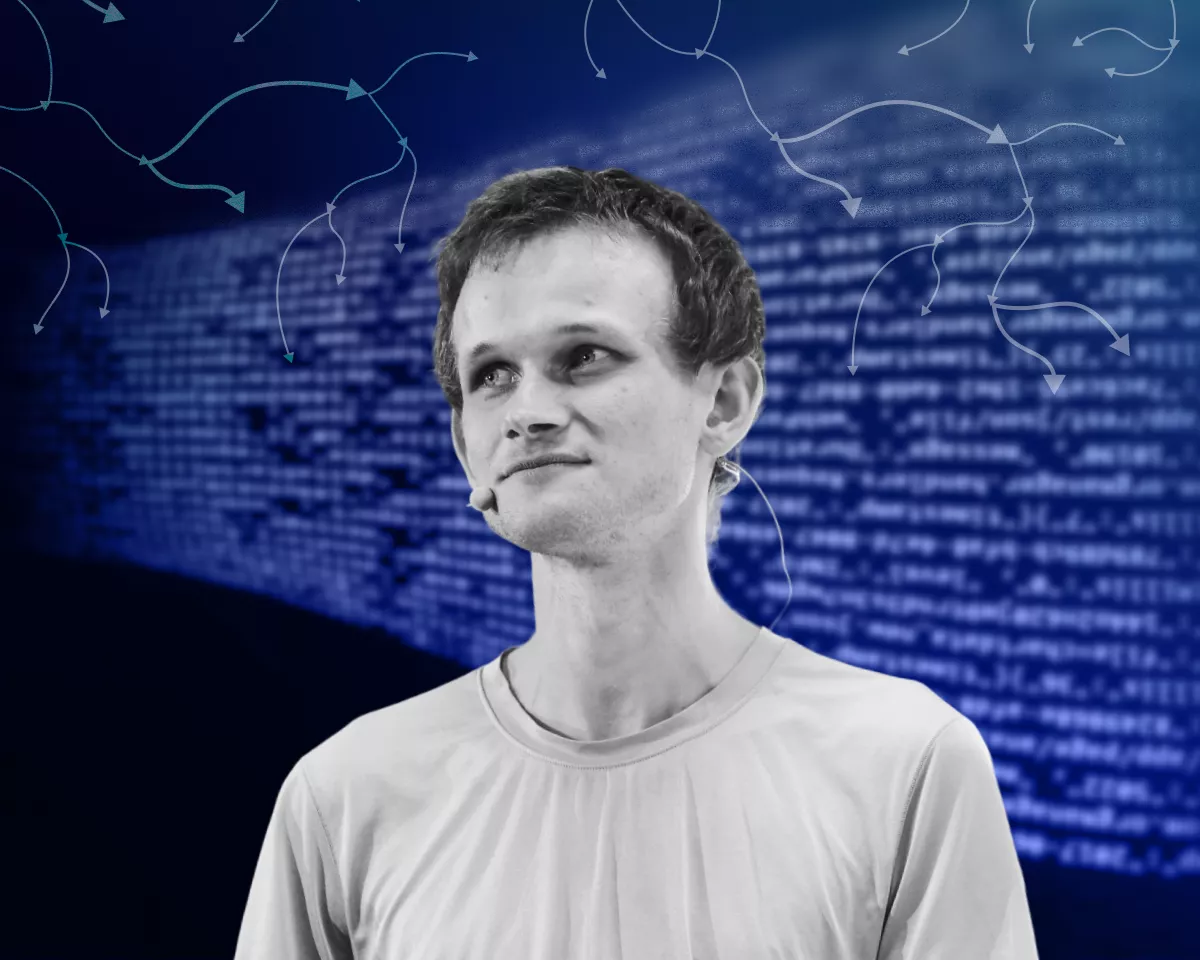
Ethereum co-founder Vitalik Buterin has criticized the trend towards creating “overly agentic” AI models. He called for increased human oversight to enhance quality and safety.
Echoing something @karpathy recently said, it does frustrate me how a lot of AI development is trying to be as “agentic” as possible, when actually creating *more* paths for human input both creates a better output (now for quite a while going forward) and is better for safety.
— vitalik.eth (@VitalikButerin) August 11, 2025
“It frustrates me that many AI developers strive for maximum system autonomy, although in reality, more opportunities for human control not only improve results (both now and in the future) but also enhance safety,” he wrote.
Buterin responded to a post by former Tesla AI director Andrej Karpathy, who noted that large language models are becoming too independent due to optimization for long-term tasks. For instance, in programming, they spend a long time analyzing even the simplest requests.
“While this is justified for prolonged tasks, such an approach is less applicable to active iterative development or quick checks before script execution. I regularly interrupt AI with commands: ‘Stop analyzing. Limit yourself to this file. No additional tools. No redundant solutions,'” he emphasized.
Buterin supported his position, stating that excessive AI autonomy reduces efficiency. In his view, open models with editing functions are much better than those creating content from scratch.
The Ethereum co-founder sees potential in the brain-computer interface, which tracks user reactions to generated content in real-time and adapts accordingly. This would allow AI to consider intentions and expectations. Current models, he says, often ignore such nuances, reducing their usefulness.
Community Reaction
Besides Buterin, many users supported Karpathy’s position.
I cancelled cursor yesterday for this reason. Constantly thinking 5 steps ahead in the wrong direction. I’m back to manually copy + pasting from chatgpt/claude/gemini for now.
— barry farkus ⏩️ (@paimon2cool) August 9, 2025
“I canceled Cursor yesterday for this reason — it constantly thinks five steps ahead in the wrong direction. I’m back to manually copying responses from ChatGPT/Claude/Gemini,” noted AI enthusiast barry farkus.
Software engineer Kaan Karakas added that existing AI-based models tend to overcomplicate. According to him, “this is good for deep analysis, but it slows down simple checks.”
However, not everyone agreed with the AI expert’s viewpoint. A user named Conor stated that Karpathy is discussing default behavior, which can be changed.
You are commenting more on the default behavior. As always, you can prompt and be explicit with the models to do precisely what you want (eg literally paste this tweet in your system instructions and be like, watch out for this for this ask)
— Conor (@jconorgrogan) August 9, 2025
“You can clearly instruct the model in the prompt about what you want (for example, literally paste this tweet into the system instructions and write something like: ‘pay attention to this when executing the request’). I’m not against default behavior being more autonomous, but yes — if your tasks go beyond these limits, you’ll need to give clear instructions,” he commented.
On August 8, OpenAI released its flagship AI model GPT-5.