



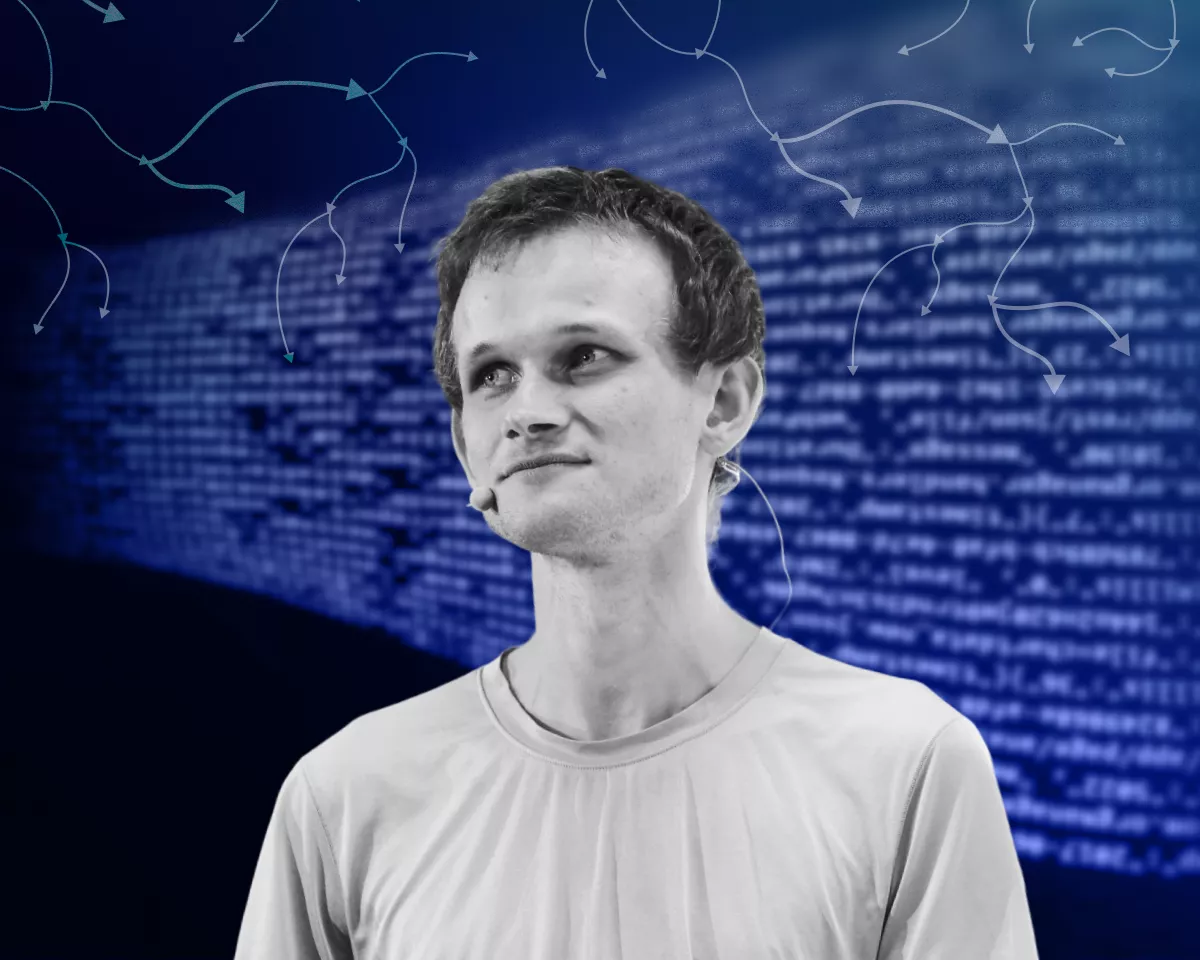
Ethereum co-founder Vitalik Buterin has advocated for enhancing the network’s preparedness against a hypothetical 51% attack, reports The Block.
“I am in favour of conducting more research and creating,” he stated during the EthCC conference in Brussels.
A 51% attack in the context of Proof-of-Stake occurs when a malicious actor controls more than 50% of all coins staked for block validation. This enables:
- manipulation — confirming only transactions beneficial to the attacker while rejecting or delaying others;
- double spending — executing the same operation multiple times, deceiving the network;
- rewriting history — altering already confirmed blocks to create alternative chains;
- censorship — blocking specific transactions or addresses.
Buterin considers the latter to be one of the main threats.
Honest validators could switch to a blockchain fork as a potential response to such an attack, he believes. This plan relies primarily on social consensus, where community members collectively agree to choose an alternative chain.
However, Buterin asserts that it would be far better if the network were more prepared for such a challenge.
“We want to make the response to 51% attacks as automated as possible. If you are a validator, your node should operate with software that, upon detecting censorship of transactions or validators, or if the node itself is censored, will automatically counteract the censorship of the main chain. All honest nodes, thanks to the code they execute, will automatically coordinate to use the same minority software,” he said.
Buterin acknowledged that achieving a 100% automatic switch of the network to a fork is impossible due to numerous constraints. Yet he emphasized:
“The closer we get to this, the less effort will be required from social consensus.”
According to him, “the technological layer should at least present one obvious candidate for a soft fork,” around which the community can rally if it becomes necessary to leave a censoring chain.
Additionally, Buterin advocated for the development of second-layer solutions and the widespread adoption of Ethereum light clients. He is convinced that relevant wallets should support verification in the context of zkEVM.
He also addressed the threat posed by quantum computers. In the context of the Ethereum blockchain, this remains an unresolved issue, Buterin stressed. He also pointed to four elements at risk: Merkle trees, consensus signatures, BLOB objects, and user accounts. Each has its own solutions.
The Ethereum co-founder also highlighted the importance of further simplifying the protocol to ease processes for users and developers.
Previously, Vitalik Buterin commented on various aspects threatening the decentralization of the second-largest cryptocurrency network: MEV, liquid staking, and the cost of running a full node.
Earlier, the programmer described the next five years as “crucial” for the mass adoption of Ethereum.