



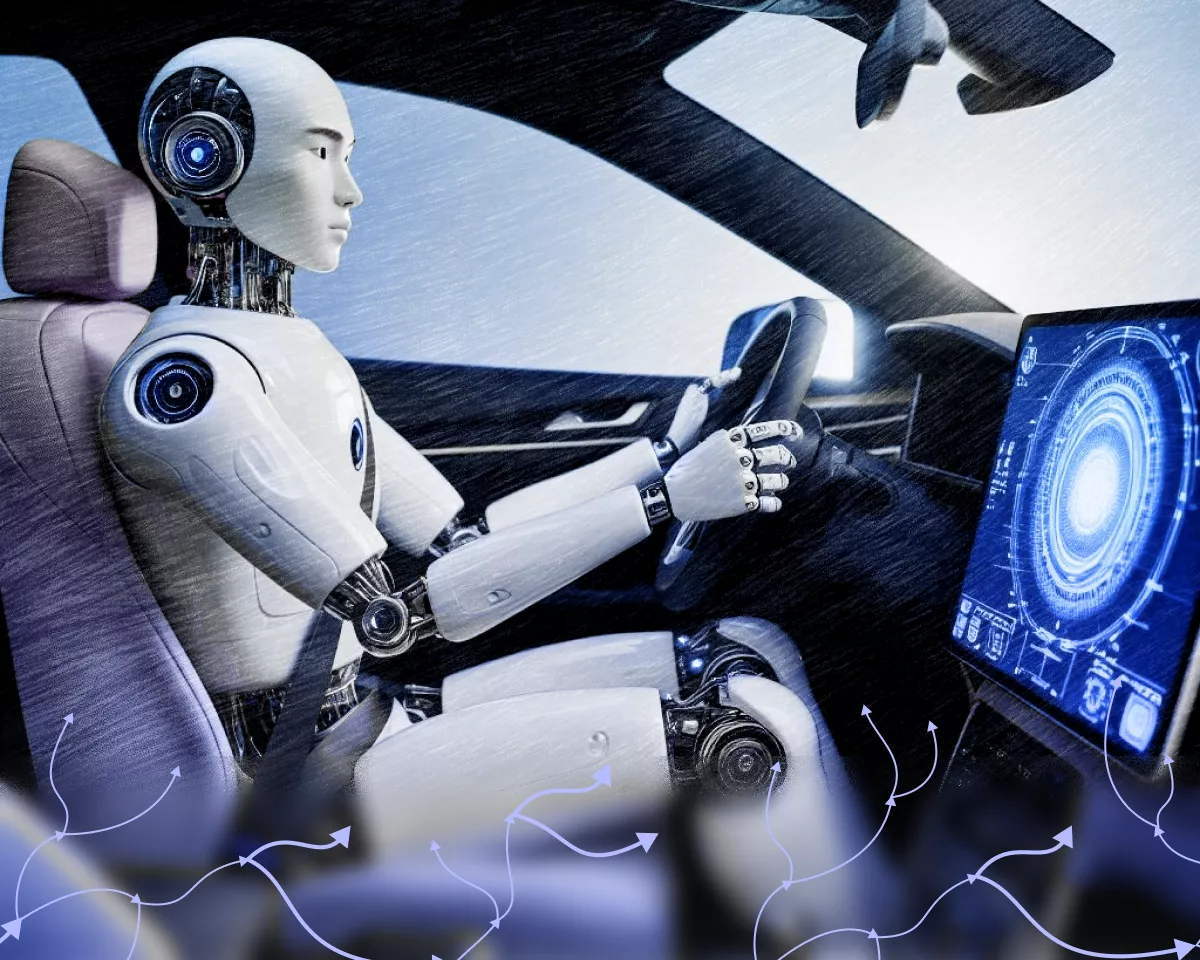
Alphabet’s Waymo is testing Google’s Gemini chatbot in its autonomous robotaxis. The AI will accompany passengers and respond to their inquiries, according to researcher Jane Manchun Wong.
Waymo is working on Gemini AI in-car assistant
They tried to hide it from the app, but here’s the full 1200-line system prompt pic.twitter.com/weh1EBPj7y
— Jane Manchun Wong (@wongmjane) December 24, 2025
“While examining the mobile app code, I discovered the system prompt for the unreleased Gemini integration,” Wong wrote in her blog.
The discovered Waymo Ride Assistant Meta-Prompt document is a specification of over 1,200 lines that defines the AI assistant’s behavior in the vehicle.
Although not included in public versions, Wong noted that it “clearly indicates something more significant than a simple chatbot.”
The assistant can answer questions, control some in-car functions like climate control, and reassure passengers.
“We cannot disclose any details. Our team is constantly working on enhancing features to make rides with Waymo enjoyable, seamless, and useful. Some of these solutions may be implemented in our system, some may not,” commented Waymo representative Yulia Ilina to TechCrunch.
Alphabet has previously integrated Gemini into its technology stack. Waymo has used the “world knowledge” LLM to train autonomous vehicles to navigate complex and risky scenarios.
Wong noted that the assistant should have a clear identity and purpose: “a friendly and helpful AI companion tasked with enhancing the passenger experience by providing useful information and assistance in a safe, reassuring, and unobtrusive manner.”
Among the car functions to which Gemini currently has no access are adjusting music volume and seats, changing routes, and controlling windows.
The prompts include responses regarding competitors like Tesla and conditions for ending a conversation. The bot should avoid speculating about the driver’s actions or events during the ride.
The assistant can answer general questions such as the weather, the height of the Eiffel Tower, or the closing time of a local store. It is prohibited from performing actions like ordering food or making reservations.
Traffic Light Issues
Waymo is a leading player in the autonomous robotaxi business. The company has been developing this area since 2020, though not without incidents.
On the evening of December 20, 2025, the firm suspended its robotaxi operations in San Francisco. The cause was a massive power outage that left autonomous vehicles stranded on the city’s streets.
Users posted photos and videos of traffic incidents: groups of cars with hazard lights on blocked traffic, disrupting the flow.
“The power outage was a widespread event that led to a transportation collapse throughout San Francisco. Traffic lights were out, and there were disruptions in public transport. We aim to adapt our technology to the flow during such events,” a Waymo representative commented.
The company stated that the autopilot can navigate intersections even when traffic lights are off. However, the scale of Saturday’s outage led to a prolonged robotaxi standstill: vehicles required significantly more time to analyze the road situation.
On the afternoon of December 21, Waymo resumed service. However, three days after the incident, it suspended operations again, citing an update “to respond to future power outages.”
“We have always focused on developing the Waymo Driver for real-world conditions, including infrastructure failures,” the blog states.
In December, Tesla launched driverless taxis without drivers overseeing the process, but not yet for passenger transport.