




The price of the first cryptocurrency set a new ATH near $123,000; US president Donald Trump signed a law regulating stablecoins; Russia’s State Duma set a timetable for the digital ruble—plus other events of the week.
Bitcoin sets a peak near $123,000 but is outpaced by altcoins
The bellwether cryptocurrency began the week with a sprint. On Monday, July 14, it broke above $120,000 and then hit a record $122,838 (CoinGecko).


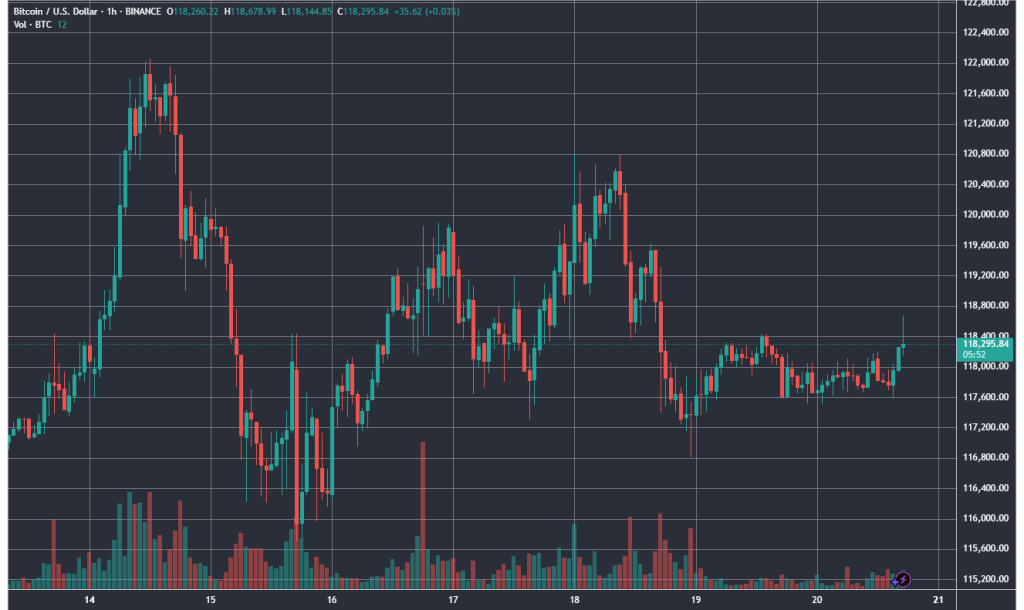
Analysts cited institutional demand, macroeconomic factors and upbeat expectations around America’s “crypto week” as the main drivers of the rally.
Within a day, however, digital gold pulled back after the release of US consumer-inflation data.
At one point bitcoin dipped below $116,000. After a rebound and stabilisation, it traded sideways, ending the week above $118,000.
On July 17, Ethereum’s price rose nearly 9% in a day to $3,452, the highest since January. The rally was supported by record inflows into spot ETFs tied to the second-largest cryptocurrency.
Over the week, ether added 25.8%. Other large-cap altcoins also rallied: Dogecoin (25.8%), XRP (24.2%), Solana (+11%) and BNB (+7.8%).


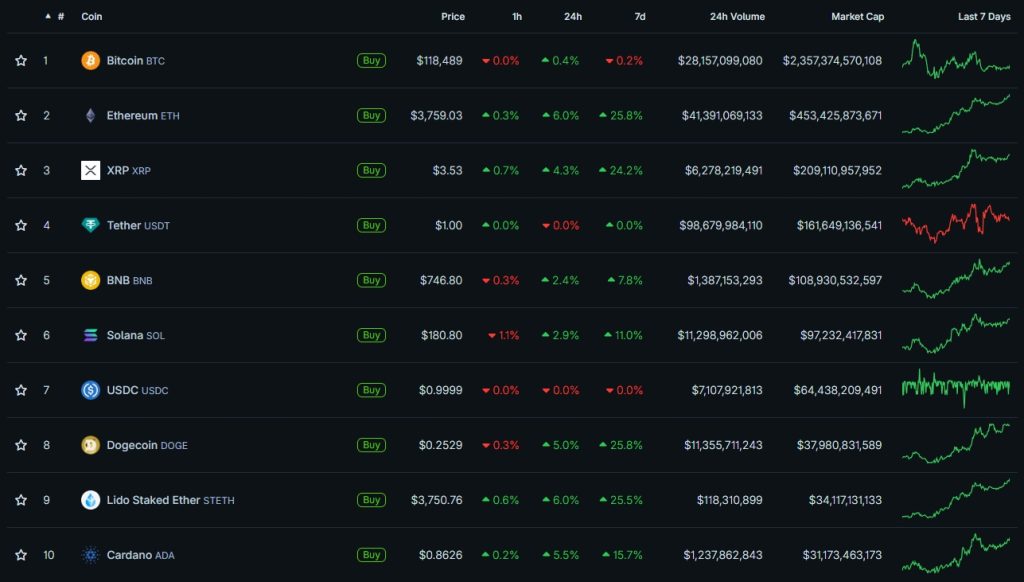
Bitcoin’s gain over the period was close to zero; the dominance index fell to 59%. Meanwhile, total market capitalisation approached $4 trillion. Analysts spoke of the start of an altseason.
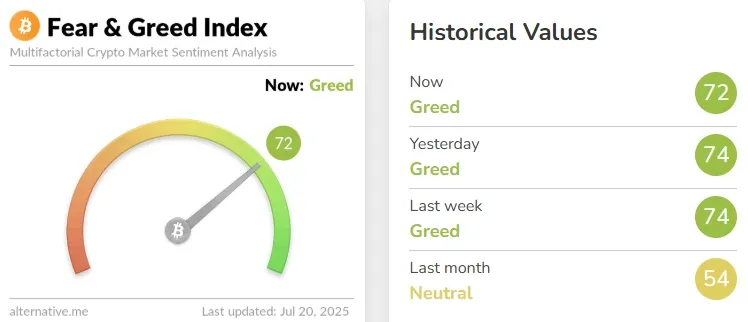
The Crypto Fear and Greed Index remains in the “greed” zone at 72.


Donald Trump signs the GENIUS Act stablecoin law
On July 18, US president Donald Trump signed the GENIUS Act, which sets rules for stablecoins and marks the first significant crypto statute in the country.
A day earlier, the House on a second attempt approved the measure. Lawmakers passed three digital-asset bills in total, including the CLARITY Act and the Anti-CBDC Act, which still await Senate consideration.
The GENIUS Act requires full backing of stablecoins with liquid assets and annual audits for issuers with market capitalisations above $50bn. It bans the payment of interest or other income to stablecoin holders and sets guidelines for foreign firms operating in the segment.
It will take effect in six months, or 120 days after regulators issue implementing rules.
“The GENIUS Act creates a clear and simple regulatory framework for building and unlocking the enormous potential of dollar-backed stablecoins,” Trump said at the signing ceremony.
Industry figures in attendance included Gemini co-founders Cameron and Tyler Winklevoss, Robinhood CEO Vladimir Tenev, Circle CEO Jeremy Allaire and Tether chief Paolo Ardoino.
The latter has already confirmed that the USDT issuer intends to comply with the GENIUS Act in order to bring the stablecoin to the American market within three years. Ardoino also again flagged a special US-focused version of the coin geared to institutional investors.
Allaire said Circle has for several years been operating under standards now codified by law.
Digital ruble to enter circulation by September 2026
Russia’s State Duma passed at third reading a law to introduce the digital ruble into circulation from September 1, 2026.
From that date, banks must offer clients the ability to transact in the national CBDC. By September 1, 2028, the functionality must be available at all credit institutions, and all merchants will be required to accept payments in the asset.
Exemptions will apply only to outlets with annual revenue under 5m rubles and those operating where there is no internet or mobile coverage.
What to discuss with friends?
- PUMP presale participants sold nearly 60% of their tokens.
- Research: Gen Z spend crypto on games; millennials on real estate.
- The darknet marketplace Abacus Market was suspected of a $12m exit scam.
- The IMF denied El Salvador’s bitcoin purchases.
Developers propose a way to shield bitcoin from quantum attacks
A group of developers found a way to protect the network from potential quantum-computing threats. Casa CTO Jameson Lopp published a proposal on GitHub.
“Quantum adversaries can compute private keys for known public addresses, and then slowly move funds so as not to attract the crypto community’s attention. We are likely to learn of the day of the quantum breach much later, unless the attackers intentionally broadcast transactions,” he noted.
The idea is to migrate users to quantum-resistant addresses and block all legacy ones. Frozen funds could be recovered. According to the developers, this would require a separate Bitcoin Improvement Proposal (BIP).
Also on ForkLog:
- A journalist determined the real volume of bitcoins held by US authorities.
- Sber proposed putting bitcoin custody under banks’ control.
- Nvidia’s chief: China does not need American chips for military purposes.
- Base sped up its main network tenfold.
Coinbase launches Base App — a “super app” with social features and payments
America’s largest crypto exchange Coinbase rebranded its eponymous wallet as Base App. The application combines a social network, mini-apps, chat, payments and trading.
The company called it a new chapter for the Base ecosystem. The platform now comprises three parts:
- the Base Chain Layer-2 network;
- the Base Build developer toolkit;
- the Base App consumer application.
The app includes a social feed on the Farcaster protocol. Users can tokenise posts via Zora, receive tips and weekly rewards for activity. They can also track friends’ trades and swap tokens directly in the feed.
Base App features embedded mini-apps—from games to prediction markets. It supports one-tap USDC payments via NFC and encrypted messaging over the XMTP protocol.
On sign-up, users receive a Base Account—a smart wallet that works across apps and networks.
What else to read?
In our “Silicon Tanks” series, we introduced researcher Evgeny Morozov, a critic of “solutionism” and “internet-centrism” whose work has become especially timely in an era of pervasive data control and AI hype.
We examined the key regulatory aspects of using and distributing AI-generated content.
With Web3 researcher Vladimir Menaskop, we explored how the popular maxim “one bitcoin equals one bitcoin” arose and what it means.
In our regular digest, we compiled the week’s main cybersecurity developments.