



Bitcoin slid toward $73,000; Fidelity outlined crypto-market trends for 2026; private transactions were proposed for Ethereum — and more from the week.
Pressure from Hormuz
The leading cryptocurrency began the week by breaking above $77,000, a level that had capped gains in prior days. The main driver was a drop in oil prices after reports of positive momentum in US-Iran talks that would reopen shipping in the Strait of Hormuz.


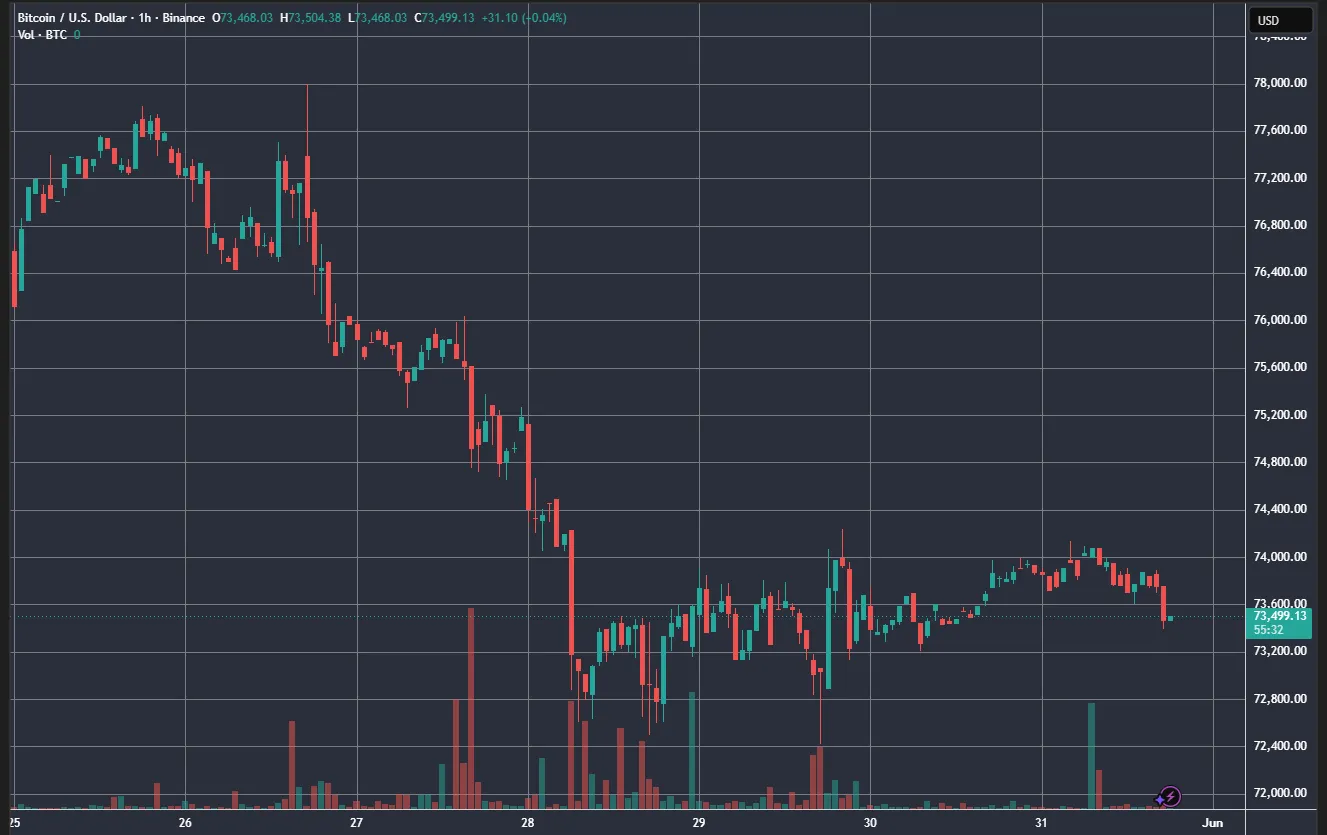
However, as the Middle East conflict escalated, prices slumped below $73,000. Beyond political and macro pressures, CryptoQuant flagged technicals: spot trading volumes fell to 2023 lows and a market-wide demand shortfall emerged.
Bitcoin fell about 3.7% for the week, settling around ~$73,500.

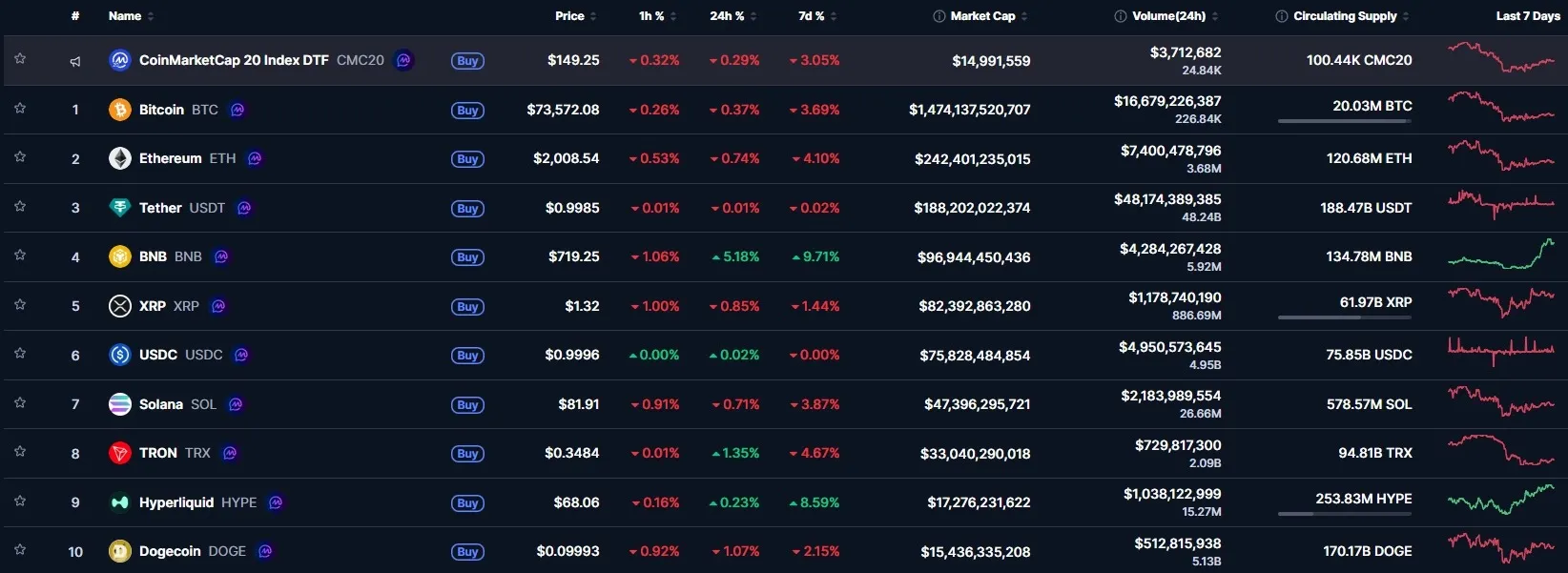
Most major altcoins showed similar moves. Against that backdrop, BNB and HYPE kept rising — up 9.7% and 8.6%, respectively. The Hyperliquid token climbed to ninth by market value, displacing Dogecoin.
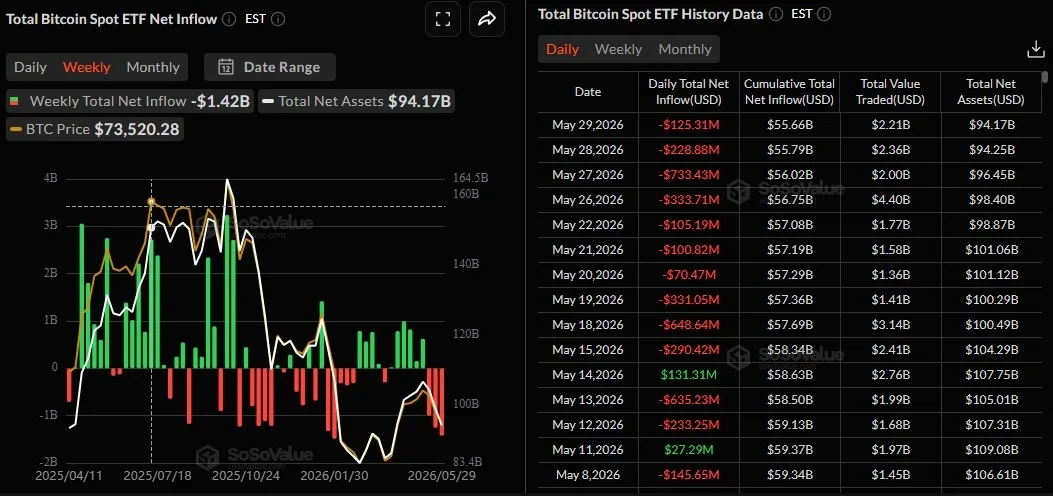
Spot bitcoin ETFs continued to record outflows, which accelerated — $1.42 billion versus $1.26 billion the previous period.

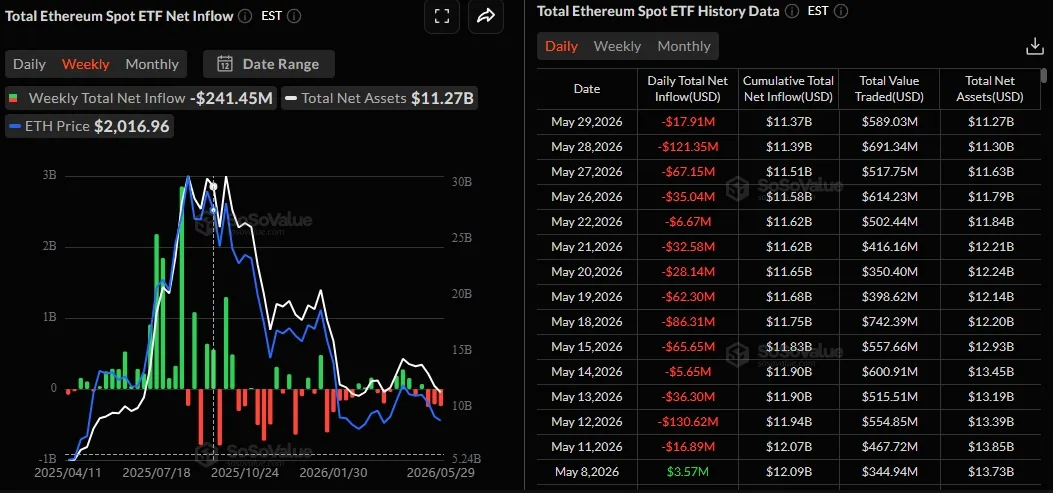
Ethereum funds added to the negative trend, losing $241.4 million versus $216 million a week earlier.

The crypto fear and greed index even rose to 28 from 25, exiting the zone signaling extreme investor fear.

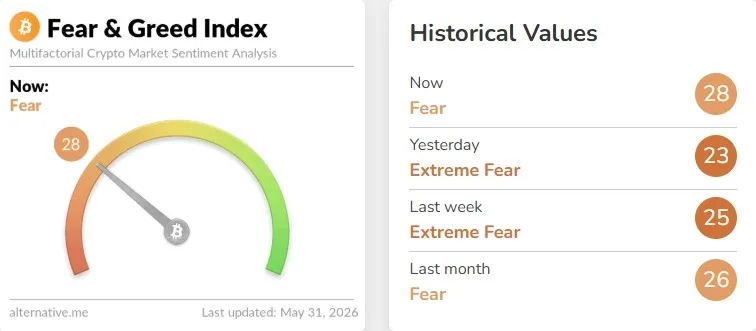
Total market capitalization slipped to $2.57 trillion. Bitcoin’s dominance was little changed at 59.3%, while Ethereum’s share stayed below 10%.
Developers propose adding private transactions to Ethereum
Facet co-founder Tom Lehman proposed including EIP-8182 in the upcoming Ethereum upgrade dubbed Hegota. The initiative would add a protected pool at the base layer for private transfers of ether and ERC-20 tokens.
The system is planned as a contract with no admin keys or pause function. It would use Groth16 zero-knowledge proofs to validate transactions.
Lehman explained that current mixing services underperform due to fragmentation. New pools struggle to attract users without an installed base, and without liquidity they can’t deliver adequate anonymity. EIP-8182 would create a single environment for all wallets and apps. Users could send hidden transfers to regular addresses or ENS domains without creating special accounts.
What to discuss with friends?
- Forbes named five avenues for AI adoption in aviation.
- Researchers found religious bias in AI models.
- The FBI exposed a scam-center network and seized $8 billion in bitcoin.
- Startup Moth unveiled the first game for quantum computers.
Fidelity outlines 2026 crypto-market trends
Analysts at Fidelity Digital Assets reviewed the first half of 2026 and identified six structural trends shaping the industry. They argue the period is marked by a “technical retooling” of the ecosystem rather than a simple price rally.
Among the main trends, Fidelity highlighted:
- a faster convergence of digital assets with traditional finance, helped by the arrival of options on spot bitcoin ETPs and progress in tokenization by major banks.
- a stronger focus on tokenholder rights. Projects such as Hyperliquid and Aave are actively adopting buybacks and revenue-redistribution mechanisms.
- rising demand for compute for AI, creating competition with traditional mining. Since the start of the year, the 30-day average hashrate fell 8.8%, and difficulty 7.8%.
- bitcoin’s technical resilience — removing the data cap in OP_RETURN did not bloat the blockchain; Bitcoin Core nodes’ dominance (~77%) supports consensus stability; interest in quantum-resistant upgrades is growing.
As a fifth point, Fidelity cited bearish forces early in the year: bitcoin dropped 13% amid high inflation and forced liquidations. Despite this, institutions continue building capital, and regulatory clarity is laying the groundwork for recovery.
The final trend involves stronger gold positioning and a gradual move away from dollar infrastructure.
10,000 critical flaws: Anthropic reports first Project Glasswing results
Anthropic published the first report on Project Glasswing — a vulnerability-hunting program using the Claude Mythos model.
Over a month, about 50 partners uncovered more than 10,000 high and critical security issues. The bottleneck, the company said, was not discovery speed but validation and releasing patches.
The AI scanned over 1,000 open-source projects and found 23,019 vulnerabilities of all severities. Of these, 6,202 were initially classified as “high” or “critical.” On additional review, 90.6% of findings were confirmed, including 62.4% requiring urgent fixes.
Also on ForkLog:
- A hacker hijacked a $15 million GUA airdrop.
- IBM sped up an AI model using a quantum processor.
- The US Treasury Secretary ruled out launching a digital dollar.
- Socket identified an attack on crypto and AI developers.
Experts warn AI is accelerating the quantum threat
Artificial intelligence accelerates quantum-computing development and shortens the window in which modern cryptography may lose its strength.
Project Eleven head Alex Pruden said machine learning is already used to optimize error correction — one of the key barriers to building quantum computers. AI is used not only for defense but also to find weaknesses in cryptography and software.
NEAR co-founder Illia Polosukhin noted that AI has been accelerating scientific research for several years. He allowed that the next generation of quantum systems could be created with its help.
He also pointed to a “collect now, decrypt later” scenario: encrypted traffic can be intercepted today for future decryption.
Meanwhile, Quantus experts believe the crypto industry is not ready to move to post-quantum cryptography.
Wallets, exchanges, custodians, validators, bridges and governance systems are potentially at risk, they said in the study The State of Quantum: What Crypto Can’t Afford to Ignore.
In the company’s view, crypto faces tighter constraints than conventional IT. In centralized services, cryptography can be updated via patches. In blockchains, user-controlled funds, distributed governance and public keys can remain on the network for years.
What else to read?
We explain why bitcoin behaved unexpectedly during the Strait of Hormuz crisis and held up despite market expectations.
We revisited Mike Leigh’s “Naked” (1993) as a cypherpunk film that didn’t know it.
In ForkLog cards, we outline who Kevin Warsh is and what is expected of him as the new chairman of the US Federal Reserve.
We compiled the week’s most notable security developments in our traditional digest.