




Bitcoin has reached a new high, surpassing the significant psychological mark of $100,000. Donald Trump nominated Paul Atkins to head the SEC, the founder of Hydra was sentenced to life imprisonment in Russia, and other events of the past week unfolded.
Bitcoin’s Six-Figure Milestone
This week, Bitcoin started around $98,000, but on Tuesday, December 3, the crypto market experienced a significant correction following the imposition of martial law in South Korea.
Adding to the negative sentiment was the transfer of 10,000 BTC linked to the defunct darknet marketplace Silk Road to Coinbase by U.S. authorities.
Until Thursday, Bitcoin showed declines, trading between $93,000 and $97,000. On the night of December 4-5, amid a surge in trading volume, the asset finally broke through the $100,000 level. The price peaked at $104,088 on the Binance exchange.


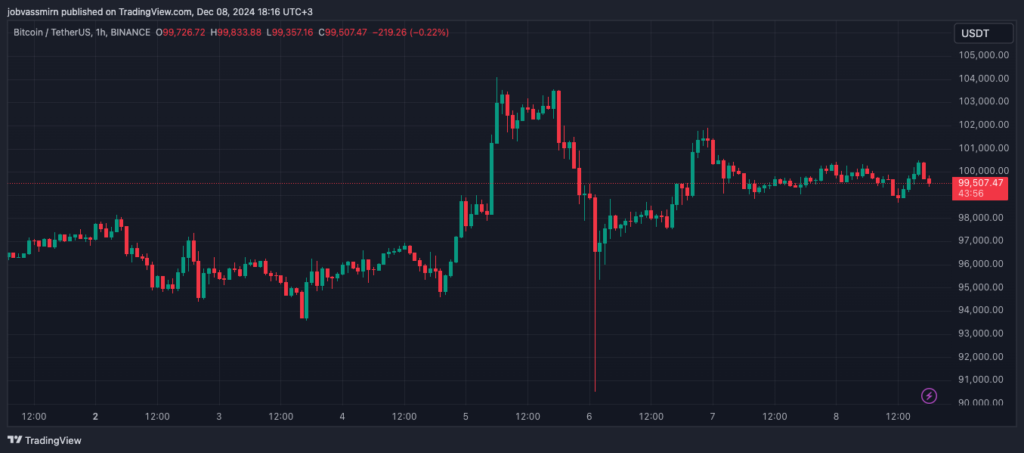
Upon reaching this significant psychological level, the crypto community received congratulations from newly elected U.S. President Donald Trump. Additionally, Fed Chairman Jerome Powell compared Bitcoin to gold, and columnists at the Financial Times issued an “apology” for their skepticism.
The following day, the leading cryptocurrency underwent a further correction, briefly dipping to $90,000. However, the asset quickly regained its position, returning several times to $100,000. At the time of writing, the coin is trading at $99,500, marking a 3% increase for the week.
Amid Bitcoin’s all-time high (ATH), other cryptocurrencies also showed positive dynamics. Ethereum rose above $4,000 for the first time since March, with a weekly gain of 8%.


Meanwhile, XRP approached $3 and entered the top three by market capitalization. BNB ($788) and TRON ($0.43) also reached new ATHs. Despite a pullback, TRON gained 51% over seven days.
Inflows into spot Bitcoin ETFs this week reached $2.79 billion after an outflow of $138 million last week, according to SoSoValue. Ethereum-based instruments received a record $836 million.
The total market capitalization of the cryptocurrency market exceeds $3.86 trillion. Bitcoin’s dominance index stands at 51.4%, while Ethereum’s is 12.5%.
New SEC Chairman
Trump officially nominated Paul Atkins for the position of SEC chairman. The politician highlighted the nominee’s understanding of digital assets and called him a “proven leader in common-sense regulation.”


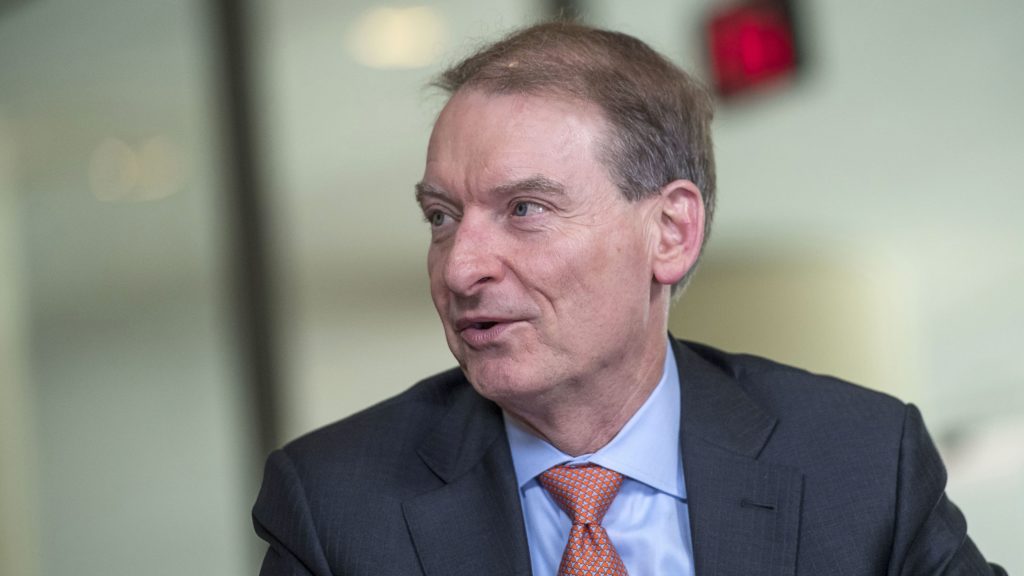
Atkins is a board member of the nonprofit organization The Digital Chamber, which promotes and lobbies for blockchain technology, Bitcoin, and other cryptocurrencies in political circles. From 2002 to 2008, he served as an SEC commissioner, where, according to Trump, he “strongly advocated for transparency and investor protection.”
The candidate received support from many politicians and crypto industry participants, including Coinbase CEO Brian Armstrong, “crypto mom” Hester Peirce, and Senator Cynthia Lummis.
This week, Trump also nominated co-founder and general partner of venture firm Craft Ventures, David Sacks, for the role of “czar” in AI and digital assets.
“In this important role, David will lead the administration’s policy on artificial intelligence and cryptocurrencies, two areas critical to America’s future competitiveness,” the politician stated.
One of the “crypto czar’s” tasks will be to work on the regulatory framework for the digital asset industry. He will also head the President’s Science and Technology Advisory Council.
Sacks previously served as COO of PayPal, where he worked alongside Peter Thiel and Elon Musk.
Saylor’s Bitcoin Strategy for Microsoft
MicroStrategy founder Michael Saylor presented a financial plan to Microsoft, proposing the tech giant transition to Bitcoin. This move could add $5 trillion to the company’s market capitalization by 2034.
The entrepreneur suggested converting reserves, cash flows, and debts into the leading cryptocurrency. In his view, this would boost MSFT’s stock growth.
According to his strategy, the firm should invest $100 billion in Bitcoin annually.
Saylor compared the growth rates of Microsoft, digital gold, and traditional financial instruments relative to the S&P 500 index.

He argues that buying Bitcoin is more logical than repurchasing one’s own shares, and holding it is more rational than traditional bonds.
“Bitcoin is the best asset you could own,” the businessman asserts.
Later, the MicroStrategy founder shared the secret to successful investing in the first cryptocurrency. He advised market participants to “simply continue acquiring the asset with their free capital,” as it “will always appreciate against the dollar.”
Conclusion in the Hydra Case
In Russia, the founder of the darknet marketplace Hydra, Stanislav Moiseev, was sentenced to life imprisonment and fined 4 million rubles.
The Moscow Regional Court also sentenced 15 accomplices to terms ranging from eight to 23 years, with fines totaling 16 million rubles. All defendants were found guilty of organizing a criminal community, producing and distributing drugs on a large scale.
The court confiscated and seized some of the convicts’ property.
Hydra was one of the largest darknet marketplaces in the world. According to U.S. authorities, from January 2016 to March 2022, over $5 billion in cryptocurrencies were deposited into wallets controlled by the platform. In 2021, it accounted for 75% of all darknet-related crypto transactions, amounting to at least €1.23 billion.
In April 2022, German police seized Hydra’s servers and confiscated 543 BTC, while the U.S. Treasury imposed sanctions on the platform. However, Russian and German authorities did not cooperate on this matter.
What to Discuss with Friends?
- A Siberian deputy faces charges for mining in a garage.
- Arthur Hayes predicted the return of the “glorious days” of ICOs.
- Garantex, Russia Today, Ryuk: The UK shut down a Russian crypto laundering network.
- Crypto project founders took third place in Forbes 30 Under 30 Finance list.
Trends for the Coming Year
Analysts from venture firm Andreessen Horowitz (a16z) have identified the main directions for the crypto market in 2025. They believe the key trend will be the integration of AI with blockchain.
The company anticipates the development of three main sectors within this symbiosis:
- AI-agent-based crypto wallets;
- decentralized autonomous chatbots;
- identity verification solutions.
Among other directions, a16z highlighted tokenization and stablecoins. The latter have already created a market for international money transfers, and starting next year, “stablecoins” will gradually replace daily credit card transactions.
The “non-traditional assets” sector will also grow as infrastructure develops within tokenization. New income sources are expected to emerge from previously overlooked tools like biometric data.
Another promising direction is on-chain trading of government bonds, experts believe.
11 Years of Dogecoin
December 6 marked the 11th anniversary of the launch of the first meme cryptocurrency, Dogecoin (DOGE).
In anticipation of the anniversary, the coin’s price exceeded $0.46, later reaching the November peak of around $0.48. At the time of writing, DOGE is trading at $0.45.

The historical maximum of $0.73 was recorded in May 2021. The asset needs to grow another 36% to reach this level.
DOGE was launched in 2013 by developer Billy Markus and Adobe Systems sales department employee Jackson Palmer, who decided to joke about the rapidly growing number of cryptocurrencies.
The community congratulated the project on its anniversary and wished the coin to reach a price of $1. One commentator noted that Dogecoin is “almost a teenager” — a rare phenomenon for meme coins.
Also on ForkLog:
- The head of Tether acknowledged USDT as the “fuel” for Bitcoin’s price growth.
- Research: The FDIC required banks to suspend activities related to cryptocurrencies.
- Bitcoin mining difficulty reached a record 103 T.
- The former U.S. Treasury Secretary criticized the idea of a national Bitcoin reserve.
What Else to Read?
ForkLog interviewed the co-founder of the “Pitupi” project and explored the intricacies of P2P arbitration.
The traditional digest compiled the week’s main events in the field of cybersecurity.