




The cryptocurrency market experienced a slight slowdown, with mining bans in several Russian regions, hackers targeting Hyperliquid, and other notable events of the past week.
Unrealized Christmas Rally
For Bitcoin and the broader market, the holiday week was relatively calm, with no sharp corrections or rapid growth.
The leading cryptocurrency opened Monday at $96,000, but fell to $93,000 the next day. It gradually recovered, reaching around $98,000 by Thursday.
On Christmas, December 24-25, Bitcoin traded between $96,000 and $99,000, but post-holiday, it dropped to $94,000. At the time of writing, the digital gold is priced at $94,700.


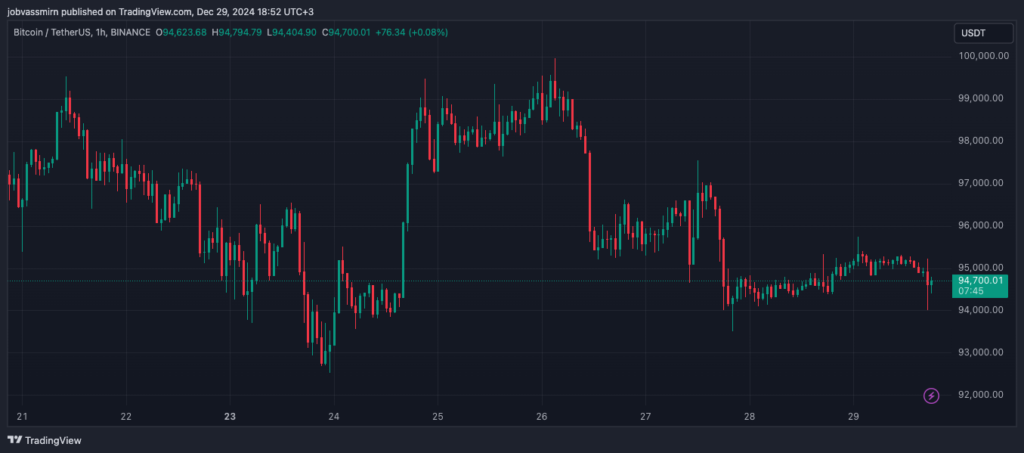
According to experts at QCP Capital, the anticipated Christmas rally for Bitcoin was disrupted by negative news and ETF outflows.
According to CoinGecko, from 2014 to 2023, the cryptocurrency market demonstrated a Santa Claus rally eight out of ten times, with growth ranging from 0.7% to 11.8% during the week from December 27 to January 2.



André Dragoș, head of research at Bitwise in Europe, suggested a further decline in Bitcoin in the coming weeks. He noted that the attitude towards risky investments like the leading cryptocurrency has become more cautious and will remain so for the foreseeable future.
However, he believes the current situation presents opportunities for profitable Bitcoin purchases “on the dip,” as the limited supply is a factor for long-term price growth of digital gold.
Cryptocurrencies in the top 10 by market capitalization showed mixed results. Over the week, Ethereum rose only 0.5% and is trading at $3,385.


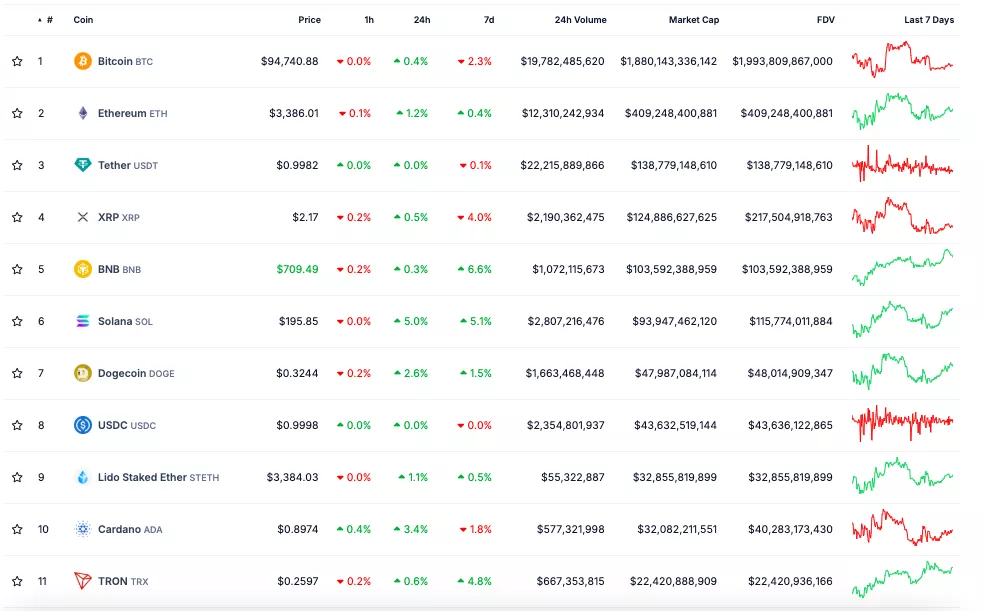
Solana rose by 5.1%, while XRP fell by 4%.
BNB managed to recover above $700, gaining 6.6% over seven days.
The total market capitalization of the crypto market is $3.47 trillion, with Bitcoin’s dominance at 54.1%.
Mining Ban and Monitoring Drops in Russia
From January 1, 2025, to March 15, 2031, a ban on cryptocurrency mining and participation in mining pools will be implemented in several regions of Russia.
The restrictions will affect Dagestan, Ingushetia, Kabardino-Balkaria, Karachay-Cherkessia, North Ossetia, and Chechnya. Additionally, mining is prohibited during peak energy consumption in some areas of the Irkutsk region, Buryatia, and the Trans-Baikal Territory.
The Commission on Energy Development retains the right to adjust the list to maintain consumption balance as industrial demands change.
Russian Deputy Prime Minister Alexander Novak suggested expanding the list of regions with mining bans, reports RBC.
“If there are such requests from regions, from governors, who within the framework of socio-economic development forecasts will see that there may be a deficit for connecting industrial consumers, for connecting social facilities — primarily schools, hospitals, and so on. Of course, restrictions will be introduced to ensure the connection of social facilities and construction enterprises first,” Novak stated.
It was also revealed this week that the Bank of Russia, together with Rosfinmonitoring, is developing a platform to monitor suspicious transactions by individuals and share this information among credit institutions.
The initiative aims to combat drops, who provide their cards for shadow transactions.
“Their clients are all major online casinos, whose websites are blocked. These also include Russian and foreign crypto exchanges, pirate sites, drug shops,” explained Bogdan Shablya, head of the Financial Monitoring and Currency Control Service of the Central Bank.
According to him, around 10 million transfers to dropper cards by Russians have been recorded recently. Currently, the Central Bank has information on approximately 700,000 suspicious exchange participants.
The platform will allow banks to coordinate efforts to block such clients’ activities and prevent them from opening new accounts. However, the exact development timeline is not disclosed.
Trump and Regulation in the US
In the US political sphere, the Christmas week began with new appointments: President-elect Donald Trump nominated crypto-friendly Stephen Miran as head of his Council of Economic Advisers (CEA).
Previously, the candidate was a senior economic policy advisor at the Treasury Department from 2016 to 2020. Miran is expected to “work in a team to ensure an economic boom.”
Trump also appointed former football player Bo Hines as executive director of the Digital Assets Advisory Board. He will work alongside “crypto czar” David Sacks “to stimulate innovation and growth in the industry, providing leaders with the resources needed for success.”
Trump announced all decisions on his social network Truth Social. He hopes the “Crypto Council” will create conditions for the industry to remain “a cornerstone of US technological progress.”
The US is gradually preparing for the departure of SEC head Gary Gensler, which will occur after Trump’s inauguration on January 20, 2025. Commissioner Hester Peirce is confident that the agency will fundamentally change its enforcement approach with the change in personnel.
According to her, the Commission “has always leaned towards enforcement,” but now wants to focus on clearly defining the agency’s jurisdiction. Her colleague Mark Uyeda described the previous SEC approach as “a complete disaster.”
He hopes the regulator will stop being “a scolding teacher” that bans everything and return to its prescribed role as an agency.
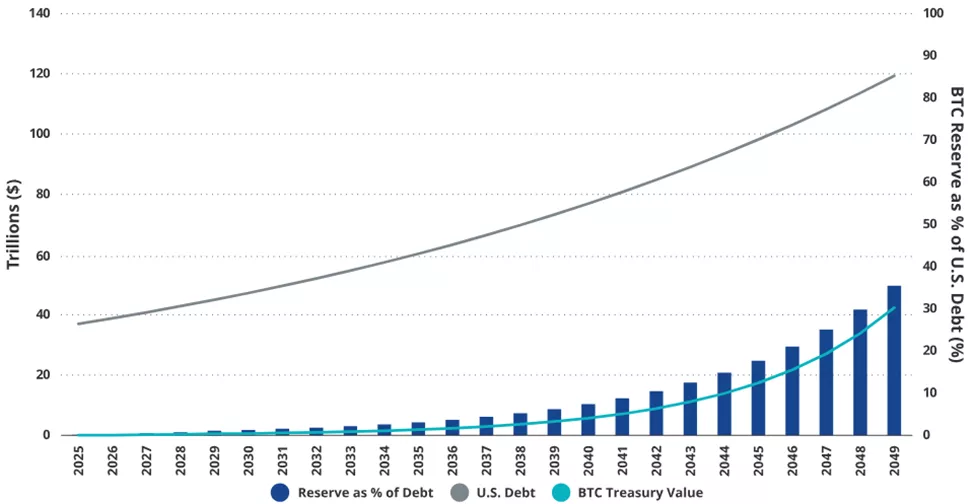
Discussions also continue on the possible creation of a Bitcoin reserve in the US. According to VanEck analysts, such a move could help the United States reduce its national debt by 35% by 2050.
According to experts, digital gold will rise to $42.3 million by 2049, showing an average annual growth rate of 25%. Meanwhile, federal government obligations will increase to $119.3 trillion (CAGR 5%).
As a result, the share of the Bitcoin reserve in the US national debt will rise to 35%.

Additionally, the US Internal Revenue Service (IRS) has introduced rules requiring “brokers from the DeFi segment” to report gross income from crypto asset transactions.
Market participants will perform tasks similar to traditional brokers: collecting information on their users’ transactions and submitting Form 1099. This form is used for reporting income not related to wages and other employer payments.
However, the innovations have sparked a wave of criticism on social media. Some lawyers emphasized that the IRS’s actions exceed its authority.
“This unlawful rule is the dying gasp of an anti-crypto faction losing power. It needs to be overturned, either through the courts or by a new administration,” noted Variant’s chief legal officer Jake Chervinsky.
What to Discuss with Friends?
- Adam Back: Quantum computers will make Bitcoin stronger.
- Seed phrases in YouTube comments: Analysts reveal a new scam.
- CoinGecko names meme coins as the main trend among traders in 2024.
- DEX aggregator Jupiter announces a new airdrop.
Hackers on Hyperliquid
MetaMask wallet developer Tai Vano and several other users noticed suspicious activity on the DEX Hyperliquid. Allegedly, wallets linked to North Korean hackers are actively trading, with their trading loss amounting to about $700,000.
The community speculated that cybercriminals chose Hyperliquid as a potential target and are conducting transactions to test the system’s stability.
Amid panic, the total locked value on the exchange decreased by $249 million in a day. The figure fell to $2.08 billion and has not recovered since.


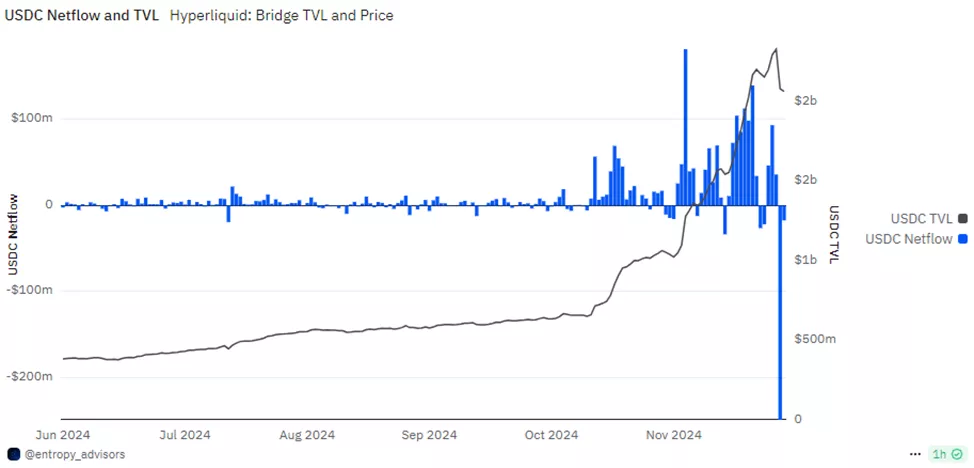
The project team denied any threat and assured that all user funds are safe.
The situation also negatively impacted the platform’s native token HYPE, which fell from a peak of $35.5 to $27.5.
Do Kwon’s Extradition
On December 25, a Montenegrin court rejected the appeal of former Terraform Labs CEO Do Kwon to cancel his extradition. The decision to hand over the entrepreneur to US or South Korean authorities was delegated to the country’s Minister of Justice, Bojan Božović.
Later, Božović approved Kwon’s extradition to the United States while denying the second party.
According to the statement, the authorities analyzed extradition requests from the US and South Korea based on several criteria, including the severity and location of the crime, the procedure for submitting official documents, and the possibility of further transferring Kwon to another country.
Previously, the entrepreneur had repeatedly managed to appeal Montenegrin authorities’ decisions. However, the court rejected all his appeals, and the country changed its Minister of Justice.
Kwon spent four months in a local prison on charges of using forged documents. In March 2024, he was released and moved to an immigration center, where he is to be held until extradition.
Courts and Sentences
During what seemed like a family holiday period, there were lawsuits and prison sentences.
On December 26, former Bithumb Holdings CEO An Seong-hyeon was found guilty of fraud and sentenced to 4.5 years in prison. The decision was made by the Seoul Southern District Court.
He was accused of conspiring with other company board members and caught receiving bribes exceeding $3 million. Other defendants in the case also received prison terms.
Also this week, Elisa Rossi, the ex-wife of Solana co-founder Stephen Akridge, sued him for failing to pay staking income during their divorce.
The couple began the process in 2023, and Rossi was entitled to a share of their joint savings in SOL tokens. Due to the “acrimonious and protracted” nature of the process, she agreed to 25% instead of the standard 50%.
According to her, Akridge provided her access to the assets but continued to receive staking income, which he concealed. Rossi discovered this “months later.”
She repeatedly demanded her share of the money, but her ex-husband refused. The specific amount was not disclosed, and the parties have not publicly commented on the process.
Former head of the Bahamian division of the cryptocurrency exchange FTX, Ryan Salame, was more fortunate — his prison term was reduced by a year from a total of 7.5 years. This information appeared on the Federal Bureau of Prisons website.
Former Alameda Research head Caroline Ellison had her sentence reduced by three months.
Only Vitalik Buterin stood out positively, making headlines as the “adoptive parent” of a pygmy hippo named Moo Deng. The Ethereum co-founder donated 10 million Thai baht (~$300,000) to the Khao Kheow Zoo, home to the internet meme star.



Also on ForkLog:
- Experts predict Bitcoin’s return to its peak due to rising FUD sentiments.
- Forbes presents a forecast for the crypto industry and AI in 2025.
- Where is it cheaper to invest? Cryptocurrency taxation in the US, EU, and UK.
- Leaders and laggards among crypto stocks in 2024.
What Else to Read?
We explore the eternal question: which trading strategy — futures or spot — better aligns with the current state of the crypto market.
In the traditional digest, we gathered the main events of the week in the field of cybersecurity.