



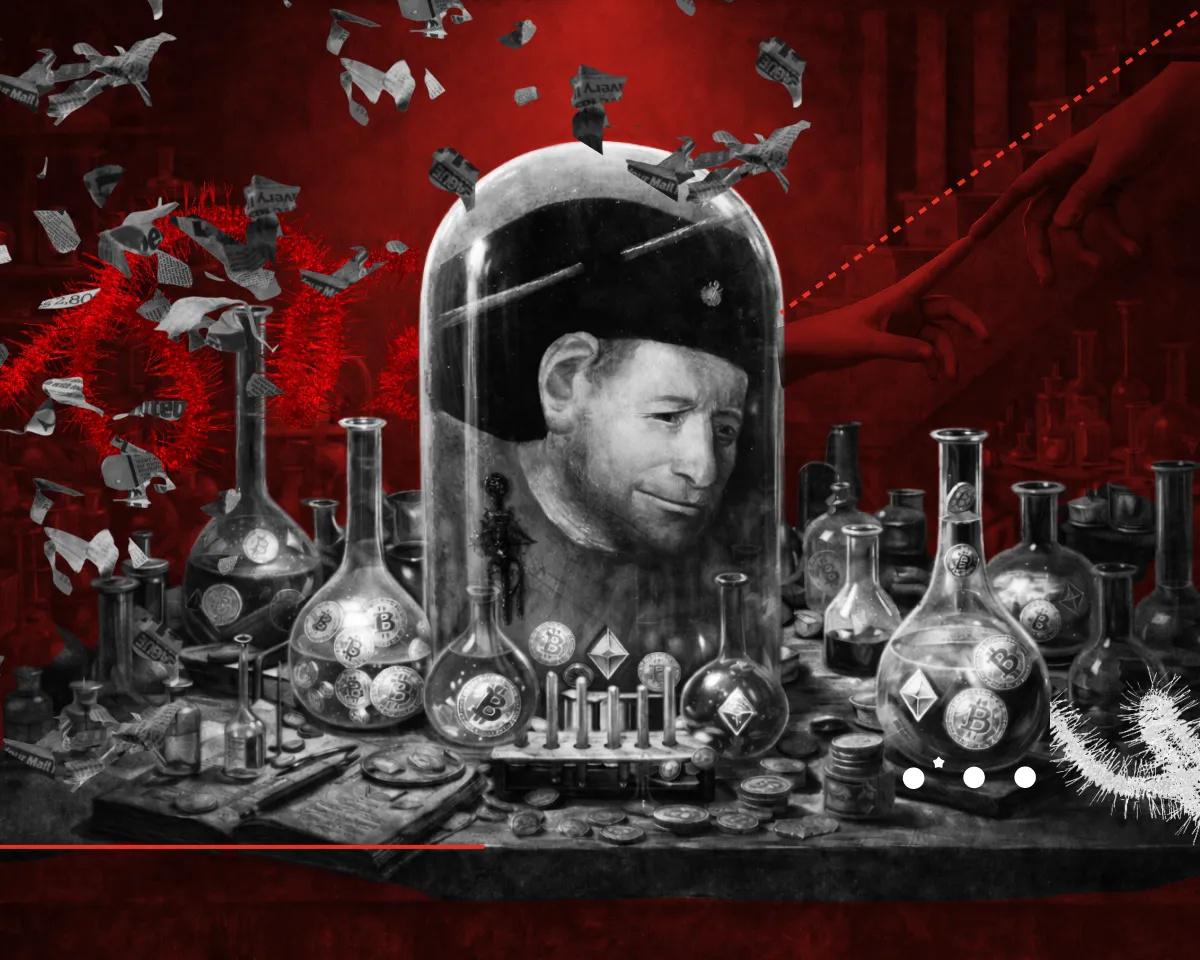
Today’s pupils and students enjoy entire ecosystems for learning and can choose future careers according to their interests. However, it was not always so, and even now access to knowledge remains a luxury for many. The head, temporarily detached from our colleague, the crypto‑polymath Aremefe, traces how education has shifted across eras—and why it still offers the safest investment.
How Indians Learned
Setting: Takshashila, Ancient India. 5th century BCE.
In the era before Buddhism, education in what is now India was largely practical. On one hand, brahmins studied sacred Hindu texts, rituals and philosophy. On the other, children of lower castes learned to till the soil, wield a sword or stitch shoes.
Sacred Hindu texts, rituals and philosophy occupied the Brahmins, while children of lower castes learned to till the soil, wield a sword or stitch shoes.
Learning began for all but Shudras with the initiation rite of upanayana. Specifically, with his wife’s consent, a father brought his son to a teacher so the boy might become a dvija—”twice-born”. The boy then had two fathers: one who brought him into the physical world and one who guided him into the world of knowledge. As the Laws of Manu declared:
“In the eighth year from conception one should perform the initiation for a Brahmin; in the eleventh from conception, for a Kshatriya; in the twelfth from conception, for a Vaishya. [The initiation] of a Brahmin who desires [to acquire] sacred knowledge may be performed in the fifth [year], of a Kshatriya who desires power, in the sixth, and of a Vaishya who desires wealth, in the eighth.”
Those who skipped initiation became outcasts and could not marry within their caste. Meanwhile, girls, with rare exceptions, were taught at home and only household management. The most admired quality in any woman was obedience.


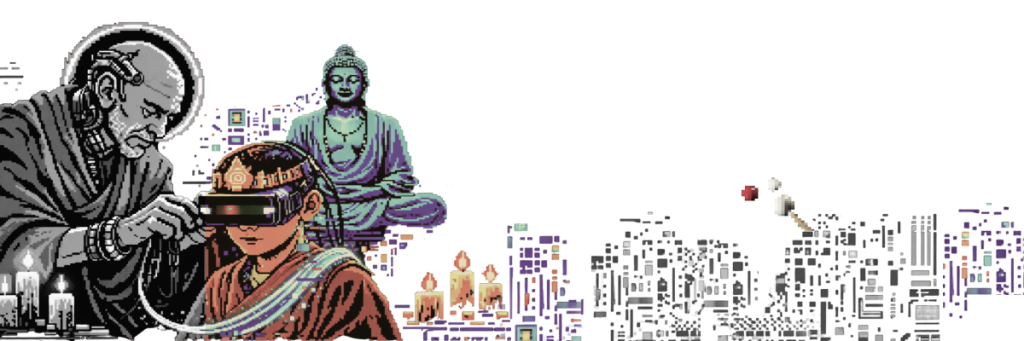
A man now known to all upended that order: Siddhartha Gautama, the Buddha Shakyamuni. He was born the former and became the latter. By breaking the Brahmins’ monopoly on religious authority, he spiritually levelled all people. Society leapt forward and, in its wake, education reformed: Sanskrit, built on Brahmi, became the leading language of northern India. Leave ideograms to the barbarians—we have an alphabet.
Roughly 300 years on, teachers began to receive payment. India moved to a two-tier system: tol (primary school) and agrahara (higher learning). Agraharas taught mathematics, geography, medicine, music and even the art of snake-charming.
How Romans Learned
Setting: Rome. 1st century BCE—5th century CE.
Wealthy families usually taught their daughters at home, while poorer girls learned alongside boys. A three-stage system—elementary, middle and advanced schools—took hold under Hellenistic influence. Pupils in elementary schools learned writing, reading and simple arithmetic, often from slaves. Grammar schools trained them in proper phrasing and textual interpretation, and also in astronomy, philosophy and music—now taught by freedmen using the first textbooks.
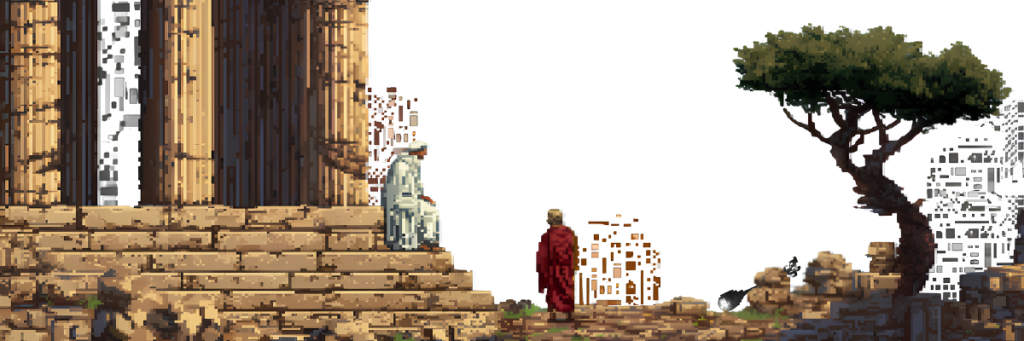
Howeber, fewer reached the third stage, the schools of rhetoric, for two reasons: distance and price. Such institutions were rare in the provinces and far dearer than grammar schools. But there one learned Greek if Roman, Latin if Greek, composition on set themes—and even gymnastics. Interestingly, free citizens taught, and slaves could also enter, but only with their owners’ consent.
Then, after Rome fell, many technologies and institutions vanished, decayed or changed beyond recognition. In particular, education, too, became predominantly ecclesiastical.
How Burghers Learned
Setting: Western Europe. 5th–14th centuries CE.
The Middle Ages could fill volumes, but our focus is education—at three stages: Early, High and Late.
In the Early Middle Ages things were bleak. Had the Buddha Shakyamuni seen it, he might have slapped his forehead and gone into deep meditation. Once again, education narrowed to a circle of initiates and centred on religion. Preachers served as teachers; memorisation and repetition defined instruction.
Latin, the psalms and church singing remained beyond the reach of all but a few. A child of wealthy parents might be sent to a monastic school, doomed to a life of service to God. By the standards of the time, not bad: food delivered, clothes laundered, hands kissed—had trams existed, the fare would have been free. But getting there took effort.
The High Middle Ages were livelier—universities appeared. People, it turned out, were different. One boy sang psalms badly but had a kind look and could tear up a young willow with one hand; he was sent to a lord’s court to learn arms, etiquette and horsemanship en route to knighthood and a portrait of his lady beneath his cuirass. Those inclined to intellect went to universities—for learning and religion. All seemed set: universities existed, knights were ambitious, power intact. But nothing lasts forever.
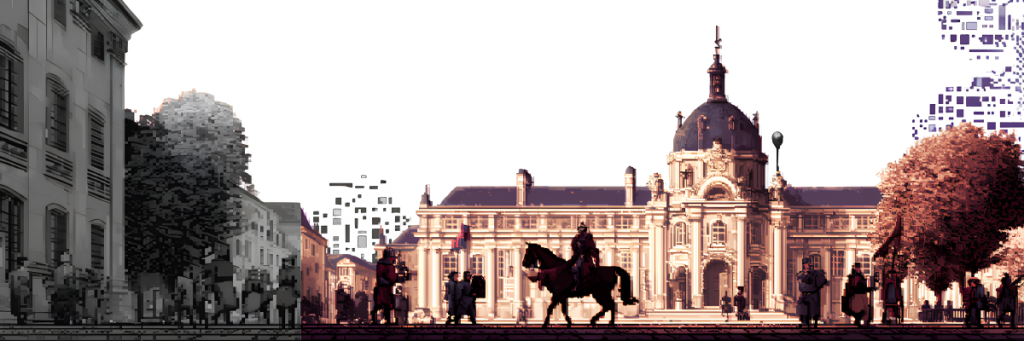
Firearms and the Black Death reshaped learning. With the advent of handguns, knights declined as a fighting force; the plague thinned Europe’s great cities. When it ebbed, the economy reset; hired merchants demanded triple for single, amassed fortunes and sent their children to study.
Surging demand bred supply: Vienna, Copenhagen, Aberdeen and other universities. Education, though, was still for elites—only now money was not the preserve of aristocrats.
Setting: Zatec, Bohemia. 15th century. London, England. 18th century.
As navigation improved and vagrants could be trained for the sea, Europeans discovered a new continent—America. Universities pored over the ancients; ignorance of Seneca’s Moral Letters to Lucilius was bad form.
The focus shifted from religious to general learning: geography, ethics, the rudiments of law. Gutenberg’s press whirred—those soot-blackened teacherly grimoires, handed down through generations, could be binned.
Education grew professional. Sir Thomas More posed a radical question for his day: why should access to knowledge be a privilege if a chain is only as strong as its weakest link?
But marvelling is not doing. To belittle More would be wrong, yet his works pale beside a true reformer of education: Jan Amos Comenius, the Czech writer and pedagogue. He was ahead of his time, seeking to teach through motivation, not punishment.
Thanks to him, the class-and-lesson model took shape. Schooling became regular and inescapable; textbooks became standard; teaching became a state profession. The separation of “pay for labour” from “payment for good” put an end to arguments that “knowledge is a divine gift” and therefore must be free.
More’s idea bore fruit—England introduced free schooling, vastly widening access. But the sirs wanted more: not just broadening knowledge, but making it universal and compulsory, and looking beyond secondary to higher education. They opened doors to children from low-income families and ethnic minorities—an unheard-of liberty for the time.
Comenius’s ideas were refined; learning became continuous. The system was pyramidal: lower grades had more subjects at lesser depth; middle grades fewer subjects at greater depth; upper grades profile subjects at maximum depth.
Bachelor’s and master’s degrees expanded as social elevators. A graduate of the arts might apprentice to a master; a doctor could open a practice; a master of law could enter government.
Everyone had a chance; few took it.
How Communists Learned
Setting: Kyshtym. 1910–1970.
Enough of foreign lands. Let’s jump through space and time to the Soviet Union.
The early post-revolution years were a breakthrough for education in Russia. The literacy campaign (likbez) launched in 1919; grades vanished from schools alongside many other experiments—soon scrapped under triumphant Stalinism. A strong ideological core now infused education’s natural-science and technical bent.
From 1918 to 1920, the authorities reorganized the Far Eastern, Nizhny Novgorod and Smolensk universities to prioritize cadres for industrialization and the army. Cutting deals with party policy, university leaders set up workers’ faculties and departments of socialism.
A rabfak allowed workers and peasants who had missed secondary school to catch up in three to four years and prepare for higher education. Departments of socialism produced ideological units who, devoting their lives to Marxist-Leninist theory, spread it among the masses like preachers.
Education almost always serves as a potent instrument of propaganda, but Soviet authorities raised this to a new qualitative level. Even after Stalin’s death and the denunciation of his cult, authoritarian ideology did not leave schools and universities: alongside traditional courses in political economy and the basics of Marxism-Leninism came mandatory subjects such as scientific communism and the history of the CPSU.
How Boomers Learned
Setting: Afanasyevsky Postik, Krasnodar Krai. Timelessness.
After the war, mores softened; children of White Guards could hold any university chair, not just in the natural sciences. The 10th–11th grades were a bridge to professional training. Given the USSR’s production focus, many more vocational colleges opened than universities. After Gagarin’s flight, the space sector—and with it engineering and military-technical specialties—became especially prestigious.
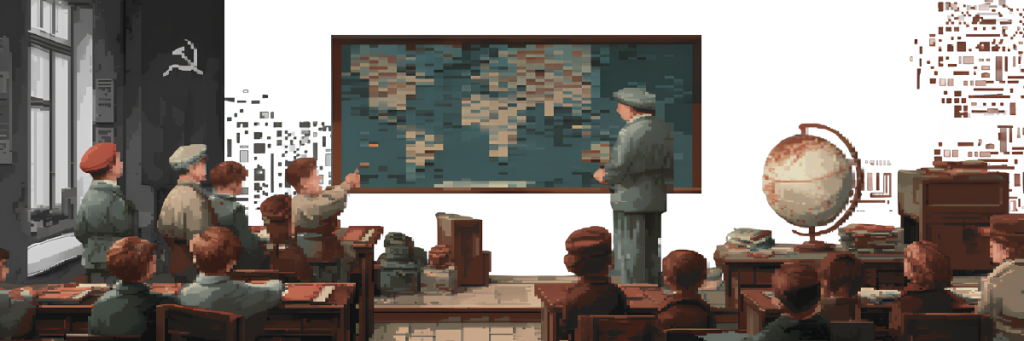
The USSR constitution guaranteed education to be entirely free and accessible to all social groups without gender distinctions. In practice there were surcharges for extended days, and some specialties had competitive entry—not everyone could make the cut. Understandable: there were not enough rockets for all aspiring cosmonauts. Another problem was the shortage of schools in the regions.
Overbearing bureaucracy hampered teachers. Paperwork and weak technical facilities lowered teaching quality, even if reporting took only 3–7% of working time.
How Gen Z Learned
Setting: Labubovo, planet Earth. First quarter of the 21st century.
We were taught much like the boomers, with one key difference: instead of the theory of capital we got practice from the start. Education is for everyone—expensive, cheap or free—but you still have to chip in for new curtains.
School programmes vary by profile: more physics and maths here, more IT there, and elsewhere no lesson starts until you do three laps on skis. Higher education has become more elite as costs soar. As a classic line has it: “The factories stand idle; the country is nothing but guitarists.”
The COVID-19 pandemic sped up distance learning, exposing a serious flaw. Designing a course for LMS takes time that is not funded by the state. Teachers are paid for contact hours, not for prep or marking. On the plus side, the system removes the drudgery of collecting exercise books and taking attendance.
Late Gen Zers favour high-tech schooling: QR codes in textbooks and smart boards in class. Technology has leapt ahead: 20 years ago a fifth-grader might flaunt a Siemens S65 with Bluetooth and 38 MB of memory; today no one blinks at a pupil with an Apple ecosystem—wireless earbuds, watch, phone and an NFC tag tucked in the shoe bag. For instance, graduates five years ago did not turn to LLM to write papers; today 86% of surveyed students use ChatGPT.

Gen Z now asks: is a five-year degree worth it if technology will soon leap again and make it redundant?
Hence online courses. (This is where an advert for an online school would go—but it won’t.) For a fee, and fast, you can learn to be something. All theory—bad; real practice—good.
The main dilemma: employers’ bias against online credentials versus applicants’ desire to earn quickly without years of study. In the end, what matters are a candidate’s actual skills, not the mode of learning. By law, medical, pharmaceutical, aviation and biotech degrees cannot be earned online—yet every year unlicensed dentists treat patients after watching YouTube lessons.
When the mountain will not go to Labubu, Labubu goes to learn the crypto trade. With employers ignoring diplomas and scalping yielding 1-2% a round, income depends only on your deposit. Crypto has thus powered self-education enormously. Yet volatility may fall and institutional investors may take over. Recently meme coins emerged as a dubious outlet—but today that door is shut.
If you opened it anyway and are wondering what to do with thousands upon thousands of SOL, note that some private universities accept crypto for tuition. These include Bentley University in the US, the University of Cumbria in the UK and the European School of Management and Technology in Germany. Not investment advice or financial counsel—but better this than another Panerai Luminor.
How They Teach in South Sudan
Formally, South Sudan also has universal schooling, yet by some estimates 80% of the population cannot read or write. The reason, said to be the civil war amid Dinka–Nuer conflict, is compounded by dire poverty, the inability to staff schools and to keep them safe.
Schools operate irregularly. There are only six universities nationwide, one private. The three top leaders at each institution are appointed by the president. Each university is headed by a rector with two deputies: one for academic affairs and one for administration and finance. Only one of the five public universities has a woman as rector.
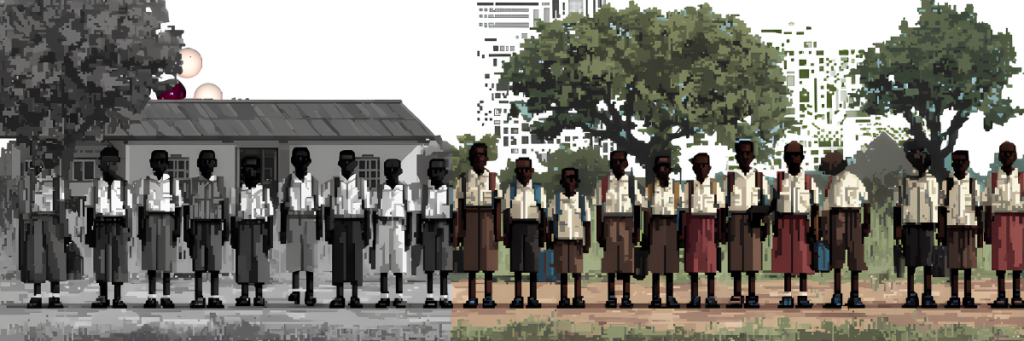
Many outstanding specialists have left South Sudan in search of better conditions. By July 2015 scholars there earned on average 35% less than peers in East Africa, triggering brain drain. The government funds higher education on the premise that graduates will later repay their debt to the country; that does not happen if the educated choose to work abroad.
There are no realistic preconditions for resolving South Sudan’s education crisis.
In Lieu of a Conclusion
Despite high technology, many regions lag in access to education as much as Europe did at the start of the first millennium.
Gender-based exclusion persists: South Sudan, the CAR, Guinea, Afghanistan, Pakistan, Yemen, Nigeria—these are just some of the places where girls can scarcely study because of local norms, systematic violence and economic hardship.
In developed countries a similar gap is class-based. With vocational training you might become a machine operator (a nod to the age of manufactures); with a higher degree you have a straight road to paperwork in a legal department—or even into a bank.
To adapt to society, you need secondary education; to gain skills, you need vocational training; to learn how to learn, you need higher education. These needs explain why schools, colleges and universities exist. Whether we might not need them is a story for another time.
Text: the head of Professor Aremefe