



White Castle hires robot chefs; Pokémon generator created by enthusiast, and other AI news
We strive to inform readers not only about events in the Bitcoin industry, but also to tell what is happening in adjacent technological fields — cybersecurity, and now the world of artificial intelligence (AI).
ForkLog AI has gathered the most important AI news from the past week.
- The Russian government approved an AI development plan in the regions.
- Human rights advocates found 25,000 cameras in New York monitoring residents in public spaces.
- In South Korea, a deepfake of a presidential candidate was created to attract young voters to the election.
- A member of the Idaho House developed a bill to ban AI from taking on a “personhood”.
- Eric Schmidt launched a $125 million fund for research into “problematic AI”.
- Study: people trust synthetic faces more than real ones.
- White Castle fast-food chain will hire robot chefs in 100 locations.
- An enthusiast created a Pokémon generator.
- Most important AI deals of the past week.
Russian regions and the Ministry of Digital Development have drawn up an AI development plan
Regional authorities in Russia, together with the Ministry of Digital Development, developed an AI development roadmap for 2022. The document has preliminary approval from the office of Deputy Prime Minister Dmitry Chernyshenko.
The plan contains 17 items. It includes the gathering by regions of anonymised data to train algorithms and ensuring access to them for local authorities. It also provides for growth of computing resources and the creation of mechanisms for forming science-and-production consortia to test AI.
Among the performers listed in the roadmap are “Sber”, the Ministry of Digital Development, the Ministry of Economy and the Ministry of Finance.
By December 2022, regional governments are to select the best AI projects.
The plan’s budget has not yet been approved.
Study: New York authorities monitor residents with 25,000 cameras
In New York, around 25,000 cameras with facial recognition were identified, most of which are located in ethnic minority neighborhoods. Experts said this “disproportionately threatens the rights of non-white residents”.
In January 2021, Amnesty International launched the Ban the Scan campaign, under which 7,000 volunteers checked 45,000 intersections and found 25,500 recording devices. According to researchers’ report, about 3,300 cameras are used by authorities and law enforcement.
Activists found that in the Bronx, Brooklyn and Queens there is the highest concentration of devices in areas with a high concentration of ethnic minorities.

Concentration of surveillance cameras across all five boroughs of New York. Data: Amnesty International.
Activists also explored the relationship between the number of cameras and police searches. They assigned each precinct a “surveillance level” according to the number of government cameras per 1,000 residents. Areas with high surveillance levels were more frequently subjected to “stop-and-frisk” police practices.
Idaho to ban AI from obtaining “personhood”
The Idaho State House of Representatives’ State Committee approved a bill that would ban artificial intelligence from obtaining the status of “personhood.” The measure has already been brought to a vote.
The bill is aimed at preventing any future attempts to grant rights to non-human objects or animals.
According to state Representative Tammy Nichols, some groups want to attribute “personhood” to non-human objects to restrict access to certain natural resources.
“Children should not yield to artificial intelligence or be on a level with bodies of water and trees,” she added.
South Korea created a deepfake of a presidential candidate
In South Korea, a deepfake of a presidential candidate was created to mobilise young voters for the March 9, 2021 election.
The developers used around 20 hours of audio and video content featuring more than 3,000 statements by the politician Yoon Suk-yeol. They created a digital AI avatar named AI Yoon that resembles the real candidate and can joke.
Eric Schmidt launched a $125 million AI research fund
The former Google CEO Eric Schmidt will launch a charitable fund of $125 million to finance AI research.
The project, named AI2050, is aimed at solving “complex problems” in the field, including algorithmic bias, misuse, harm to society, geopolitical conflicts and the scientific limits of the technology. The initiative’s goal is to develop AI by 2050 that, in general, will benefit humanity.
The fund, chaired by Schmidt and Google’s new head of the Technology and Society group James Manyika, will over five years allocate funds to individual researchers not employed by corporations.
In New York, AI issued the first fines to owners of noisy cars
New Yorkers began receiving notices from the Department of Environmental Conservation (DEC) about exceeding the permissible level of car noise.
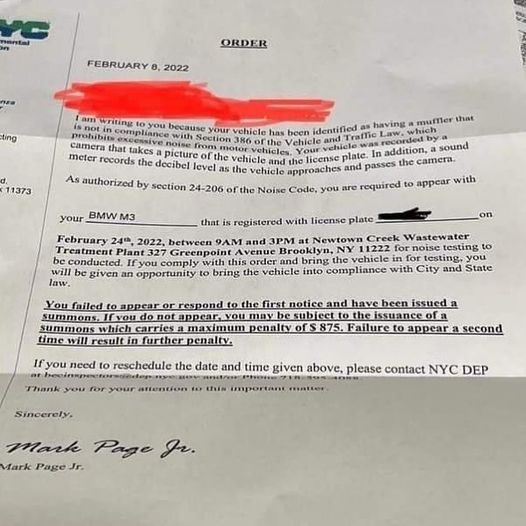
City-installed cameras and microphones automatically log the noise level of passing vehicles. If the noise level exceeds the permitted value, an algorithm recognises the number plate and emails the driver a notice.
The notice instructs the owner to bring the car to a department-designated location for inspection and muffler installation. Failure to comply may lead to a fine of up to $875 and additional penalties for ignoring the summons.
According to the DEC, by June 30, 2022, New York authorities will reassess the viability of the program, after which it may be expanded or discontinued.
AI annotator arrives in Google Docs
Google added to the document service a feature for automatically creating summaries.

The AI-powered tool analyzes multi-page text, highlights important information and generates a brief summary. Users can also create summaries manually.
Study: people trust synthetic faces more than real
Researchers from Lancaster University and UC Berkeley conducted a study and found that synthetic faces evoke more trust in people than real ones.
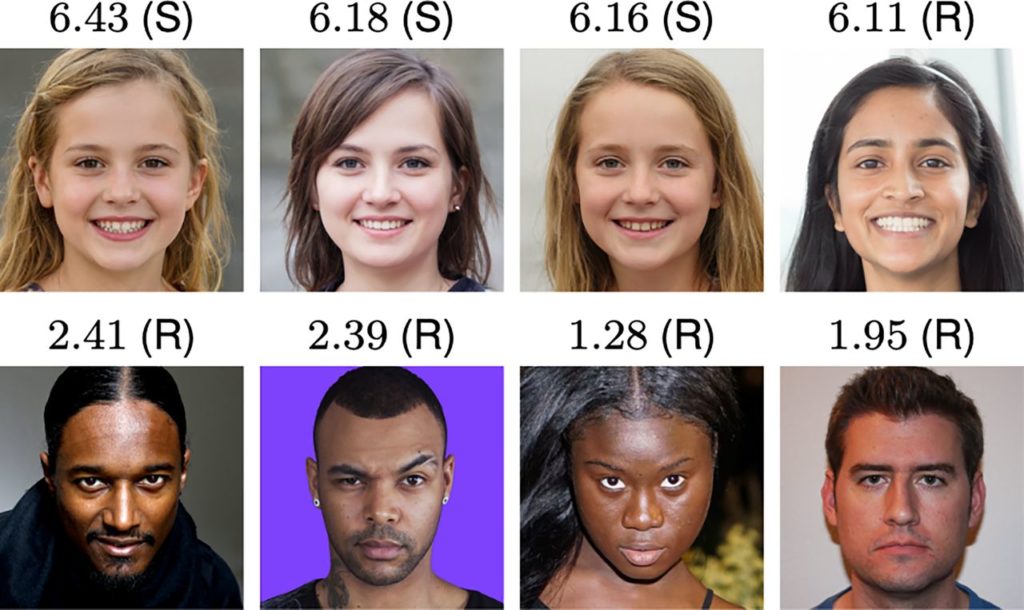
Researchers asked participants to distinguish AI-generated StyleGAN2 faces from photos of real people.
In the first experiment, 315 participants classified 128 images out of 800 available. Their accuracy was 48%. In the second, 219 new subjects, pre-trained to spot fakes, evaluated 128 images from the same dataset. Their accuracy rose to 59%.
In the third experiment, 223 respondents were asked to rate 128 faces for “trustworthiness” on a scale from 1 (very untrustworthy) to 7 (very trustworthy). As a result, trust in synthetic images was 7.7% higher.
White Castle hires robot chefs
In 2022, Miso Robotics will launch Flippy 2 robot chefs in 100 White Castle burger joints.
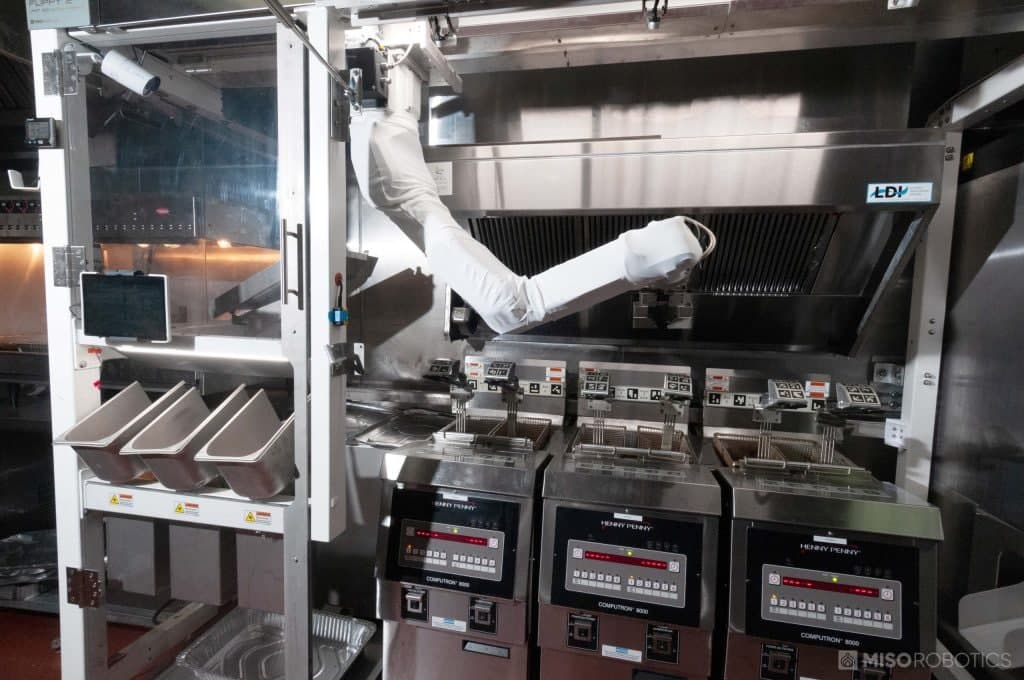
The device uses AI to identify the type of food, place it in the correct fry basket, cook it, and place it in the hot-holding area.
According to the company, Flippy 2 can process 60 baskets per hour or about 300 burgers per day.
Enthusiast creates Pokémon generator
A machine-learning engineer developed the Nokémon neural Pokémon generator.
He used a model to generate images from text descriptions using OpenAI’s DALL-E. The engineer trained the algorithm on images of all Pokémon along with their attribute types.
In the web app, users can specify a character or its element, after which AI will generate a suitable variant. ForkLog AI used Slowpoke as the base, and here is Nokémon’s output.

Most important AI deals of the past week
From February 13 to 19, 2022, AI startups drew in more than $166 million. Here are the most interesting deals.
- Overview raised $10 million to support an AI platform for visual defect detection on a manufacturing line.
- Exodigo raised $29 million to grow its software team building 3D maps of subterranean spaces and structures.
- Instrumental raised $50 million for its data collection and processing platform for manufacturing.
- Raydiant raised $30 million to accelerate digital signage for stores.
- Nanonets raised $10 million to scale software for automating document workflows.
- Voila raised $6 million for AI-powered storefronts for online creators.
- DuploCloud raised $15 million to develop and market IaC products.
- Atommerce raised $16.7 million to scale its mental-health platform.
Also on ForkLog:
- Co-founder of OpenAI allowed for consciousness in artificial intelligence.
- Elon Musk’s Neuralink was accused of cruelty to animals.
- Texas filed a lawsuit against Meta over the use of facial recognition technology.
- Artificial intelligence has learned to flirt and to confess love.
- American senators urged to find an alternative to the ID.me facial-recognition system.
- Engineers sped up training of neural networks on CPUs by more than twofold.
What to read this weekend?
In ForkLog AI’s new educational cards we explain what recommender systems are, how they work, where they are used, and their advantages and drawbacks.
Subscribe to ForkLog’s Telegram news: ForkLog AI — all news from the AI world!
Рассылки ForkLog: держите руку на пульсе биткоин-индустрии!