


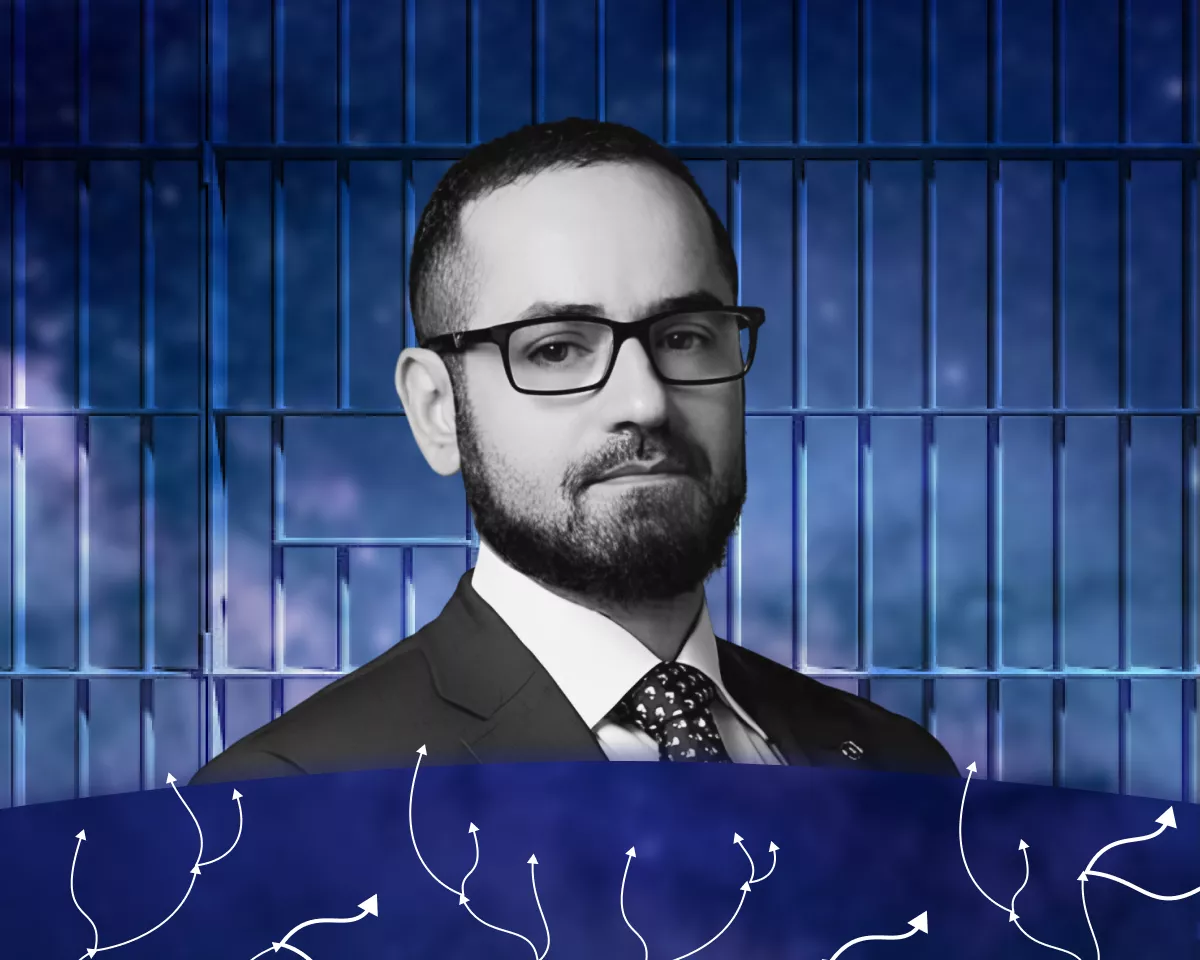
Why Tigran Gambaryan’s arrest matters beyond Binance
On February 26, 2024, Nigerian authorities detained Binance’s vice president for global intelligence and investigations, Tigran Gambaryan. Half a year on, he remains in custody, and the executive’s family says his health has been seriously harmed.
A day before the detention, the executive, together with the exchange’s director for West and East Africa, Nadeem Anjarwalla, arrived in the country to discuss the company’s current problems with the authorities.
ForkLog recalls who Tigran Gambaryan is and examines why his arrest concerns more than just Binance.
Career track
Little is known about Gambaryan’s early biography. He began his public-sector career as an auditor at the CDTFA, where he investigated tax violations. Far more information is available from his time at the IRS.
According to his page on LinkedIn, Gambaryan worked there from 2011 to 2021. He took particular interest in cases involving cryptocurrencies.
“He was an innovator in investigating things that very few people in the country knew about […]. I do not think anyone has had a greater impact on such investigations,” said former prosecutor Will Frentzen in an interview with Wired.
As a federal agent, Gambaryan investigated the actions of two former Drug Enforcement Administration employees — Shaun Bridges and Carl Force — who worked undercover in the Silk Road case. It later emerged that they themselves were involved in a criminal scheme and seriously abused their powers.
The work of the investigative team, which included Gambaryan, resulted in sentences for the ex-agents: Force received 6.5 years (extortion, money laundering and obstruction of justice), Bridges got nearly six years for stealing bitcoins from a darknet-market dealer and money laundering, and later faced additional charges.
The next high-profile case involving Gambaryan concerned the exchanges Mt.Gox and BTC-e. The investigation found that bitcoins stolen from the first platform were moved to wallets belonging to BTC-e administrator Alexander Vinnik, and then to the exchange itself.
The probe led to Vinnik’s arrest in Greece. In August 2022 he was extradited to the United States, and two years later he pleaded guilty to a money-laundering conspiracy via BTC-e.
“The long-standing investigation was supported by numerous former prosecutors and investigators from several agencies, including IRS-CI Special Agent James Heid and former IRS-CI Special Agent Tigran Gambaryan,” noted representatives of the U.S. Department of Justice in May 2024.
By then Gambaryan had already been in a Nigerian prison for several months.
How Nigeria became a trap
In September 2021 the cryptocurrency exchange Binance announced that it had hired Tigran Gambaryan as vice president for global intelligence and investigations.
A year later, Binance became the first company in the industry to join the non-profit NCFTA, which focuses on identifying and neutralising cybercrime threats. At the time, the executive said the success of the crypto industry depends on close cooperation between the sector and law-enforcement and other government agencies.
Adhering to that approach, Gambaryan ultimately decided to address the exchange’s problems in Nigeria. They began back in June 2022 — in a comment to ForkLog, Binance representatives noted that after the regulator published rules requiring crypto platforms to obtain permits, the company approached the local SEC about the licensing process but received no reply.
In June 2023 the Commission ordered the exchange to stop soliciting Nigerian investors, and a month later declared Binance’s activities in the country illegal.
According to a WSJ article, Gambaryan appeared in Abuja in early January 2024 — a month after the exchange received a letter from the chairman of the Financial Crimes Committee requesting attendance at a public inquiry. As part of a company delegation, he met local officials who expressed concerns about violations of AML rules and tax evasion.
Sources for the newspaper called the trip “scary”. According to them, one official suggested delegation members faced detention. The same day, a Nigerian lawyer working with Binance named the cost of settling the issues — more than $100m, said three people familiar with the talks.
WSJ’s interlocutors clarified that after this Gambaryan and his colleagues cut short the trip and left Nigeria. However, a month later the vice president decided to return. The newspaper hints this was his decision, and Binance supposedly received assurances from local officials about the executive’s safety.
From vice president to detainee
Hostility from Nigeria’s government intensified. The authorities ordered telecoms to block access to certain platforms, including Binance. And in early March it emerged that they considered the exchange responsible for the depreciation of the NGN.
“People on the Binance platform are fixing the [NGN] exchange rate, which quickly affects Nigeria’s economy at a time when the country is trying to stabilise it,” presidential adviser Bayo Onanuga said at the time.
This information surfaced after media reports of the detention on February 26 of unnamed company executives. In an interview with the BBC, presidential spokesman Zakari Mijinyawa said exchange employees were under investigation and “are being questioned in an investigation by security agencies on foreign exchange market regulation.”
Only on March 12 did WSJ report that the detainees were Gambaryan and the exchange’s director for West and East Africa, Nadeem Anjarwalla. According to the paper, they arrived in Abuja on February 25 at the authorities’ invitation. After their first meeting they were taken to hotels, told to pack, had their passports confiscated and were moved to a “guesthouse” run by Nigeria’s National Security Agency.
At the end of March it became known that Nigerian authorities accused Anjarwalla, Gambaryan and Binance Holdings Limited of tax evasion, operating an unregistered business and money laundering.
On March 22, Anjarwalla escaped custody, but law enforcement tracked him down in Kenya and agreed his extradition. On April 8 a court detained Gambaryan, who pleaded not guilty.
To a wheelchair in six months
In May Reuters reported that Gambaryan’s condition had sharply worsened, preventing him from attending a scheduled hearing. His lawyers cited malaria and the need for comprehensive medical care. According to Binance’s chronology, held by ForkLog, the executive fainted at the May 23 court session.
A month later, U.S. Representatives French Hill and Chrissy Houlahan visited him. They said he was suffering from malaria and bilateral pneumonia but was being denied access to quality treatment. Officials from the Nigerian government quickly rebutted those claims.
In August Binance CEO Richard Teng reported a rapid deterioration in Gambaryan’s condition. His wife, Yuki, said he was suffering from pneumonia and tonsillitis and, due to an aggravated herniated disc, could not walk. The authorities refused to provide him with a wheelchair. In early September, Gambaryan appeared at a hearing on crutches and, at one point, according to the family, broke down in tears from pain in the courtroom.
“This is fvcked uppp”
Binance executive cries out in Nigerian court. pic.twitter.com/ZS0qNVpg86
— @????????????? (@OneJoblessBoy) September 2, 2024
Prosecutors from the Economic and Financial Crimes Commission insisted the executive was not ill and had refused treatment. In a statement received by ForkLog from Gambaryan’s family representatives, it says he needs a tonsillectomy and is forced to take blood thinners to prevent clots, because the hernia has left him “bedridden”.
“The truth is that the prison has been hiding his medical records for months, and even in the partial records they finally released today [2 September], it says Tigran needs surgery. They cannot continue to play these games with my husband’s life,” Yuki Gambaryan stressed in a message passed to ForkLog.
In a statement on September 13, she emphasised that the prison “is refusing medical treatment, likely to avoid confirming his condition,” and urged the authorities to act:
“And I ask the U.S. government to officially recognise that Tigran has been wrongfully detained, and to take immediate action against the Nigerian government if they do not release him.”
When the editors tried to contact Nigeria’s foreign ministry, the email bounced back stating the “recipient’s mailbox is full.”
Binance’s fight
In April Binance appealed to Nigeria’s authorities not to prosecute its executive, stressing that he has no decision-making authority at the company. The platform called the accusations “utterly baseless.”
Exchange representatives noted that Gambaryan responded to more than 600 information requests from Nigerian law enforcement or related to local investigations. The data provided helped uncover “numerous crimes,” including money laundering and kidnappings, and led to the freezing of more than $400,000.
Earlier the company announced it would cease Nigerian naira services. It is unknown whether the platform responded to the authorities’ demand to hand over data on all users from Nigeria and their transaction histories.
Those steps proved insufficient — as of September 13, Gambaryan remains under arrest.
In a comment to ForkLog, Binance representatives stressed that Nigeria “does not need to detain Tigran” to resolve any issues.
“We continue to urge the government of Nigeria to allow Tigran to return home and continue our discussions. Our recent agreements with Brazil and India demonstrate that historical issues can be resolved through constructive dialogue and adherence to legal standards. This is the international standard of doing business,” the company said.
The U.S. response
In June, tax charges were dropped against Gambaryan and Anjarwalla, but they remain defendants in a money-laundering case. The same month, 108 former U.S. federal prosecutors and agents wrote a letter to Secretary of State Antony Blinken demanding help to secure the Binance executive’s release.
Earlier, members of the U.S. Congress urged President Joe Biden to intervene in the exchange’s dispute with Nigeria’s authorities. They expressed concern for the life of the former government official and noted that local authorities were not providing him with proper medical care.
This is corroborated by Hill and Houlahan, who after visiting the prison appealed to the U.S. embassy to facilitate Gambaryan’s humanitarian release, given “the horrific conditions of the prison and his health.”
Over the past six months there has been no public statement from the State Department or the White House — at least, the editors found no such press releases. The foreign-policy department did not respond to ForkLog’s request to comment on what actions are being taken to resolve the situation.
Almost a week after the request, the NYT ran a story saying that in May Secretary of State Antony Blinken raised the issue in a conversation with his Nigerian counterpart. Other diplomats, including the U.S. ambassador to Nigeria, urged Gambaryan’s release in private talks with the country’s president, and the heads of the finance and trade ministries, as well as the attorney general.
Officials who spoke to the newspaper clarified that since June the State Department has privately urged the authorities of the African country to release the Binance representative. One of the interlocutors added that the U.S. government “still to some extent believes in Nigeria’s judicial system.”
The journalists recalled that the country had long been considered a close ally of Washington and the second-largest U.S. trading partner in Africa.
Yet some U.S. officials continue to demand more attention to the situation and more decisive measures. In July, Representative Rich McCormick urged that Gambaryan be declared a hostage. On September 11, his colleague Hill said it is necessary to “press harder” on Nigeria’s government.
Tigran Gambaryan is not being held by Iran or Russia — he is being held by our supposed friend, Nigeria.
We need to press harder. The Nigerian government must understand that the continued wrongful detention of Tigran is putting our relationship in jeopardy.
Watch more ⬇️ pic.twitter.com/S8ylTzqbru
— French Hill (@RepFrenchHill) September 11, 2024
Where is the community?
During the six months of Gambaryan’s detention, the cryptocurrency community has shown scant interest in the issue. On X there were isolated calls to free the Binance executive, but the story did not spark widespread debate.
From monitoring X over recent months, beyond the media and Teng, a handful of posts stand out from industry veteran and well-known Bitcoin developer Jameson Lopp.
Tigran Gambaryan, former US federal agent and crypto crime investigator, has been detained by the Nigerian government for 6 months in inhumane conditions that are causing his health to fail. Free Tigran! pic.twitter.com/0fmfvewYDH
— Jameson Lopp (@lopp) August 26, 2024
Beyond the consequences for Gambaryan himself, the community’s detachment carries risks for the industry. This case could become a pattern — and at least in Nigeria the trend is visible.
On September 11 it emerged that the EFCC had, through a court, frozen 22 bank accounts of USDT sellers on the exchanges Bybit, KuCoin and others, totalling 548.6m NGN ($330,000).
Investigators believe the traders manipulated the market by artificially lowering the national currency’s rate, and that the platforms contributed to its devaluation. Among the complaints against the exchanges is the familiar failure to comply with anti-money-laundering rules from the Binance case.
Conclusion
The arrest of Tigran Gambaryan in Nigeria is an alarming signal for the cryptocurrency industry and for international companies operating in regions with unstable legal conditions.
This story calls for a united community and more active government engagement so that the precedent does not become the norm. Perhaps the lack of broad pressure from the industry and society allows Washington to wait so as not to strain relations with Nigeria. As a result, instead of comprehensive support, there are only isolated calls for action from both officials and the community.
If nothing changes, Gambaryan will be forced to continue the fight alone, relying only on his family and lawyers.
Рассылки ForkLog: держите руку на пульсе биткоин-индустрии!