




In 2025, cryptocurrency liquidity ceased to be evenly distributed, concentrating mainly in Bitcoin, Ethereum, and a few other major coins. This is according to a report by Wintermute, as reported by The Block.


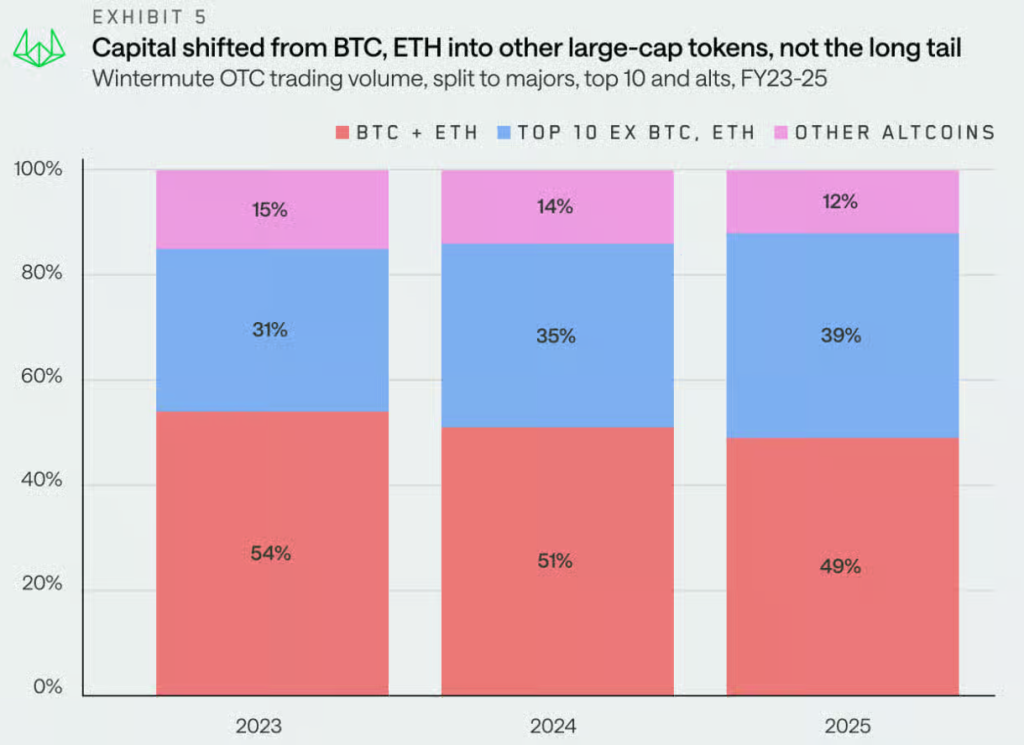
Over the past two years, the share of altcoins in total crypto liquidity fell from 15% to 12%. Researchers used data from over-the-counter (OTC) markets in their analysis.
The shift in capital flow structures has led to a departure from previous cyclical models, the company noted.
This situation arose amid the active entry of large institutional players into the market, including asset managers with ETFs. They primarily direct capital into more stable and time-tested cryptocurrencies.
Additionally, Wintermute pointed out the shortening duration of altcoin rallies. In 2025, the average growth period for “alternative coins” was approximately 19 days, compared to 61 days in 2024.
Experts also noted a change in the approaches of major counterparties to executing trades. According to the company’s analysis, institutional participants have shown less confidence in price direction and more tactical positioning, guided by news headlines.


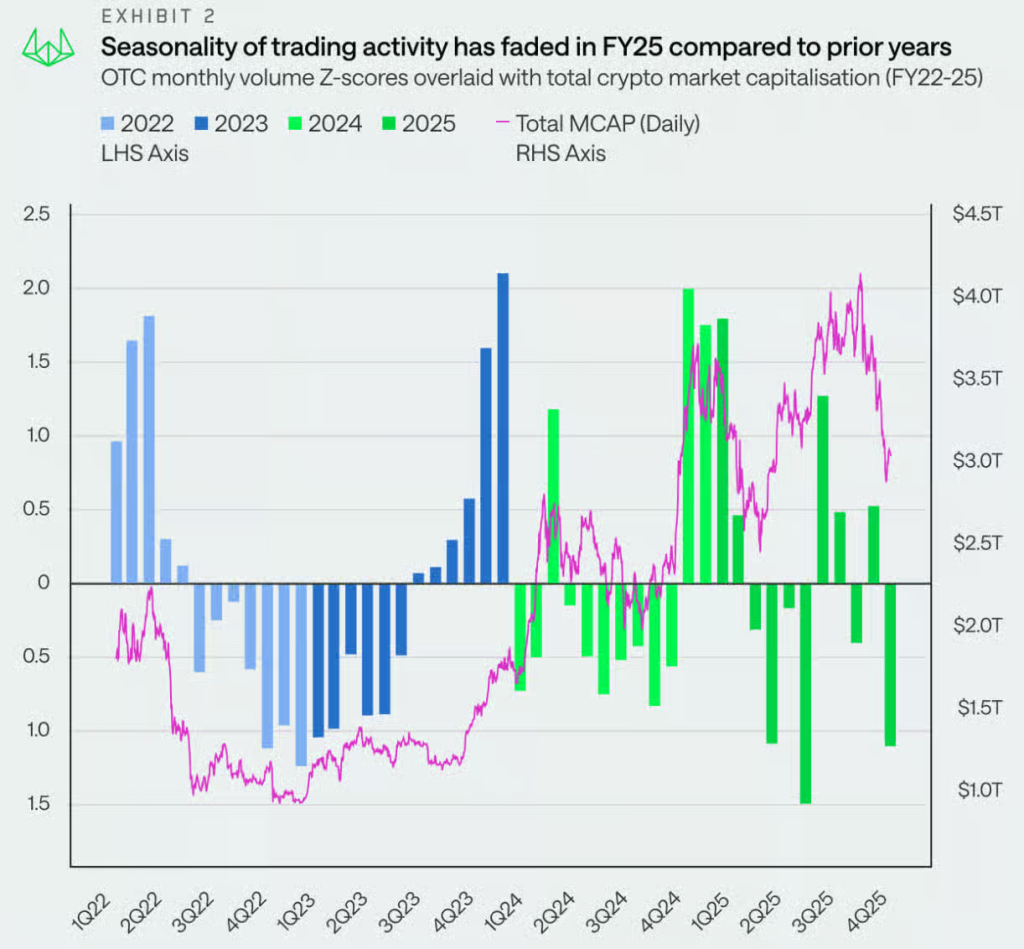
Regarding derivatives, Wintermute noted the expansion of OTC structures. There is growing use of CFDs as a capital-efficient way to access a broader set of underlying assets.
Options have also become a primary tool for managing crypto portfolios.
According to Wintermute, the paths to ensuring liquidity are now as significant as the overall risk attitude. Thus, future dynamics depend on whether capital will expand beyond a few major assets or remain in the upper market segment.
While renewed interest from retail investors could still attract new funds and stimulate altcoin rallies, Wintermute considers such a scenario unlikely.
Earlier, MN Fund founder Michaël van de Poppe stated that Bitcoin could surpass the psychologically significant $100,000 level by the end of January if it manages to hold above $92,000.