



The native token of the ZKsync L2 network (ZK) has been listed on several major cryptocurrency exchanges, including Binance, Bybit, Gate.io, and KuCoin. At the time of writing, the coin is trading at approximately $0.25.


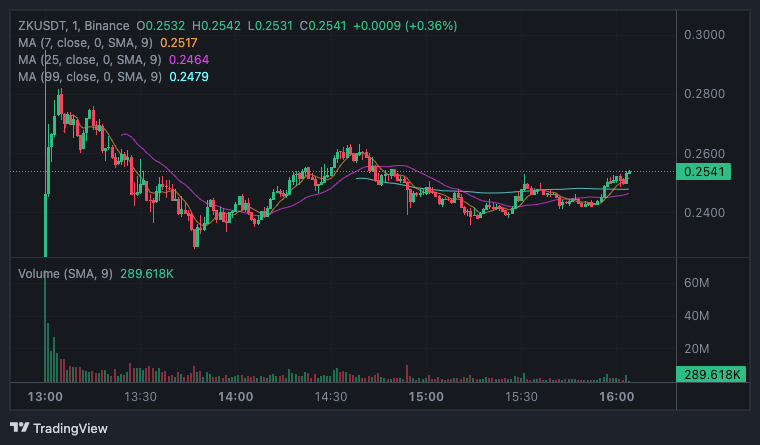
According to CoinGecko, ZK’s market capitalization has surpassed $910 million with a fully diluted valuation (FDV) of around $5.2 billion.
Approximately six hours post-launch, the trading volume of the coin reached $470 million.
The total issuance of the project will be 21 billion ZK, but currently, only 3.675 billion coins are in circulation. The majority were distributed through an airdrop to the community, which allocated 17.5% of the tokens.
The remaining ZK will be unlocked over time through ZKsync Foundation’s ecosystem initiatives and the governance model of ZK Nation. Investors will receive 17.2%, while the Matter Labs development team will get 16.1%.
The ZK airdrop was met with mostly negative reactions from network participants, as only 13% of wallets were eligible for the distribution, with most being identified as “sybils.”
As is often the case, the token distribution was accompanied by a surge of scammers. According to Blockaid analysts, the number of malicious decentralized applications increased “fivefold” following the launch of the airdrop checker.
⚠️ Are you excited about @zksync‘s $ZK airdrop? So are the scammers!
Blockaid has observed a massive uptick in malicious dApps impersonating the ZkSync eligibility checker, with a 5X increase on the day the checker was released. pic.twitter.com/tmW1xPHed0
— Blockaid (@blockaid_) June 13, 2024
Typically, criminals created fake accounts on X and spread phishing or other fraudulent software in comments under official ZKsync posts.
Developers’ Justifications
In response to community criticism, ZKsync stated that the project employed an “explicit” method for detecting “sybils” in addition to a “unique distribution design.”
We were overwhelmed with the flow of information and emotions in the first days after announcement. We focused initially on listening, verifying the methodology to exclude any mistakes, collecting feedback and trying to systematize it.
We then started to write a comprehensive…
— ZK Nation (@TheZKNation) June 15, 2024
“We were overwhelmed with the flow of information and emotions in the first days after the announcement. Initially, we focused on listening, verifying the methodology to exclude errors, collecting feedback, and trying to systematize it. Then we began writing a detailed FAQ, but keeping up with everything at once was impossible,” said ZK Nation.
On June 15, developers updated the frequently asked questions section, explaining more specific airdrop criteria. It also discussed efforts to combat multi-accounting and bots.
“[Sybils] fund accounts from various addresses, never interact with each other, use random amounts, and software to randomize daily human behavior patterns, and even perform project-specific actions (e.g., using ZKsync payment masters),” the statement said.
According to the team, most such bots are “virtually impossible to detect even with the most advanced countermeasures.”
However, overly aggressive filtering could deprive many regular users of the distribution, developers believe. Therefore, they decided to reward users who are “highly likely” to be organic.
“Every distribution will have sybils. However, for every bot that can be identified, there are hundreds of exceptions,” concluded ZKsync.
In the near future, a token distribution for the L2 project Taiko is expected to occur alongside the mainnet launch.
According to The Block, since the beginning of the year, participants in the crypto industry have received ~$4 billion in various coins through airdrops.