Is Bukele no longer the ‘crypto president’? Why El Salvador is cutting a deal with the IMF
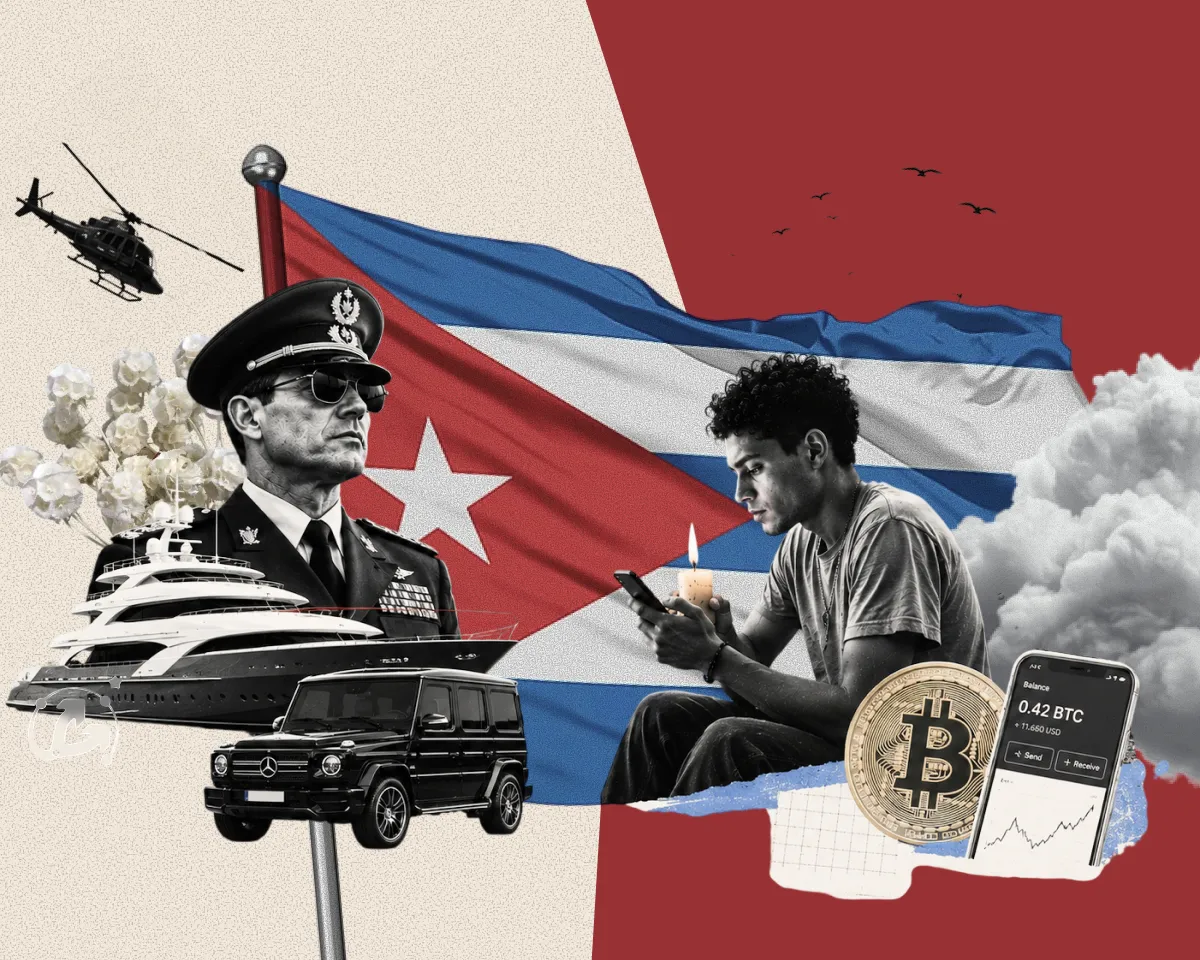
In recent days, reports have emerged that El Salvador will recalibrate its cryptocurrency policy in ways that do not favour bitcoin holders. The government has likely taken these steps under pressure from the International Monetary Fund (IMF).
Oleg Cash Coin examines why the republic—once a symbol of bitcoin’s ascent onto the state stage—finds itself agreeing to compromises.
Expectations and reality
El Salvador, the “country of the rising bitcoin,” will make concessions to soften its crypto policy to secure an IMF loan. According to the Financial Times, the authorities will scrap provisions mandating acceptance of the “digital gold” as a means of payment, likely leaving the decision to companies.
By compromising, El Salvador plans to obtain $3.3bn in financing from the IMF, the Inter-American Development Bank and the World Bank. An agreement is expected within the next two to three weeks.
The headline sounds dramatic, as if El Salvador had renounced bitcoin. In reality, the negotiations have been going on for a long time, and crypto policy is only a small part of the conditions set by the multilateral lenders.
El Salvador is often described as the first state to adopt bitcoin as an official means of payment. Yet Japan has had a similar law since 2017, which has never bothered anyone, including the IMF.
The difference is that Japan is a highly developed economy with robust regulatory machinery. El Salvador, by contrast, is socially, politically and financially fragile, with public debt around 80% of GDP.
Doubting the country’s ability to pay, the IMF and other international bodies quickly began talks with President Nayib Bukele about unwinding his bitcoin strategy.
Moreover, by using the US dollar as its national currency, El Salvador can hardly claim an independent crypto policy when circumstances demand otherwise. The country effectively lacks the means to issue its own money, and that imposes constraints.
Bukele is in a very different position from Argentina’s President Javier Milei, who governs with his “people’s crypto policy,” leaving room for manoeuvre.
Biden and Trump
Talks about El Salvador’s debts and their restructuring resumed in late summer 2024, shortly after Joe Biden exited the presidential race. Around the same time Bukele gave a long interview to Time in which he gently acknowledged that bitcoin had not delivered as a “currency for everyone,” even if it had found followers at home. Around then the IMF also reached an understanding with Bukele on concessions.
“Progress has been made in negotiations on a Fund-supported program focused on strengthening public finances, as well as reducing risks related to bitcoin,” — said an IMF statement on August 6, 2024.
It seems Donald Trump’s figure became an important element in the understandings between the IMF and El Salvador. And the issue is not really bitcoin, but a growing public debt that must be financed without being offset by the budget. The smallest country in Central America simply cannot solve this on its own.
Even with bitcoin’s spectacular rise, there is no reason to assume the stash of digital gold can pay down old loans. A week after Trump’s victory, reports said El Salvador launched an offer to buy back $2.5bn of debt maturing through 2034.
Shortly before that, Bukele met Elon Musk. The billionaire received El Salvador’s president at the height of Trump’s campaign to discuss artificial intelligence and robotics (what else).
El Salvador and new debt
On macro indicators, El Salvador is not doing as badly as it might seem at first glance. But neither have conditions improved markedly—and none are in sight.
Even as GDP has grown for years, the budget has remained persistently in deficit, inevitably feeding the size of public debt. And Bukele, crucially, has no “printing press” to paper over the gaps.
In 2021 the country’s GDP was $29bn against $25.5bn of debt. In 2023 those figures were $34bn and $28.8bn. Despite seemingly positive dynamics in both GDP and debt, the budget deficit stayed above 2.2%.
According to Arkham, Bukele’s bitcoin strategy has helped the state accumulate almost 6000 BTC worth $580m as of December 10, 2024. Relative to public debt, that is about 2%—far from covering any meaningful share.
Since 2021, El Salvador has indeed become a symbol of the applicability of the HODL strategy not only for individuals but for entire states. Yet that does not mean Bukele’s approach has delivered notable economic improvements.
The bitcoin bonds discussed for years were never issued, and the mining business remains elusive. Perhaps it is simply a slower process than many expected.
As Tether’s Paolo Ardoino noted in early 2023, judging El Salvador’s success after such a short period is shortsighted given a global environment that changes quickly and could fall apart within a few years.
Arguably, the republic could have fared much worse without adopting bitcoin, but there is little evidence that its economy has fundamentally improved.
Рассылки ForkLog: держите руку на пульсе биткоин-индустрии!