Silicon Tanks: Nancy Fraser’s feminist view of digital capitalism
“Silicon Tanks” is a ForkLog series profiling the intellectuals, scholars and visionaries who, in our view, have shaped the internet and digital finance—or, conversely, have subjected them to critique. The subject of today’s piece is the philosopher Nancy Fraser, who coined the concept of “cannibal capitalism” to describe the link between technological progress, Big Tech, economic elites and old forms of exploitation in a newly attractive wrapper.
The illusion of progress, or what’s wrong with identities
The introduction of artificial intelligence into production, the ESG agenda, and policies of diversity and inclusion can all look like the signs of a new, fairer capitalism. Some left accelerationists, for example Alex Williams and Nick Srnicek, claim that progress can be used “against capital”. In their programmatic essay #Accelerate: Manifesto for an Accelerationist Politics (2013) they state that accelerating technological development promotes automation of production, which should lead to shorter working hours and, in the longer term, to the deconstruction of the labour market.
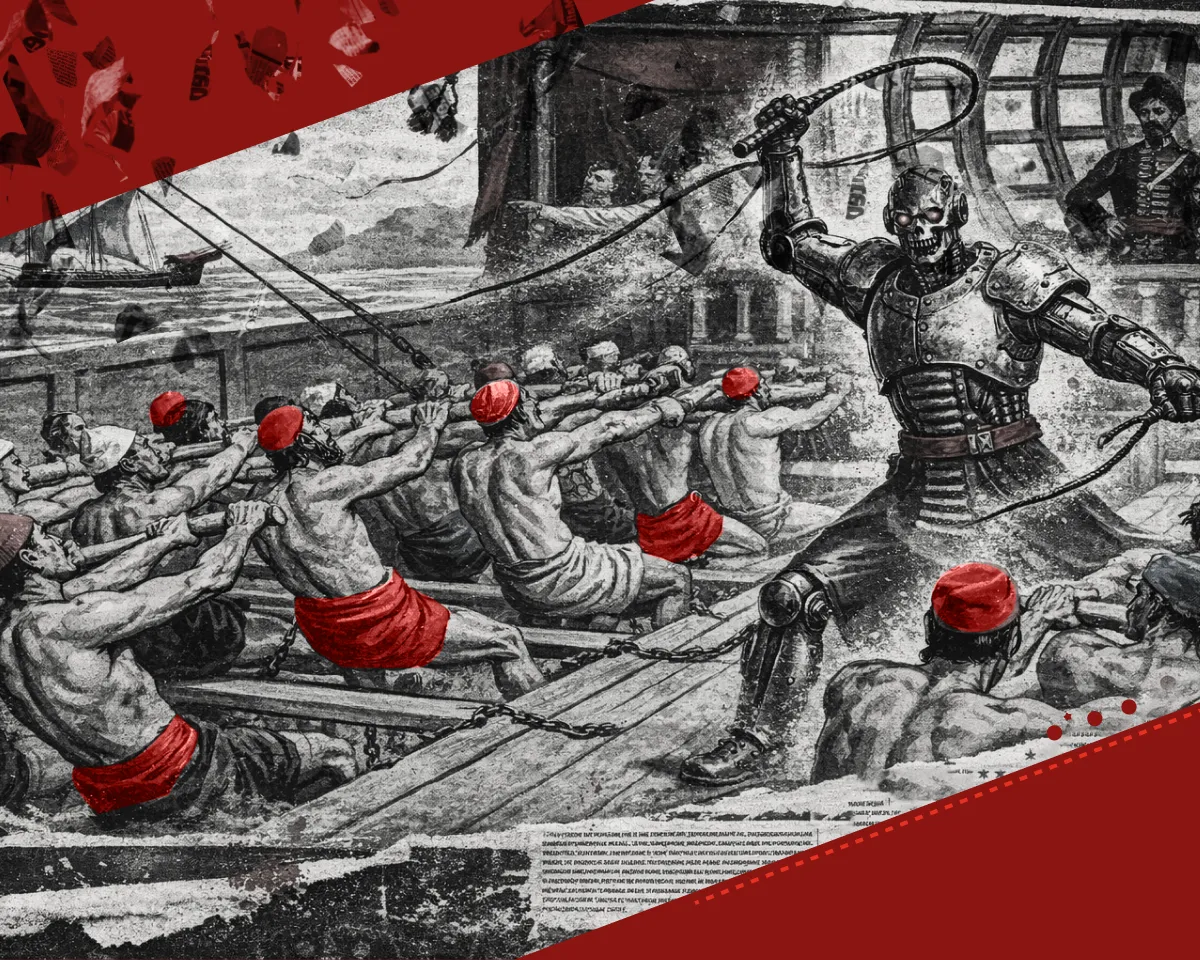
However, Nancy Fraser is convinced that the real consequences of a progressive modernised capitalism “with a human face” are rising social inequality and climatic and global socio-political crises. She calls this “cannibal capitalism”—a system that no longer simply extracts profit but eats the very foundations of its own possibility: nature, labour, trust, care.
Fraser warns of capitalism’s ability to turn any critique into a form of legitimising power and urges that this be kept constantly in view when speaking about neoliberal feminism, identity politics, and environmentalist, decolonial and anti-patriarchal movements.
To understand what exactly she criticises in activities “for all things good”, one has to grasp the conception of justice she advances. Fraser proposes to view justice as a harmonious combination of three factors: redistribution (economic), recognition (cultural) and representation (political).
In today’s world one must be maximally represented, visible and engaged to secure a place in the attention economy—a truth even the least marketing-minded person would confirm. The ability to build a personal brand is now required even of the poorest, or they will not be noticed when donations are handed out. For many groups oppressed on the basis of identity, the struggle for recognition has thus become an end in itself.
Fraser does not seek, nor does she propose, to abolish identity politics. But she points out that shifting political emphasis to identities does not fundamentally change the existing structure of power and production relations. Focused on cultural recognition, identity politics is superficial and often distracts from deeper problems of economic inequality and the unjust distribution of resources, which leads to the preservation—or even reinforcement—of existing structures of oppression.
Fraser’s commitment to developing a comprehensive analysis of the interconnections between gendered oppression and capitalism acquired new salience as political crises became more obvious than economic and social ones. In her 2017 essay “The End of Progressive Neoliberalism” she offered this account of the “rightward turn” in developed European countries and of Donald Trump’s rise to power in the United States:
“‘Progressive neoliberalism’ developed in the United States over the past three decades and was officially ‘adopted’ with Bill Clinton’s election in 1992. Clinton became the chief engineer and standard-bearer of the ‘New Democrats’—the American equivalent of Tony Blair’s ‘New Labour’. Instead of the New Deal coalition that included unionised industrial workers, African Americans, and urban middle classes, he forged a new alliance of entrepreneurs, affluent suburbanites, new social movements and youth: all proclaimed sincere devotion to contemporary progressive values, welcomed diversity, multiculturalism, and women’s rights. Even while endorsing such progressive ideas, the Clinton administration still served the interests of financiers on Wall Street.”
Note the “interests of financiers” in Fraser’s account. In her view, since the 1990s in the US they have been served not only by presidential administrations but also by human-rights campaigners, in the absence of clearly articulated left-socialist narratives in public discourse. Progressive American neoliberalism made possible an alliance of mainstream social movements (feminism, anti-racism, multiculturalism, LGBT) and elite business sectors (Wall Street, Silicon Valley, Hollywood). The former, Fraser argues, allowed the latter to appropriate their charisma:
“Ideals such as diversity or empowerment, which in principle can serve different ends, now provide a pretty wrapper for policies that destroyed production and the living conditions of those who once counted as the middle class.”
Feminism, in particular, has been successfully co-opted by contemporary capitalism. Those craving representation receive it—still far from parity with men, but female directors, PhDs, programmers are no longer rarities. Such recognition of individual women, rather than women as a class, in fact stabilises an unjust system. We get gender inclusion without undermining the economic foundations of inequality.
Such “empowerment” often simply means the struggle for the freedom of some women to exploit others—and that is often what happens. Appointing more women to corporate executive and supervisory boards, electing them to political office or otherwise granting women special powers within existing corporate or state structures only seems like feminist achievement. In reality we get a reproduction of patriarchal patterns while including women in power.
For Fraser, liberal feminists are obsessed with false aims—in essence, the possibility of becoming capitalists or presidents. The real task of feminism, in her view, is not to secure women access to the top of the hierarchy, but to dismantle those structures.
Fraser levels much the same criticisms at the way corporations and politicians saddle the environmental agenda. Today it looks maximally marginal to deny global climate change: even Vladimir Putin publicly acknowledges that attention must be paid to warming, which will have “serious consequences” for Russia. And not always is such a strategy dictated by populist intent, marketing considerations, fashion and benefits. Sometimes it is simply the acknowledgement of a consensus about something expert communities have agreed to treat as common sense. However, recognising the problem by itself does nothing to eliminate it. Moreover, Fraser considers that ecological catastrophe is embedded in the logic of capitalism’s functioning:
“Nature and care are two conditions of capitalist accumulation that capitalism exploits but does not reproduce.”
Under “green capitalism” personal responsibility is reduced to shopping in “eco stores”, while products marked “eco” move into the niche of elite consumption. Naturally, this has no effect on climate change, just as ESG ratings of corporations do not: instead of reducing emissions there is a trade in the right to pollute.
“A new common sense must avoid reductionist ‘environmentalism’. It should not treat global warming as a trump card that overrides everything else, but should trace that threat to the deep social dynamics that also drive other dimensions of the present crisis. Only by addressing all the core aspects of this crisis, ‘ecological’ and ‘non-ecological’ alike, and by revealing the links between them, can we begin to build a counter-hegemonic bloc that supports a shared project and has the political weight to carry it through effectively,” —argues Fraser.
How a well-brought-up girl became a radical
When Nancy Fraser was born—in 1947—in Baltimore, Maryland, Jim Crow laws mandating racial segregation were still in force. Her parents, non-religious Jews, were liberals who supported Franklin Roosevelt. Yet Nancy felt their way of life diverged from their declared values.
Youthful rebellion flowed naturally into political activism and the civil-rights struggle; she became an active participant in the movement resisting the Vietnam draft. As a student at Bryn Mawr College, Fraser urged young Americans to burn their draft cards and refuse to join the army. Reports of Buddhist monks in Vietnam setting themselves on fire in protest against the war made a strong impression on her. In one interview Nancy Fraser admitted she had seriously thought at the time: “If you are truly against the war, why haven’t you set yourself on fire yet?”
Maximalism and radicalism remained part of her character, but chance kept her from perishing in activist zeal—or literally destroying herself—and saw her live to 78 as a respectable professor. She met several Trotskyists who told her of methods of political struggle other than self-immolation. Nancy joined SDS and became a feminist—then a common path for young intellectual women whose parents could afford to send them to prestigious institutions.
And Bryn Mawr College was just that—an elite educational institution for women (that kind of segregation also existed in the United States in the 1960s). Fraser initially wanted to study classics. Her mentor at the college was the poet and translator of the Iliad, Richmond Lattimore—the dream came true. But had she stopped there, it would have been too bourgeois by Fraser’s own lights. The turbulence of the time demanded departures from set courses, and Fraser turned to another teacher—the philosopher Richard J. Bernstein. This choice helped her combine a passion for intellectual pursuits and politics. Bernstein slipped his student Herbert Marcuse’s One-Dimensional Man, a hallmark of the Frankfurt School of critical theory.
The “Frankfurters” and their successors aim to change and criticise society as a whole, uncovering fundamental premises in social life that prevent people from participating in “true democracy”. One might think neo-Marxists have a single answer for seven woes: abstract capitalism is to blame for everything. Yet Fraser invites us to look at it more closely and understand how, concretely, the current economic system harms humanity and how that harm can be minimised so that its root cause can ultimately be eliminated.
Three pillars of digital capitalism and frozen eggs
What, one might ask, have ovaries to do with the global economy? In fact the connection is strong: production and reproduction are entwined and in constant internal contradiction under any capitalism.
Digital capitalism rests on financialisation, invisible labour and the illusion of recognition. Financialisation delivers disproportionate gains to those already at the top of the income and wealth distribution. Capital has shifted from production to asset management. The model itself works to widen the gap between rich and poor and creates opportunities for oppression and the usurpation of power.
Digital corporations such as Google, Meta and Amazon act like financial structures. They do not produce value in the form of a traditional good; they trade emotions and attention, turning everyday life into an “investment product”. Digital capitalism exploits personal information, exacerbating racial and gender inequality through algorithmic discrimination.
The economy of affects—in which every like, pause in scrolling and other data points can be used for analysis, prediction and monetisation—was described by another scholar, Shoshana Zuboff, in her book The Age of Surveillance Capitalism. In her view, digital capitalism extracts value not from direct activity but from predicted behaviour.
Digital platforms control and monopolise data flows that function as a new form of capital. These data not only allow precise modelling of consumer behaviour but also serve as instruments of social management. We are dealing not merely with a digital market but with a new form of capitalist institutionalisation, in which private platforms usurp public functions—for example, regulating communication and structuring public discourse. Unaccountable to state and society, the actors of digital capitalism will be able to determine social order and shape the digital future.
Zuboff’s view of post-industrial capitalism became mainstream because it is frankly frightening, touching on aspects of personal security. Fraser, by contrast, does not peddle scare stories about digital giants feasting on every conceivable datapoint, including how long an image holds your gaze, and then enslaving users’ will. Yet both thinkers agree that the functioning of the digital economy is secured by labour—unseen and unpaid—that we give daily to our own detriment. Users of various platforms themselves hand over to capital their time, attention and data, thinking they are merely chatting or zoning out—often in the gaps between other forms of work.
Fraser’s concept of “cannibal capitalism” does not dispute the threats of Zuboff’s “surveillance capitalism”, but casts the net wider. Surveillance is just one mechanism of the system’s capture by digitalised capitalism of extra-economic spheres. What once seemed private, personal and so economically neutral today becomes an asset. We are not only consumers but sources of value even in moments when we are “just living”. Emotions, attachments, fears, routine gestures—all become part of an investment logic governed by private algorithms. Digital capitalism is not a new paradigm but the predictable evolution of traditional capitalist logic, with data simply the latest resource to be “devoured”. Without political will, the accelerationism built into the capitalist system turns into accelerated extractivism, as people and technologies race ahead while sinking deeper into old patterns of exploitation.
Fraser draws particular attention to how financialised capitalism subordinates states and societies to the immediate interests of private investors, demanding the cessation of public investment in social reproduction. In her view, this state of affairs institutionally entrenches a gendered division between production and reproduction—that is, it leaves the sphere of producing material goods to men and that of childbirth and care to women. Unlike earlier regimes, the new capitalism relies chiefly on liberal-individualist and gender-egalitarian imagery. In contemporary Europeanised societies gender equality is recognised; virtually all institutions today proclaim equal opportunity to realise one’s talents in every sphere, including production. Social reproduction is often seen as an anachronism and an obstacle to development. In this Fraser sees a new form of acute conflict generated by capitalism:
“Financialised capitalism not only restricted public provision and pulled women into paid labour, but also depressed real wages, thereby increasing the number of hours of paid work a household needs to provide for a family, and generated a desperate drive to offload emotional labour onto others. To make up for the ‘care deficit’, the regime effectively imports migrant labour from poor countries into rich ones. As a rule, the reproductive and emotional labour previously performed by more privileged women is taken on by women from racial minorities, often from rural populations of poor regions. But to do this, migrants must hand their family and community obligations over to others who are even poorer, and they in turn must do the same—and so on down long ‘global care chains’. The result is not the elimination of the care deficit, but its displacement—from rich families to poor ones, from the Global North to the Global South.”
Feminists of the industrial era fought the “family wage”—a system in which a household rested on the cash earnings of the “breadwinner-father” and the unpaid care labour of the economically dependent “mother-housewife”. What they got was a new model that proved little sweeter—the “two-breadwinner family”. Now, as it were, everyone must have a job; yet homes, children, the elderly—and the workers themselves—still need everyday care. Meanwhile, wages have fallen, meaning two working parents do not make a family twice as rich, and the number of hours needed to earn enough to support at least oneself, at most dependants and pets, has risen. Doubtless many are content with this. When your head is occupied with work for 8–12 hours, you simply have no time to think about social justice. Philosophers do it for you—Fraser among them.
What happens to women who achieve career success in corporations? They fear falling out of the process by taking maternity leave, because they may not return to their position soon—and promotion, in most cases, would be out of the question. Here, Fraser argues, emancipation joins forces with marketisation to undermine the foundations of social protection. The upshot is the minimisation of capacities for social reproduction. One telling trend supports this thesis—the growing popularity in the United States of egg freezing. Large tech companies are willing to pay for this costly procedure (around $10,000) to secure the “best years” of their employees’ potential while leaving children for some later time—at 50 or 60—should the desire remain.
Traditional rituals of motherhood are changing, too. Amid strong promotion of breastfeeding, rich countries have seen rising demand for expensive, high-tech breast pumps. The baby no longer suckles at its mother’s breast because a nanny feeds it from a bottle. The mother can drive to work while simultaneously pumping milk with a top-end device with two flanges that do not need to be held. The evolutionary, social or biological consequences of such changes can only be guessed at today. But one thing is already clear: progress under financialised capitalism does not liberate people; it produces an imbalance between production and reproduction in technologically advanced societies, exacerbates the “care crisis” and deepens inequality.
How did we get here? Debt plays a significant role in the system. Fraser treats it as a tool used by global financial institutions to demand that states cut social spending. States, in turn, impose austerity and even collude with investors to extract value from the population.
Farmers in the Global South lose their property through debt in a new phase of corporate land grabs. Capital is concentrated in so-called historical centres. Unstable, poorly paid service work replaces industrial jobs with robust unions, and wages fall below the socially necessary costs of reproduction. In the emerging “gig economy”—where businesses do not hire staff but bring in outside specialists for specific projects and tasks—ongoing consumer outlays require expanded consumer credit, which grows geometrically.
“It is precisely through debt that capital today swallows labour, drills states, shifts wealth from periphery to centre, and sucks value out of households, families, communities and nature. The inherent capitalist contradiction between economic production and social reproduction is thereby intensified. If the previous regime allowed states to subordinate the short-term interests of private firms to the long-term aim of sustainable accumulation, partly stabilising reproduction through public provision, the current one empowers financial capital to drill states and societies in the immediate interests of private investors, not least by demanding that the state abandon investment in social reproduction. And if the previous regime combined commercialisation with social protection under the banner of emancipation, the current one creates an even more perverse configuration in which emancipation is combined with commercialisation to undermine social protection,” — lays bare the contradictions of capital and care, Fraser.
What is to be done?
Fraser calls neoliberalism the contemporary global form of capitalism. She believes adherence to this ideology leads to falling wages and declining quality of life worldwide. Under a neoliberal economic model only corporate owners, venture investors, highly qualified specialists in high-tech sectors, and managers can be satisfied with their standard of living. This can be remedied only by deconstructing capitalist models in the economy. But by what methods should one fight what surrounds us globally and seems to flow from the very nature of human relations? Fraser proposes not to reinvent the wheel but to return to a class approach à la Marx, in a modernised version.
“Neoliberal actors dismantled the social state and made it clear to a disorganised working class that they should solve their problems on their own. Neoliberals defined their goal as servicing financial markets. Then various strands of liberal ideology were adapted to the neoliberal worldview—with its key phrases about modernity, openness, a global world, multiculturalism, diversity and empowerment—all those fashionable words. Yet the overwhelming majority were left out, including masses of women, non-white people, people of non-traditional orientations and others. They are part of the working class. That is how I see it,” —declared Nancy Fraser in one interview.
That is, she places her hopes in class consciousness, class solidarity and class struggle by all those oppressed by neoliberalism and financialised capitalism.
Nancy Fraser, together with Cinzia Arruzza and Tithi Bhattacharya, created a radical anti-capitalist and anti-liberal programme set out in the manifesto Feminism for the 99 Percent. The authors proceed from the interests of the majority of the world’s women—above all the poor, workers, migrants, racial and sexual minorities, and women with disabilities—rather than a privileged minority. They call for radicalisation and action by uniting left movements and widening the agenda, establishing democratic control over the distribution of goods. To overcome social injustice it is not enough to fight only poverty or only discrimination. An integrated strategy is needed that combines the redistribution of resources with recognition of the dignity and differences of all groups.
A just society, in Fraser’s view, is one in which all its members can participate in social life on an equal footing. This can be achieved by social policy that recognises the legitimacy of claims for recognition without increasing economic inequality and that creates the possibility of fair resource distribution without aggravating status problems.
For example, in policy aimed at reducing women’s poverty there is now the stigmatisation of “welfare mothers”—mothers living on benefits. They are set against respectable taxpayers, who are supposedly forced to work for those who, for various reasons, cannot. Such policy feeds on status. It is not enough simply to provide economic support to women; it is important to do so on a neutral, non-stigmatising basis—through universal benefits or unemployment insurance—so as not to create new forms of humiliation or marginalisation.
At the same time, the emotional sphere must be freed from market exploitation. Love is not a basis for free servicing. Justice is impossible without recognising the cultural status and significance of any labour, including domestic, traditionally female labour. Formal equality is insufficient if women’s work is still treated as secondary or “emotional”, rather than professional and valuable.
Fraser argues that the fight for economic support of women must go hand in hand with the struggle for recognition of their status and dignity: “No redistribution without recognition and no recognition without redistribution.” What should foster this is the expansion and funding of public systems of health care, education, social support and leisure, so that women can combine work and private life without harming themselves or their families.
Nancy Fraser advocates a global ecopolitics that links natural and social reproduction, questions of ecology, political power, racial and sexual oppression, and imperial domination. State-oriented movements privilege the national frame for action and cling to faith that capital can be “tamed”. Isolated “environmentalism of the rich” or consumer environmentalism, grounded in guilt and personal responsibility for lifestyle, are wholly insufficient, as they evade the real solution.
Many key elements for such an ecosocialist politics already exist: movements for environmental justice, environmentalism of the poor, decolonial and indigenous movements. Proponents of a Green New Deal propose programmes to stimulate the economy and create jobs. Degrowth activists criticise endless expansion of production and consumption, but at times conflate what ought to grow but cannot (for example restorative and caring activity) with what is most valuable to capital but ought not to grow because it threatens our survival.
All these alternatives, in Fraser’s view, contribute important ideas and prod us to rethink our way of life and our relations with nature. But none is yet sufficiently substantive or connected to the others to meet the task at hand: forging a new hegemonic “common sense” that unites all aspects of our crises and integrates them with feminism, workers’ rights, the struggle against racism, imperialism, the exploitation of natural resources, consumerism, and class consciousness. Developing viable alternatives will require both serious analysis and a commitment to democratic forms of social planning.
Critiquing the “public” sphere concept advanced by the “Frankfurter” Jürgen Habermas, Fraser proposed an alternative—the counterpublic sphere. She insists on rethinking contemporary notions of public space as a set of differentiated social arenas to which some have access while others are excluded. Following postcolonial theorists, Fraser introduces the idea of a “subaltern-counterpublic sphere”, by which she means social spaces where oppressed groups can formulate counter-discourses and create alternative interpretations of their identities, interests and needs.
She seems to want to roll the tape back a little and set out again, this time without taking a wrong turn. In the 1960s–70s the feminist community in the United States had its own journals, bookshops, lecture halls and research centres. There women created the narratives needed for social change and introduced into political and legal discourse notions such as sexism, the double burden, harassment and marital rape.
Fraser’s philosophy itself functions as an active component of the “subaltern counterpublic sphere”. The idea that capitalist societies separate social reproduction from economic production, tie the former to women and deny its value while making the economy directly dependent on social reproduction sets the direction for a new discourse aimed at discrediting and deconstructing capitalism.
All this looks utopian; but if our world can so readily realise dystopias, why should we not hope for the reverse?
Fraser herself openly admits she has no direct answers to the questions: “Can the current crisis galvanise struggle with sufficient breadth and foresight to transform the present regime? Can a new form of socialist feminism break mainstream love affairs with the market and forge a new alliance between emancipation and social protection—and if so, to what end? How, today, can we rethink the division between reproduction and production, and what could replace the two-breadwinner family?”
If capitalism indeed contains, as Fraser argues, contradictions that will reproduce themselves at new stages of human existence, then social policy alone will not cope with it. In her view, only deep structural transformation of the entire world social order can save everyone, and the first priority is to overcome the predatory subordination of reproduction to production dictated by financialised capitalism—but this time without harming emancipation and social protection. Achieving this goal will require rethinking the boundaries between production and reproduction, as well as restructuring the gender order.
What does she mean by this gender restructuring? Likely what she explains in reflecting on the book by Facebook COO Sheryl Sandberg, Lean In:
“For me, feminism is not simply the issue of promoting a small group of women to positions of power and privilege within existing social hierarchies. Rather, it is about overcoming those hierarchies. That requires challenging the structural sources of gender domination in capitalist society—above all, the institutionalised separation of two supposedly distinct kinds of activity: on the one hand, so-called ‘productive’ labour, historically associated with men and rewarded with wages; on the other hand, activities of care, often historically unpaid and still performed mostly by women. In my view, this gendered, hierarchical division between ‘production’ and ‘reproduction’ is a defining structure of capitalist society and a deep source of the gender asymmetry embedded in it. There can be no ‘women’s emancipation’ while this structure remains intact.”
Text: comrade-tovarishch
Рассылки ForkLog: держите руку на пульсе биткоин-индустрии!