


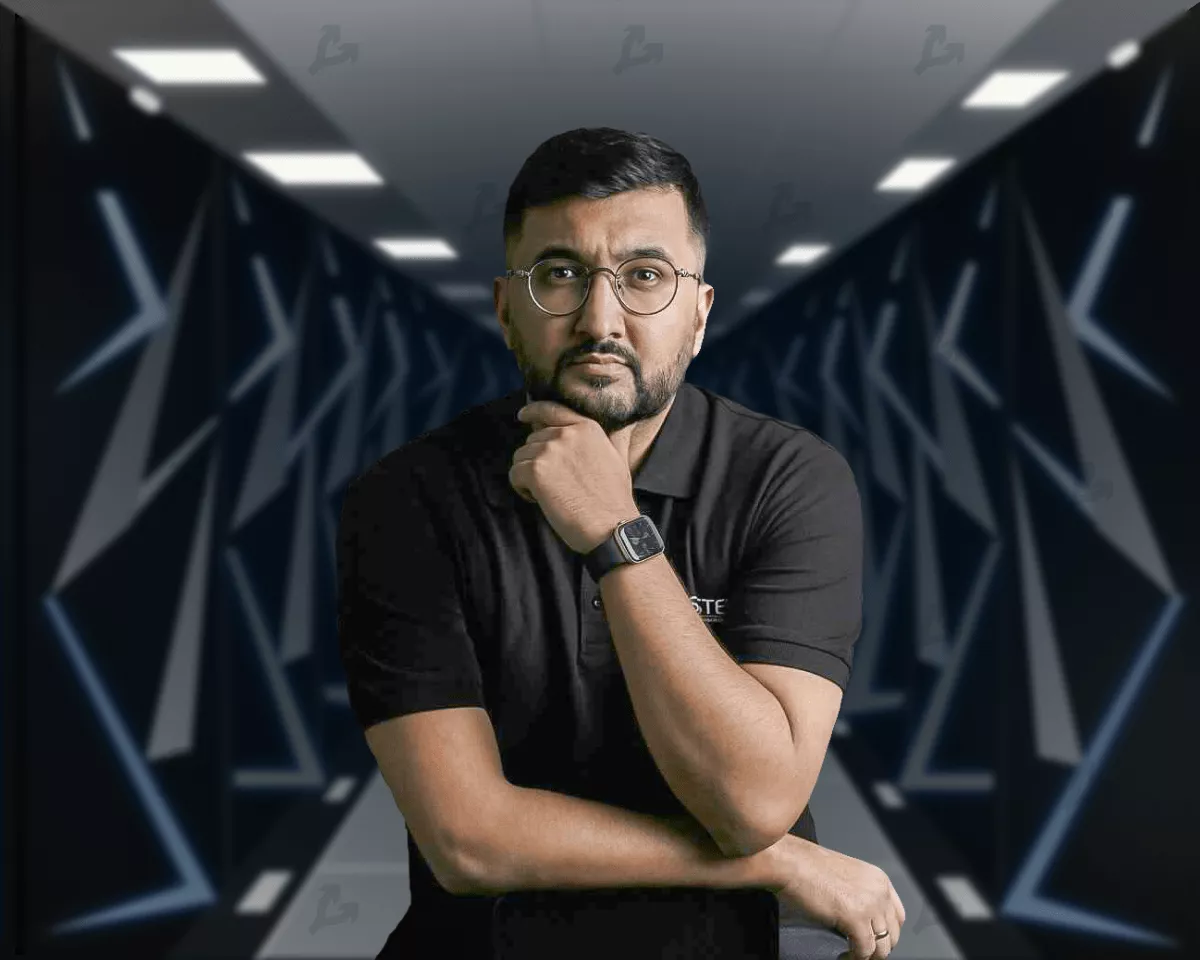
CEO of Uminers: Russia’s Cheap Power Era Is Over
In May, Chinese authorities banned mining on the territory of the country. Since then, Russia’s share of the Bitcoin network’s hashrate has increased from 7.2% to 11.2%. However, Chinese miners are still generating 20% of the total hashrate.
We spoke with Batyr Khydyrov — founder and CEO of the company Uminers, which supplies mining equipment worldwide.
He discussed regulators’ stance toward miners, the impact of semiconductor shortages on the industry, and the prospects for mining in Russia.
ForkLog: Hello, Batyr! Tell us about yourself. How did you get into the crypto industry?
Batyr Khydyrov: Hello! In 2017 at Uasia Group — the parent company of Uminers — there was a request to supply miners. They were Ibelink, which serviced the Dash cryptocurrency network.
We were involved in exporting goods from China. Mining seemed wild and unclear. But it was this order that became the starting point of Uminers.
I have always been interested in new technologies, so I began looking for information about mining: equipment manufacturers, how it works, and the technical specifics of ASIC devices.
By the end of the year we had established contacts with the management of Bitmain and Whatsminer. In 2018 I travelled to Georgia for the World Digital Mining Summit (WDMS), where I met the co-founder and then-CEO of Bitmain, Jihan Wu. Through this, I learned the intricacies of supplying miners from China.
Uminers is officially registered in Russia and operates in accordance with local laws. In addition, we have offices in China, the United States and Canada.
The headquarters of Uminers is in Guangzhou, China. On 10 December we opened a division in Shenzhen to work more closely with manufacturers of mining equipment. We can now process requests from the CIS more promptly and focus on North American and European markets.
ForkLog: Has the migration of miners from China affected your business?
Batyr Khydyrov: Volumes of supply have only increased: miners in other regions received higher rewards. New market participants emerged who were interested in mining and were waiting for a ‘signal to enter’ this business.
On the other hand, after the May events there was a large amount of used equipment. It is harder to entice clients with new miners. We have to strike a balance between a device’s hashrate, its cost, and payback period.
ForkLog: How do Chinese regulators view miners?
Batyr Khydyrov: Like parasites on the body of the state.
For a long time the authorities looked the other way: they did not regulate or tax the industry. Yet Chinese miners accounted for more than half of the total PoW cryptocurrency hashrate. They consumed colossal amounts of cheap electricity, while not creating jobs or paying taxes.
The ban was obvious and inevitable, given the global energy crisis and the evident electricity shortage in China.
I think the industry will return to China, and with a 99% probability it will be regulated by the state. It is difficult to say when this will happen: it depends on the global energy market and on conditions inside the PRC.
ForkLog: Which miner manufacturers do you work with?
Batyr Khydyrov: Uminers closely collaborates with MicroBT — one of the largest manufacturers of mining equipment alongside Canaan and Bitmain. We also have very warm partnerships with the latter.
Our current delivery statistics look like this:
- 50% — Bitmain;
- 40% — MicroBT;
- 10% — Canaan, GoldShell and others.
Let me emphasise that these figures should not be taken as a judgment on the quality of the equipment; they simply reflect our clients’ preferences.
ForkLog: How has the semiconductor shortage affected the cost of equipment?
Batyr Khydyrov: Their shortage is hurting almost all high-tech sectors. Mining is no exception.
The most expensive component of any ASIC is the processing chip. In Bitcoin mining, the number of such chips in a single device can reach up to 1,000.
I can confidently state that prices for mining equipment will rise. This is driven by the ongoing race among manufacturers for hash rate and device energy efficiency, the global shortage of semiconductors, and the 100% utilisation of chipmakers TSMC and Samsung.
ForkLog: Tell us about miner shipments to Russia and other countries.
Batyr Khydyrov: According to our estimates, Uminers accounts for 50% of shipments to the Russian market.
I will give a few figures: in 2021 we delivered over 60,000 devices to Russian clients and moved over 1,000 tonnes of mining equipment worldwide.
Most Russian vendors work with us because it is convenient. Uminers provides the full range of services in this field: from ordering equipment in China to logistics and customs clearance.
ForkLog: How long does delivery usually take?
Batyr Khydyrov: For medium and large orders — 10-15 days. These are cases where a client needs between 50 and 1,000 devices.
Retail customers can receive miners immediately: we keep up-to-date equipment in stock in Russia and China.
Uminers works closely with Binance. We were among the first to implement the Binance Pay payment system, through which purchases can be completed in a couple of clicks.
ForkLog: Are your main customers from Russia?
Batyr Khydyrov: Yes, this is our primary market. But there are challenges here: the lack of a mining infrastructure, the opacity of electricity procurement, and the relevant regulation.
We are currently developing the North American direction. In the United States and Canada there is strong demand for mining equipment: in these countries the industry has long moved out of the shadows.
Electricity there is more expensive, but the market is better protected in terms of legal guarantees. Our clients and partners in the United States view mining as a long-term investment. They do not expect quick profits, but invest in the future.
ForkLog: And how do you assess the prospects for mining in Russia?
Batyr Khydyrov: The era of cheap power in Russia is over. The time has come to invest in infrastructure projects. But this requires a legal framework.
The future of Russian mining depends on regulators. With the right approach, our country has every chance to become a leader in the industry.
Subscribe to ForkLog’s news on Twitter!
Рассылки ForkLog: держите руку на пульсе биткоин-индустрии!