Trump Signs Order on Crypto Firms’ Access to Payment InfrastructureTrump signs order on crypto firms' access to payment infrastructure.
On May 19, U.S. President Donald Trump signed an order to integrate digital assets into the traditional financial system.
Editor's choice
Google Intensifies Efforts Against AI Search ManipulationGoogle tightens AI search tool policies after BBC experiment exposes manipulation.
Bank of England to Focus on TokenisationBank of England to modernise economy with tokenisation focus.
K33 Analysts Predict Bitcoin’s Floor at $60,000Bitcoin's price fell 6% this month; K33 sees $60,000 as cycle's low.
Generative AI Employed in Hypersonic Engine DesignGE Aerospace developed a hypersonic engine design using generative AI.
Crypto without the punkWhat remains of Web3’s original ideology
Aschenbrenner’s picks and shovelsHow a former OpenAI staffer built one of the fastest-growing AI funds
The sensible person’s AIHow artificial intelligence is changing medicine
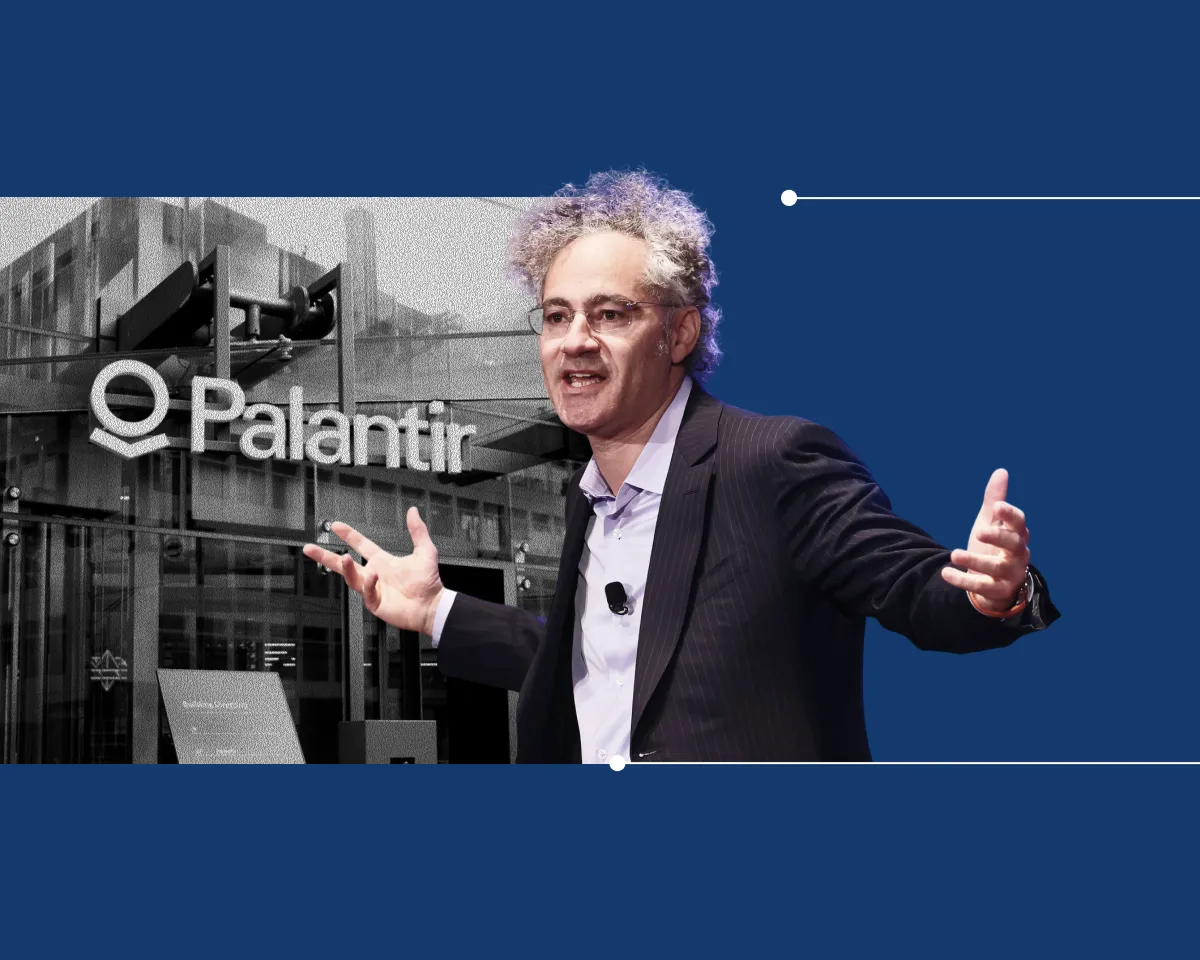
The all-seeing eye of the Technological RepublicThe future Palantir CEO Alex Karp envisions
Euro Stablecoin Project Expands to 37 BanksQivalis stablecoin project expands to 37 banks, including ABN Amro and Rabobank.
Imec Unveils World’s First Quantum Dot Qubit Deviceimec unveils first quantum dot qubit device using High-NA EUV lithography.
Opinion: AI and Quantum Technologies Threaten Corporate SecurityAI and quantum technologies threaten corporate security in APAC.
What Is Tokenized Gold and Why Are Billions Being Invested in It?Tokenised gold explained: how it works, its benefits, risks and the market’s leading projects.
The funding rate: how it helps anticipate price reversals in bitcoin and EthereumHow funding rates flag reversals in bitcoin and Ethereum before price moves.
What is zkEVM?A zkEVM brings ZK proofs to the EVM for faster, cheaper, secure Ethereum scaling.
What Is Game Theory and How Is It Used in Cryptocurrencies?How game theory underpins incentives and security in crypto.
Cisco Prepares Network Infrastructure for Quantum LeapCisco sees AI as the current wave, with quantum computing as the next phase.
BNB Chain Team Sacrifices Speed for Quantum ResilienceBNB Chain developers test post-quantum cryptography, revealing performance decline.
BNB Chain developers reported on the results of testing the network's transition to post-quantum cryptography.
Google Unveils ‘Most Powerful’ AI Model GeminiGoogle unveils Gemini 3.5 Flash, its most powerful AI model for programming and agent creation.
Expert Warns of Liquidity Crisis Risk for Tether and CircleTether and Circle face liquidity crisis risks despite holding U.S. Treasury bills.
Opinion: AI to Disrupt Real Estate and Erase the Middle ClassAI to automate office jobs, disrupt economy, says blogger.
Canaan to Heat 2800 Homes Through Bitcoin MiningCanaan to supply mining equipment for 8 MW heating project in Scandinavia.
Gartner Predicts AI Spending to Reach $2.59 TrillionAI spending to reach $2.59 trillion in 2026, a 47% increase year-on-year.
Bitcoin ETFs Experience Largest Daily Outflow Since JanuaryBitcoin ETFs see largest daily outflow since January, totaling $648.6 million.
Researchers Uncover ‘Largest Military Insider’ on PolymarketNine accounts on Polymarket earned over $2.4M from U.S. military action bets.
South Korea Tests Stablecoin Pegged to WonSouth Korea's KBFG completes stablecoin proof-of-concept phase.
IBM Declares the Dawn of Practical Quantum ComputingQuantum computing is moving from labs to real-world applications.
Quantum computing is moving from laboratory experiments to real-world applications.
We use cookies to improve the quality of our service.
By using this website, you agree to the Privacy policy.