Telegram (AI) YouTube Facebook X
Ру
a16z analysts name the main crypto-market trends for 2024

a16z analysts name the main crypto-market trends for 2024

Analysts at Andreessen Horowitz (a16z) have presented a list of “big ideas” in the industry that are generating the most excitement.

A New Era of Decentralization

Analysts reminded the mission of decentralization — to democratize systems through neutral and composable infrastructure, encourage competition and diversity of ecosystems with expanded choice and ownership rights for end users.

Centralized systems’ efficiency and stability had impeded decentralization, but in recent years the dynamics have shifted.

Models have emerged that can adapt applications with broader capabilities; and include methods such as DAO on Machiavelli-inspired principles, which ensure accountability of leadership.

“As development progresses, there should soon emerge an unprecedented level of decentralized coordination, operational functionality and innovation”, — the report says.

UX Restart

Experts lament the near-total lack of changes to the UX since 2016. It remains challenging for ordinary users — private keys, interacting with dapps, signing transactions.

Developers are currently actively testing and deploying new tools designed to improve the user experience. Among them:

  • Automatically generated cryptography-based access keys that simplify login to apps and websites on users’ devices;
  • account abstraction — a technology that adds smart-contract functionality to wallets and makes account management easier;
  • In-app wallets that can increase the number of users of crypto assets;
  • MPC, simplifying signatures of transactions by third parties without storing client keys;
  • Extended RPC capabilities that can recognise what users want and fill in the blanks.

“The listed technologies help Web3 become more popular and create the prerequisites to improve and secure UX compared with Web2,” — experts explained.

Advancement of the Modular Tech Stack

Analysts say the advantage of monolithic architectures lies in deeper integration and optimization across what would otherwise be modular boundaries. This yields performance gains, at least in the early stages.

The main advantage of an open-source modular tech stack is the capacity for unconstrained innovation. Such an architecture allows participants to specialise and spurs competition.

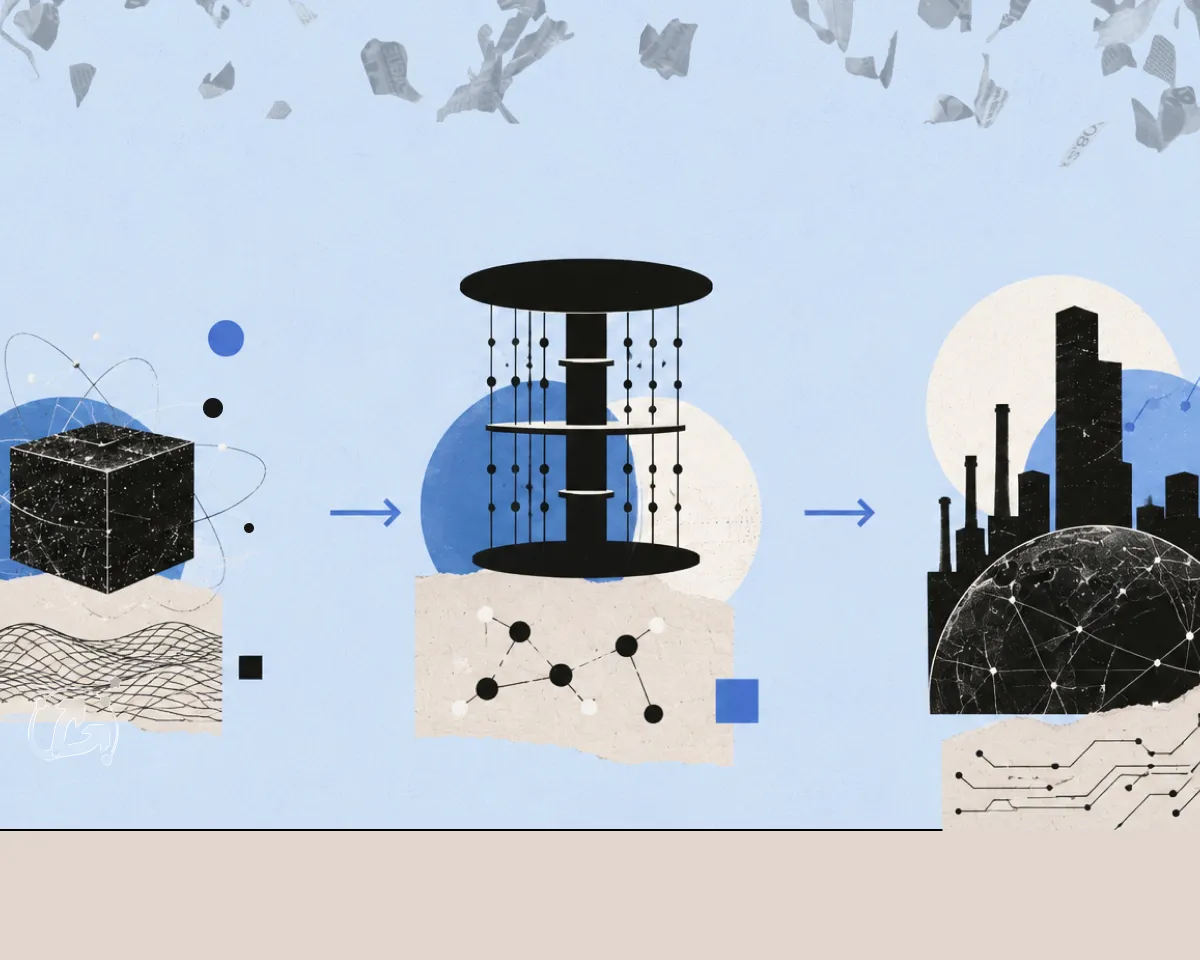
Convergence of AI and Blockchains

Experts say decentralized blockchains act as a counterweight to centralized AI. At present, AI models can be trained and deployed by only a handful of tech giants due to significant compute and data requirements.

With cryptocurrency-enabled systems, it becomes possible to create multilateral, global, borderless markets where anyone can contribute computing power or new data to a network in return for compensation, for those who need it. As a result, such markets could make AI more accessible, the experts note.

The underlying crypto technologies can also be used to open the AI’s “black box” (trace content provenance) and to create conditions for decentralised governance of generative AI.

Turning P2E into Real Games and Earnings

Analysts highlighted the need for games that are both engaging to play and offer players the possibility to extract greater value from their activity.

“The dynamics of managing the in-game economy will continue to evolve as P2E moves beyond initial growth pains. In the end, this will not be a separate trend, but simply part of games,” the specialists predicted.

Cryptographic Guarantees in AI-Powered Games

Experts noted that AI agents in Web3 games must come with guarantees: that they are based on defined models and that those models run without distortions. Otherwise, the games will lose integrity.

“When knowledge, landscape, narrative and logic are procedurally generated — when AI becomes the creator of games — we will want to know that this world was built with guarantees. Cryptography can provide them, including the ability to understand, diagnose and to ‘punish’ when something goes wrong with AI,” — the analysts explained.

Formal Verification Becomes Less Formal

Analysts say there is a need for more accessible formal verification methods in software, especially in smart-contract development. Recently, technologies have emerged that have simplified this task.

“With the growing adoption of formal-methods-based tools, we can expect the next wave of smart-contract protocols to be more reliable and less susceptible to costly hacks,” the experts forecast.

NFTs as Brand Add-Ons

Analysts note that more and more well-known brands are introducing everyday consumers to digital assets in the form of NFTs — Starbucks, Nike, Reddit. The tokens can reinforce customer identity and a sense of belonging to a community, link physical goods with their digital counterparts, and even underpin new products and experiences for the most loyal enthusiasts.

In the a16z report, the trend toward using NFTs as consumer items — often managed via custodial wallets and/or L2 blockchains with low transaction costs — was highlighted.

“Many conditions have been created to turn tokens into ubiquitous digital assets of brands,” the firm concluded.

The Popularity of SNARKs

Analysts remind that SNARKs enable a cryptographic proof of a certain computational workload to be verified by an untrusted verifier, which cannot be forged. Previously, producing such a proof required about 10^9 work units; recent advances bring that figure closer to 10^6.

A range of use cases has emerged:

  • IoT devices can verify updates;
  • Media-editing software can embed provenance data about authenticity and transformations;
  • LLM outputs can include authenticity information.

And this is far from the full list of how the technology could benefit consumers in the future.

In November, Ethereum co-founder Vitalik Buterin wrote an essay “My Techno-optimism”, in which he shared his thoughts on the impact of new developments, notably blockchain and AI, on the progress of human civilization.

Earlier, the founder of the blockchain explained how account abstraction can render user accounts resilient to hacking by quantum computers.

Подписывайтесь на ForkLog в социальных сетях

Telegram (основной канал) Facebook X
Нашли ошибку в тексте? Выделите ее и нажмите CTRL+ENTER

Рассылки ForkLog: держите руку на пульсе биткоин-индустрии!

We use cookies to improve the quality of our service.

By using this website, you agree to the Privacy policy.

OK