


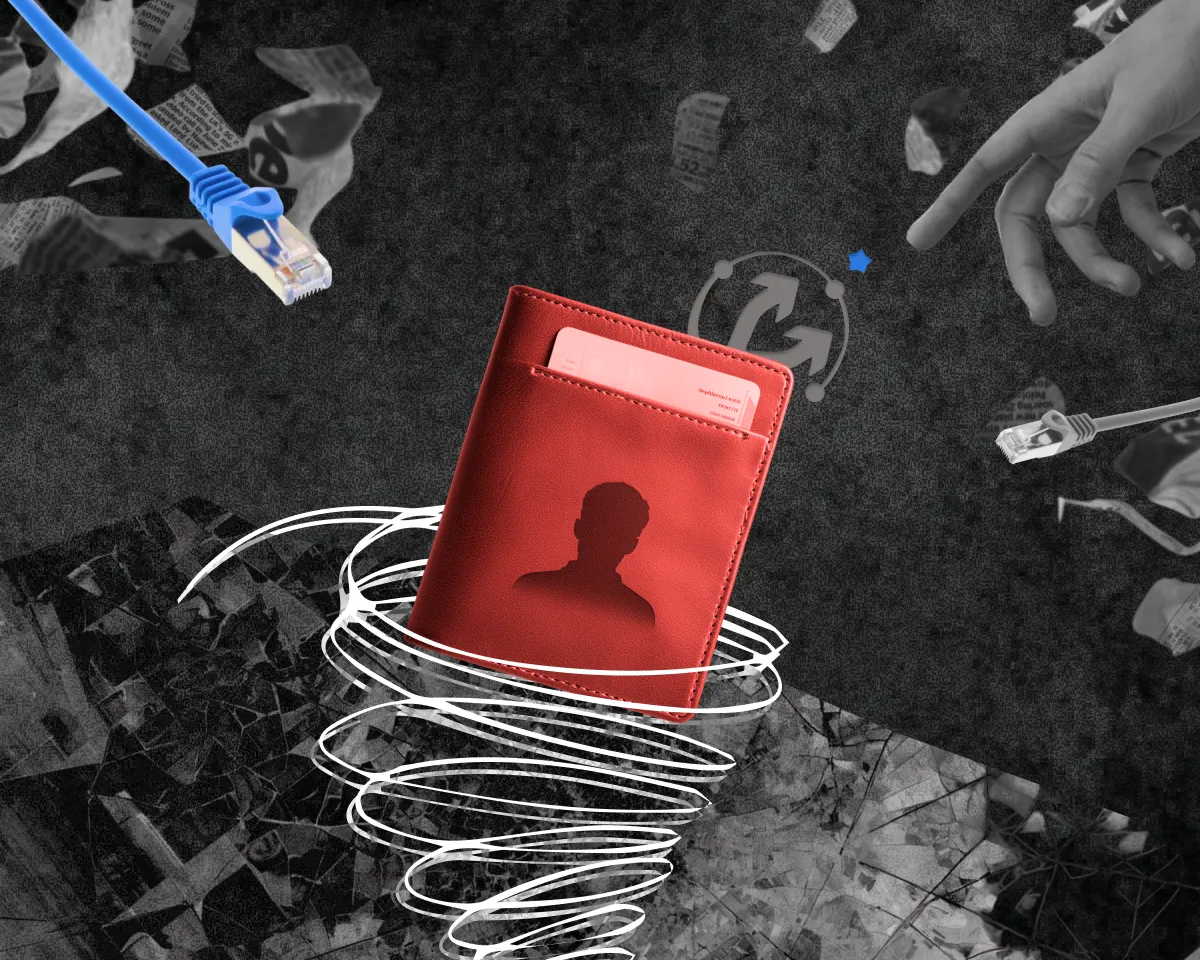
A wallet as a passport: new world or prison?
In today’s world a crypto wallet is no longer just an account but a digital imprint of the self: transaction history, DAO participation, social ties and even a credit score. The model promises a future in which trust can be quantified. Yet it brings risks: the right to be forgotten fades, while reputation becomes both commodity and brand.
ForkLog explores the ambivalence of this new identity paradigm.
From theory to practice
In 2022 Ethereum’s founder Vitalik Buterin outlined the concept of Soulbound Tokens in his paper Decentralized Society: Finding Web3’s Soul. These non-transferable tokens function as badges of achievement, certificates or proofs of affiliation.
Over time the abstraction has congealed into a full technology stack. Projects such as Gitcoin Passport, Privado ID (formerly Polygon ID) and Lens Protocol already let users collect “attestations”—cryptographically signed facts about one’s onchain life. Voted in a major DAO? That’s an attestation. Completed identity verification? Another one.

Thus the wallet becomes part of “digital identity”—the sum of traces that are impossible, or very hard, to forge. Transactions become deeds, project subscriptions turn into interests, and governance participation signals civic stance. Reputation morphs into a measurable, verifiable asset. Objectivity, though, has a dark side.
A new caste system?
The chief risk of turning reputation into a metric is the emergence of a digital caste society. Imagine that a DeFi loan—or even admission to a DAO—requires a certain score. Such tools could evaluate a user’s entire onchain activity: whether they interacted with “toxic” smart contracts, backed failed ventures, or sold tokens at the “wrong” time.
This is analogous to modern credit histories, only with deeper, harsher consequences. In the United States, people with poor credit scores are already shut out of many financial services. In Web3, wallets with a “bad” reputation could be excluded not only from finance but also from social interaction, work and community life. A basic question looms: is the community building a system in which a single misstep—or sheer bad luck—becomes a lifelong digital scarlet letter?
Who judges?
If reputation becomes a metric, who sets its parameters? Who decides what counts as “good” and what as “bad”? Early on, the verdict may fall to protocol developers and the market’s biggest players—exchanges, venture funds, influential DAOs—who will encode their notions of proper behaviour into algorithms.
For instance, a protocol might reward long-term holding and penalise frequent selling. That supports stability yet effectively imposes a financial strategy on users. Likewise, a DAO could downgrade those who vote against the mainstream, exerting pressure of the majority and curbing dissent. A tool built for trust risks turning into a mechanism of social control and behavioural conformity.
Identity theft and digital death
Under the “wallet = identity” paradigm, the theft of private keys is not merely the loss of funds; it is theft of the digital self. An attacker gains access not only to assets but also to reputation. They can vote in the victim’s name, join dubious projects and erode a standing built over years.
Losing access to keys without recovery is tantamount to digital death. The entire history, achievements and SBT-recorded ties become unreachable. The user loses not just an account but an identity.
Social-recovery wallets try to solve this. They restore access via a group of preselected trusted contacts. Unlike traditional methods such as a seed phrase, when a password or private key is lost the owner appeals to guardians, who supply fragments of a key that, combined, re-enable control over the wallet.
But this only underscores how high the stakes have become: an entire online life hangs on a string of characters.
The right to err in a world without “Delete”
The biggest threat to reputation is a fundamental property of blockchains—immutability. Every transaction, every DAO vote, every smart-contract interaction is recorded forever in a public ledger. A bad investment, backing a flop, a mis-sent transfer—all become indelible marks in an onchain biography.
This calls into question basic human rights to err and to be forgotten. Traditional society allows for a clean slate. In its current form, the blockchain does not.
Technically, “forgiveness” or hiding past mistakes is possible. Zero-knowledge (ZK) proofs can help.
For example, ZK can prove:
- the presence of a reputation score above a threshold, without revealing its exact value or history;
- citizenship of a particular country, without showing a passport;
- the fact of voting in a DAO, without disclosing the chosen option.
Yet this is only a technical patch. The philosophical conflict between radical transparency and human mercy remains unresolved. The community faces a dilemma: not every past event should be public. Widespread use of ZK to conceal data invites abuse and could undermine the very principle of trust on which the ecosystem rests.
Conclusion
The shift from wallet-as-account to wallet-as-identity is among the most consequential in the digital realm. Decentralised-identity technologies pave the way for systems where trust is proved without intermediaries.
But every coin has two sides. Transparency arrives with risks of digital control, social scoring and the loss of the right to err. The fate of this paradigm depends less on code than on the values the community encodes: whether it builds a fairer society—or a digital prison with no escape.
Рассылки ForkLog: держите руку на пульсе биткоин-индустрии!