



The number of active Solana addresses has fallen to a yearly low of 3.3 million. In January, the blockchain recorded a peak of about 9 million.
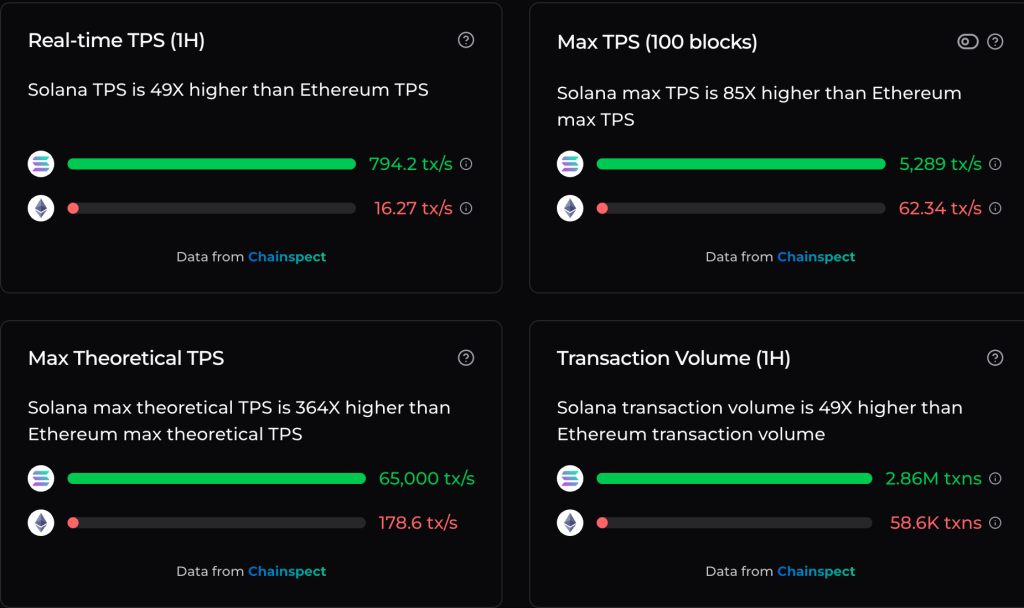
The surge in growth was particularly evident at the end of 2024. During that period, the “people’s cryptocurrency” network solidified its position as a key platform for launching and trading meme tokens. This was largely due to its high speed and low fees compared to Ethereum.


However, the service Pump.fun maintains high metrics: its daily revenue exceeds $1 million, and its share among launchpads reaches about 90%. Thus, despite the decline in engagement, activity remains notable in certain segments.
The dynamics illustrate how quickly trends change in the crypto market and why ecosystems should not overly focus on a single growth driver. Networks reliant on a narrow use case become vulnerable when the corresponding momentum weakens.
Not All Is Lost
Even amid declining on-chain activity, Solana continues to develop its infrastructure, with new DEX, prediction markets, and RWA solutions emerging.
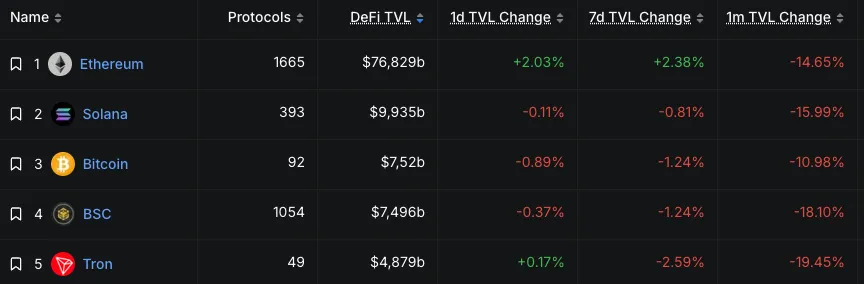
TVL in the DeFi ecosystem approaches $10 billion, surpassing BTCFi, BNB Chain, and TRON; among the leading platforms are Jupiter, Kamino, and Jito.


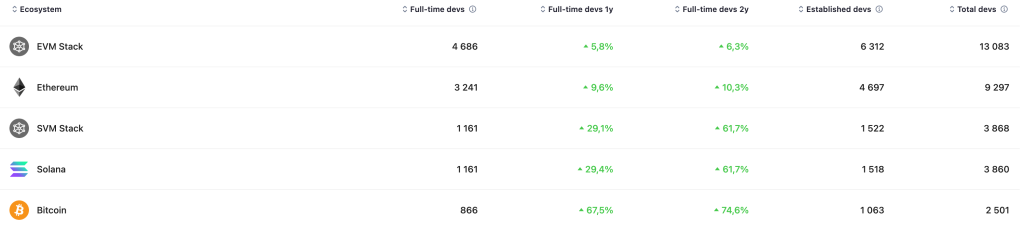
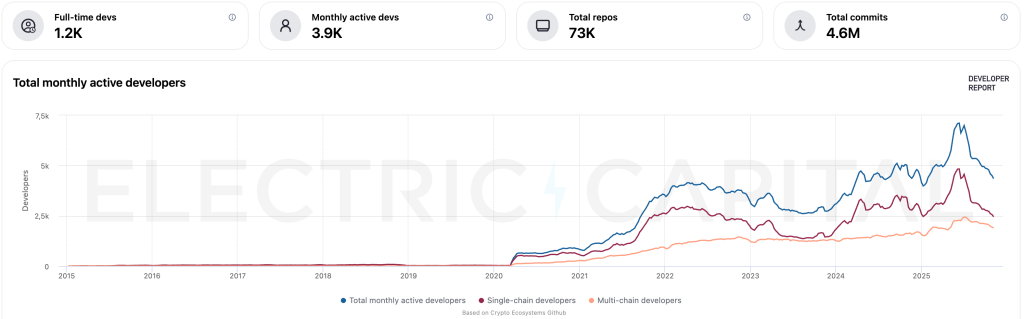
Developer activity on Solana remains relatively high. This may indicate an effort to build a more resilient ecosystem foundation, not limited to speculative trading.


Despite these positive factors and inflows into recently launched spot ETFs, the price of SOL has dropped by approximately 21% over the past 30 days, according to CoinGecko. At the time of writing, the asset is trading at around $155.
Earlier, Bitwise’s Chief Investment Officer Matt Hougan suggested that Solana could replicate Bitcoin’s success.