



By the day, more users are becoming customers of ChatGPT. Though the chatbot’s reliability sometimes leaves something to be desired, convenience and speed win out.
To improve the quality of generated content, AI firms draw on the fruits of human creativity—mostly without paying for it. The blockchain team at Story Protocol has devised a way to compensate people who have not always knowingly contributed to training large language models (LLMs).
This ForkLog piece explores creative content, its value and the new resource-allocation economy for the AI era proposed by the protocol’s creators.
AI: a medieval church
In the Middle Ages, scholars and artists did not associate their works with an act of creation. Church influence reduced their role to conduits of divine knowledge expressed as best they could. On rare occasions monarchs personally granted authors of literary works “privileges”—the earliest form of copyright.
In 1710 Britain’s Parliament passed the Statute of Anne. It sought to counter an publishers’ monopoly and protect authors of books, maps and drawings, offering them 14 years of rights with a possible extension. It was the world’s first law governing intellectual property.
In 1886 the first international copyright agreement, the Berne Convention, was signed. The treaty has been revised many times; the United States, for instance, joined only in 1988.
Lawmakers around the world expanded protection to ever more forms of intellectual value: music, film, advertising, brands.
The first court case to mention the then-new technology—the internet—came in 1993, when Playboy sued an individual for posting scanned magazine pages on a personal website.
By 1998 international instruments set limits on using computers to copy and reproduce protected works. In many countries, rights extend to 70 years after the author’s death.
Today, formalised intellectual property prevents the state or church from owning a creation; at worst it enters the public domain. But things changed with a new actor on the world stage—artificial intelligence.
Large language models do not need permission to use user content. Fueled by such material, chatbots like ChatGPT are in constant training.
However, according to leading entrepreneurs in the field, the stock of data is near exhaustion, and training on “synthetics” sharply degrades quality. The mutual dependence of content makers and giants such as OpenAI has become plain.
Blockchain lets everyone get paid
In April 2023 the social platform Reddit said it would start charging for access to its API by firms scraping data to train LLMs. In 2024 the platform signed a $60m contract with Google and announced a partnership with OpenAI to integrate with ChatGPT and other products.
Such corporate moves signalled new approaches in the AI economy. It was not OpenAI’s first such deal: it had earlier reached agreement with the Associated Press, and in December 2023 German media giant Axel Springer granted access to its material.
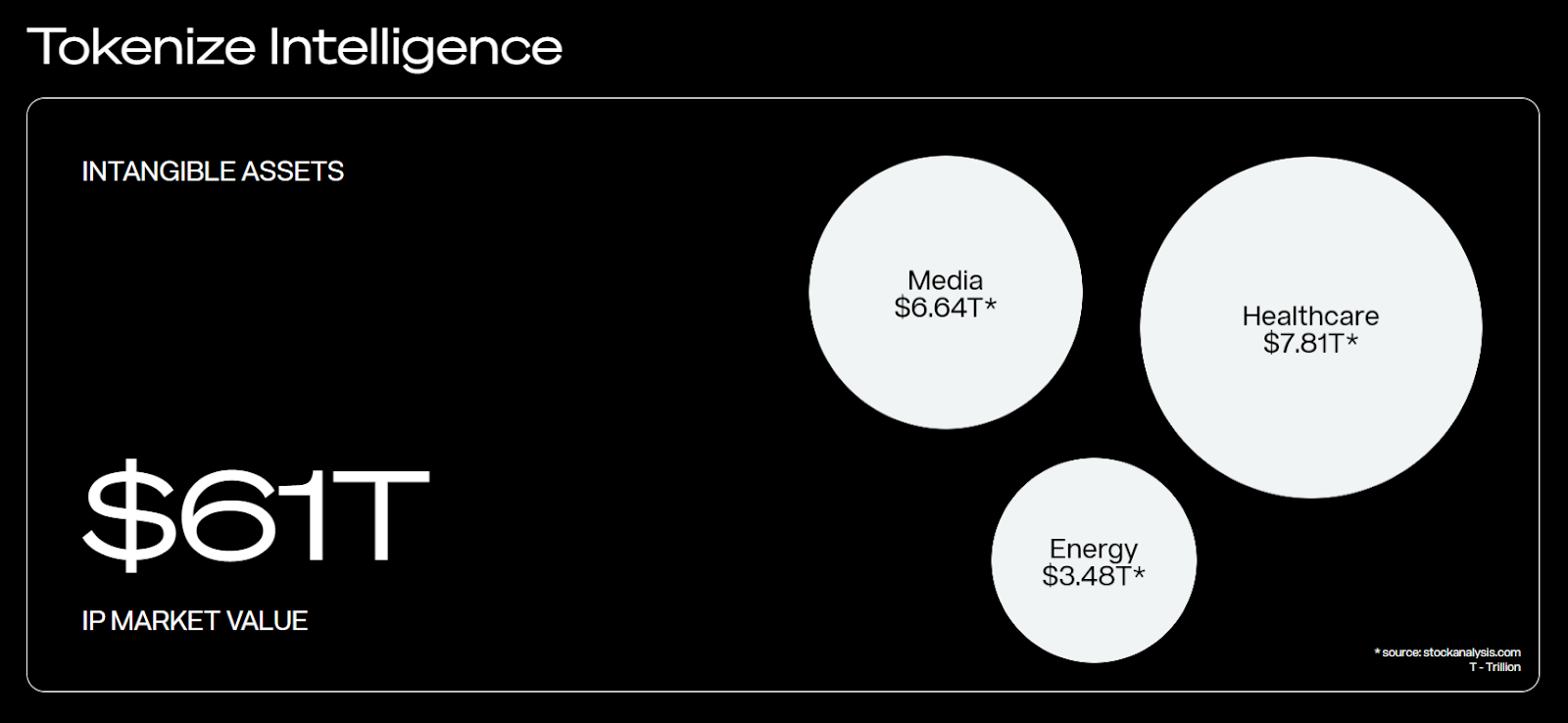
With that trajectory in mind, the founders of Story Protocol set out to answer two questions: how to motivate creators of original work, and how to make the AI firms that depend on them pay for it? The potential IP market is vast, which the project’s analysts peg at about $61trn.


Story Protocol co-founder Jason Zhao told Cointelegraph one reason for building the project. Citing a viral AI-generated video about Harry Potter and the fashion house Balenciaga, he underlined the task blockchain is meant to solve: distributing value fairly.
“J.K. Rowling does not win, the person who made the video, as well as the community, does not win either; you end up with a situation in which everyone loses,” Zhao noted.

He also pointed out that unresolved IP issues lead to events such as The New York Times’s lawsuit against OpenAI for using data without permission.
“GitHub for intellectual property”
Story Protocol was founded in 2022 by former Google DeepMind product manager Jason Zhao and his partner, who goes by SY Lee.
The team aims to make intellectual property programmable, providing a marketplace where rightsholders set the terms of use.
Backers include Polychain Capital, Hashed, 11:11 Media (owned by Paris Hilton) and Samsung Next. According to Cryptorank, the May 2023 seed round raised $29.3m led by a16z. In September a Series A brought in a further $25m. In August 2024 Story raised another $80m in a Series B.
Story Protocol is an EVM-compatible layer-1 (L1) network built on the Cosmos SDK. It can process complex data structures via a graph-like storage architecture at the execution layer and a consensus protocol, Proof-of-Creativity. The technical documentation cites instant transaction finality and low fees.
With Story Protocol, creators can:
- register their works on-chain;
- configure automatic licensing;
- split royalty income;
- get paid without intermediaries;
- protect their works from unauthorised use.
A programmable IP licence ties a legal contract to a smart contract. The document complies with the Berne Convention and is applicable in most markets worldwide.

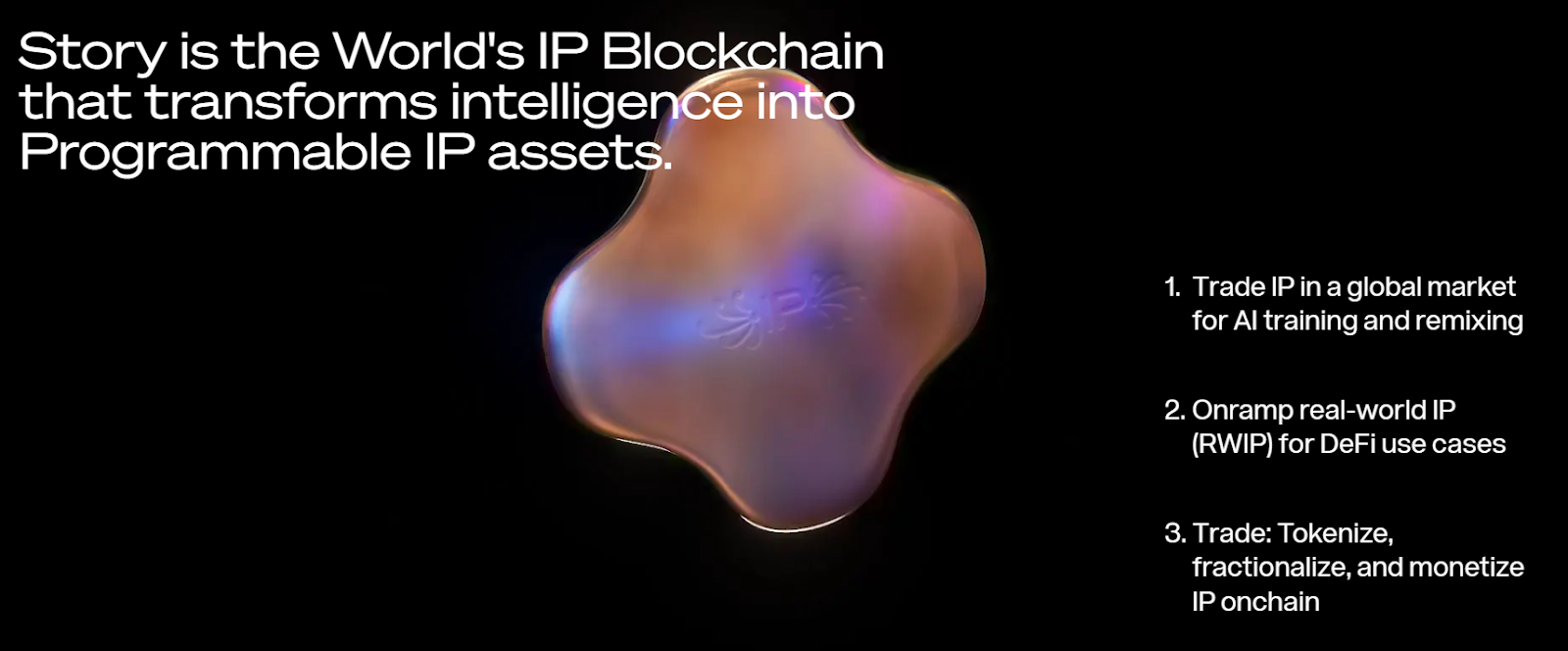
IP assets are issued as NFTs using a modified standard, ERC-6551. The technology turns non-fungible tokens into smart accounts that can manage assets, execute transactions and interact with smart contracts and decentralised apps (dapps).
The Story Protocol ecosystem token launched on 7 February 2024, ahead of mainnet on 13 February that year.
The IP token serves several core functions within Story:
- security. Validators stake IP to participate in consensus;
- gas. IP is required for all on-chain interactions;
- governance. Token holders help steer Story Protocol.
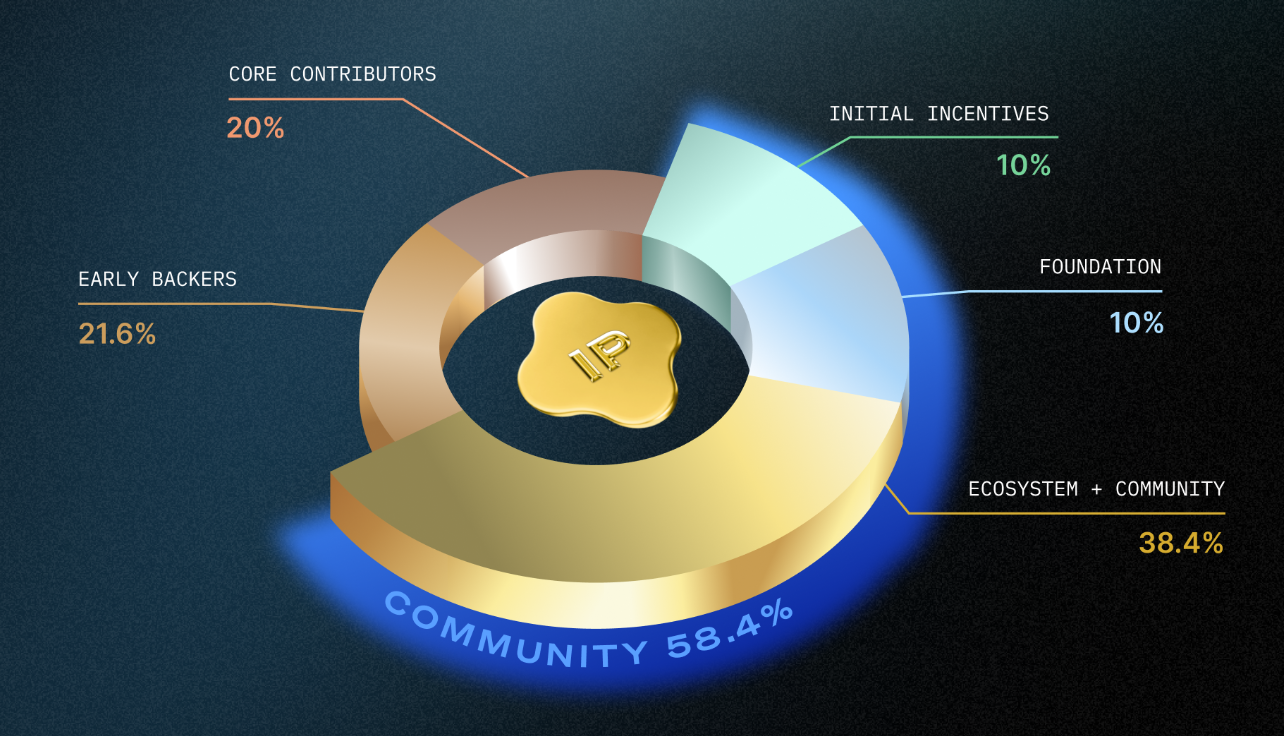
The structure and distribution of IP are designed for long-term community engagement. Total supply is 1bn tokens, with an initial 25% unlocked.
A portion of IP is burned with every transaction, which over time may reduce the total supply. A Fair Launch ensures no one starts earning rewards ahead of the community.
February 2025 was the Singularity Period—staking or delegating tokens without rewards. After the Big Bang on 2 March 2025, rewards accrue to all participants. The lock-up period is at least six months.

On 7 March the team debuted the IP Portal—anyone can now register a creation and program its IP. As Jason Zhao said on X, within weeks everyone will be able to mint a licence token. The co-founder calls the portal “the GitHub for intellectual property”.
Ecosystem and an agentic environment
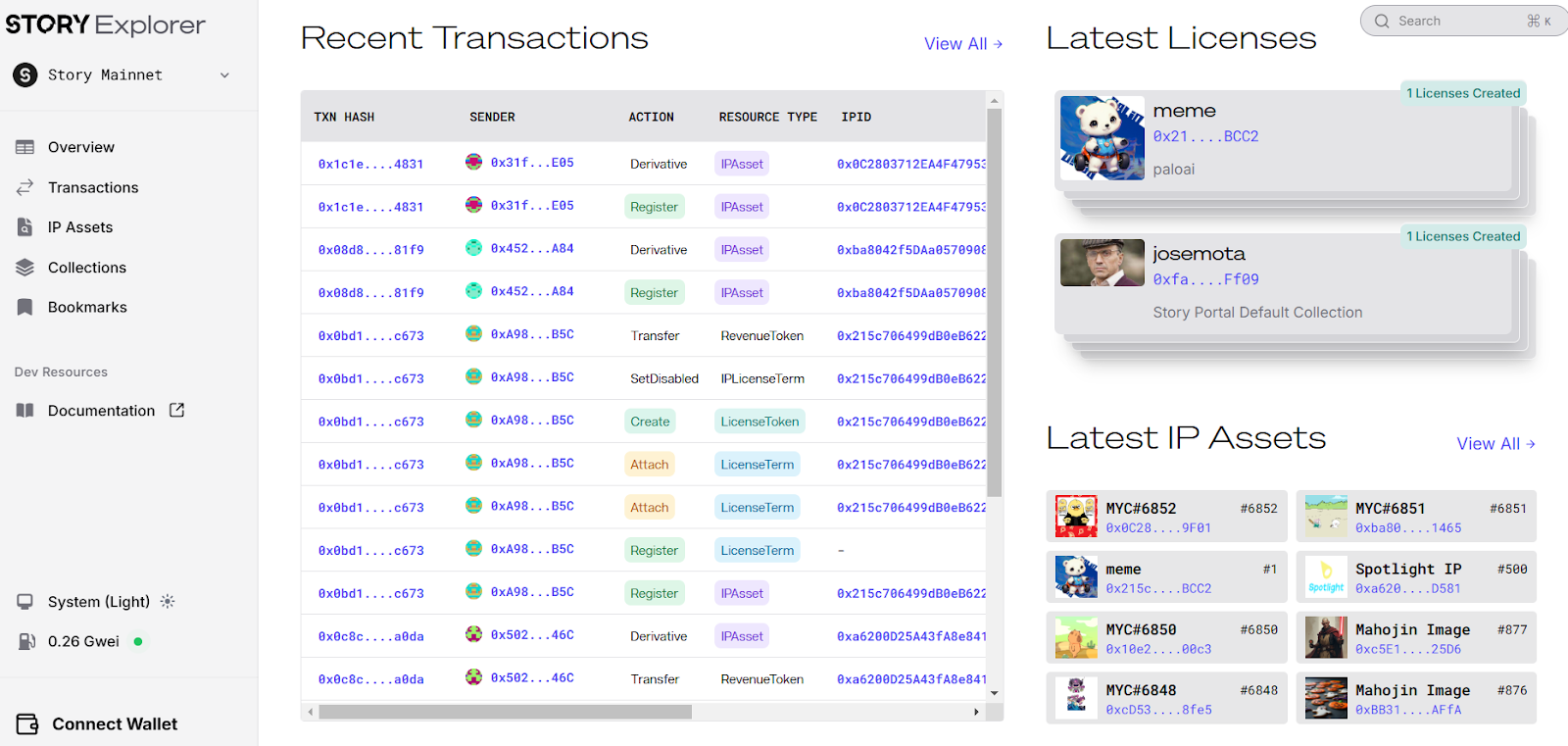
Since inception, more than 50 dapps have been deployed on Story Protocol. The protocol’s explorer lets users analyse all IP transactions in real time.

One of the most popular dapps in the ecosystem is Magma. With more than 2m users, the platform lets teams create and edit digital art in real time.
Authors can open their works to community remixing. Users can see who remixed their piece and how it evolved over time.

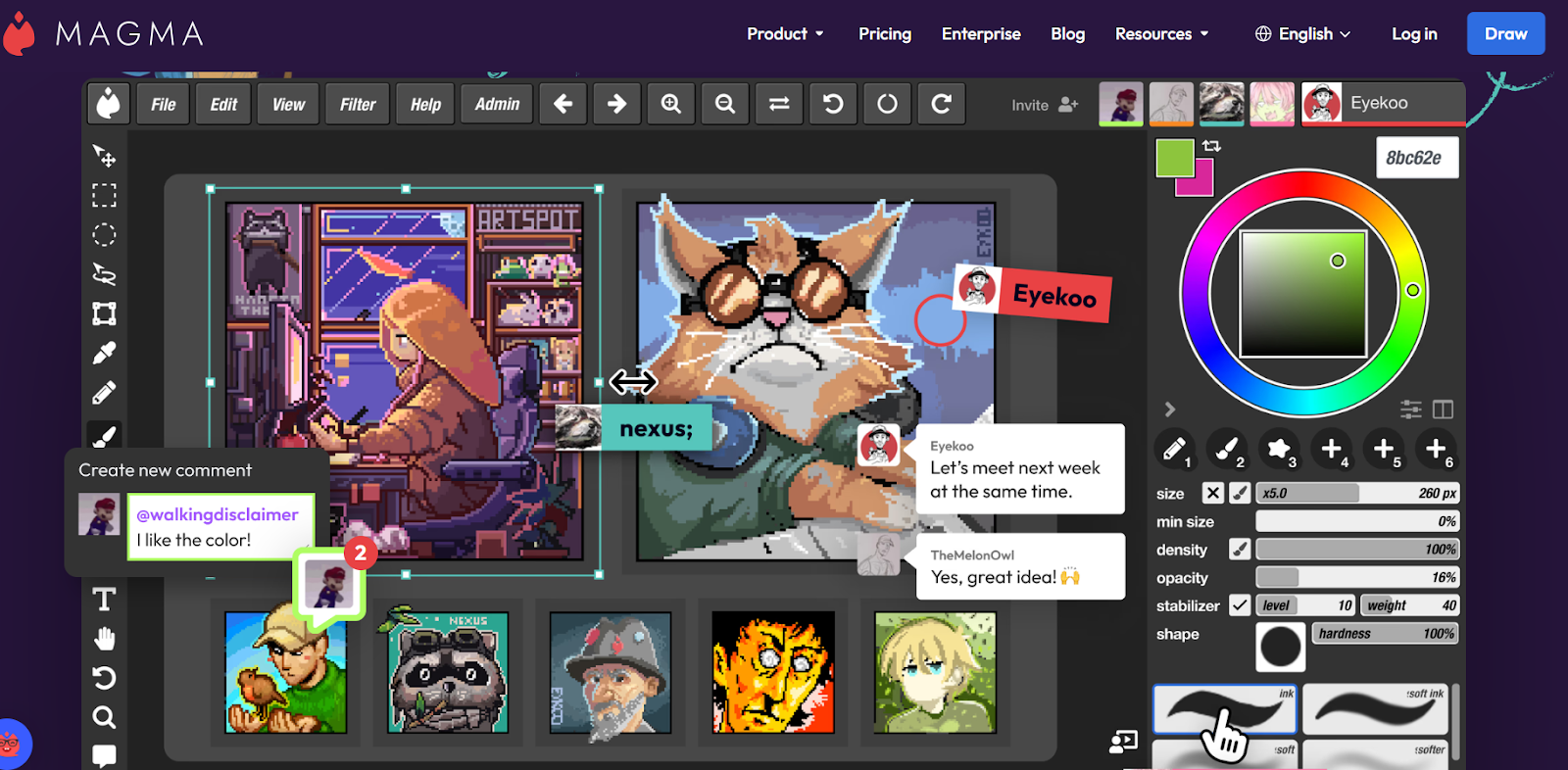
Creators can flag their works for remixes in the Magma interface. Once the original is published, its author and all additional contributors receive a share of rights to the new version.
The owner of the original can also set rules allowing only non-commercial use of remixes, without fretting about potential brand damage.
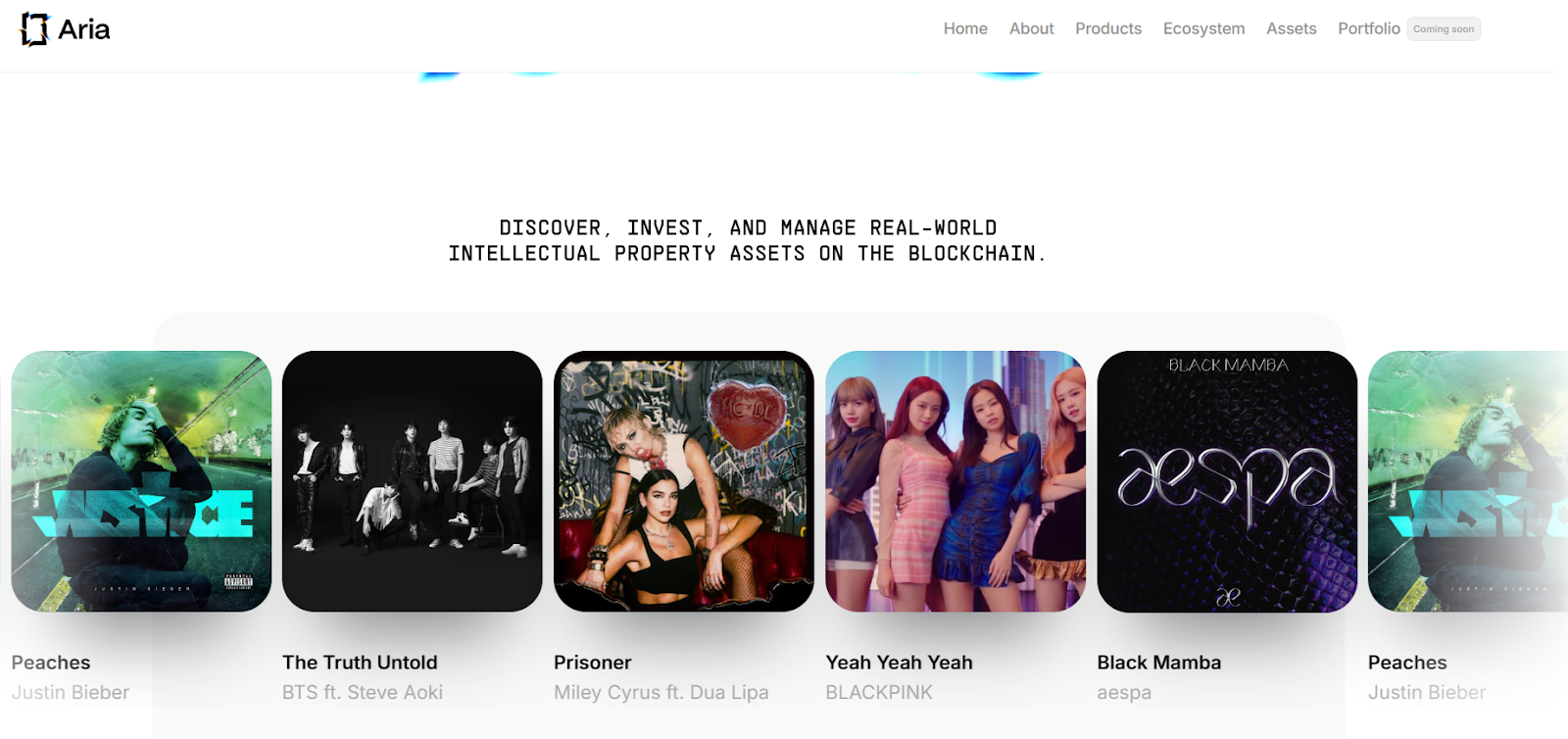
On March 4, 2025, the IP menu of the Aria Protocol app added co-ownership of works by Maroon 5 and Katy Perry. The list already included BTS, Miley Cyrus and Justin Bieber.
Aria is a Web3 platform that turns intellectual property into digital assets. It allows rightsholders, patrons and investors to accelerate development and scale signature works using crypto tools.

In December 2024 the Story team introduced an experimental environment for AI-agent interactions.
The ATCP/IP protocol allows autonomous data exchange among bots. AI agents can be compensated for information they provide. The Agent Control Protocol for IP lets bots strike deals and trade in complex IP agreements and contracts.
Earlier that year Story Protocol announced a partnership with Ritual, enabling users to upload AI models they build into the protocol. That will let them track text, image and voice outputs. In December 2024 Story’s leaders first hired an AI agent. Luna by Virtuals runs an X account for $365,000 a year.