




The trajectory of realized losses after FTX collapse eased, and on-chain activity showed a positive shift. Analysts at Glassnode arrived at these conclusions.
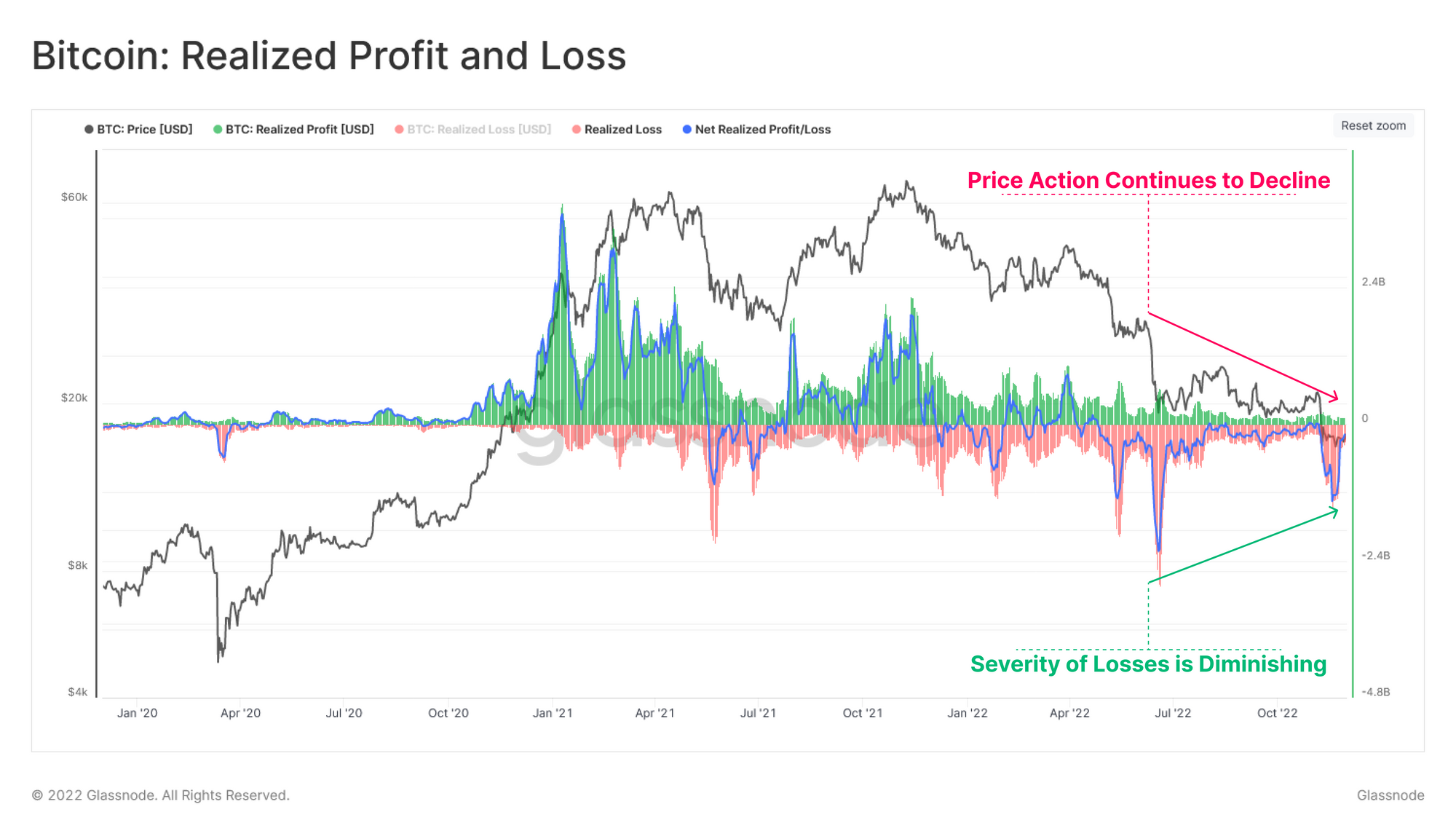
The FTX collapse contributed to a record daily volume of realized losses (about $4.435 billion). In the following days, the degree of capitulation diminished, based on the weekly moving average of the metric.
Analysts noted that after Terra ecosystem collapse realized losses amounted to about $700 million daily for the following two weeks.


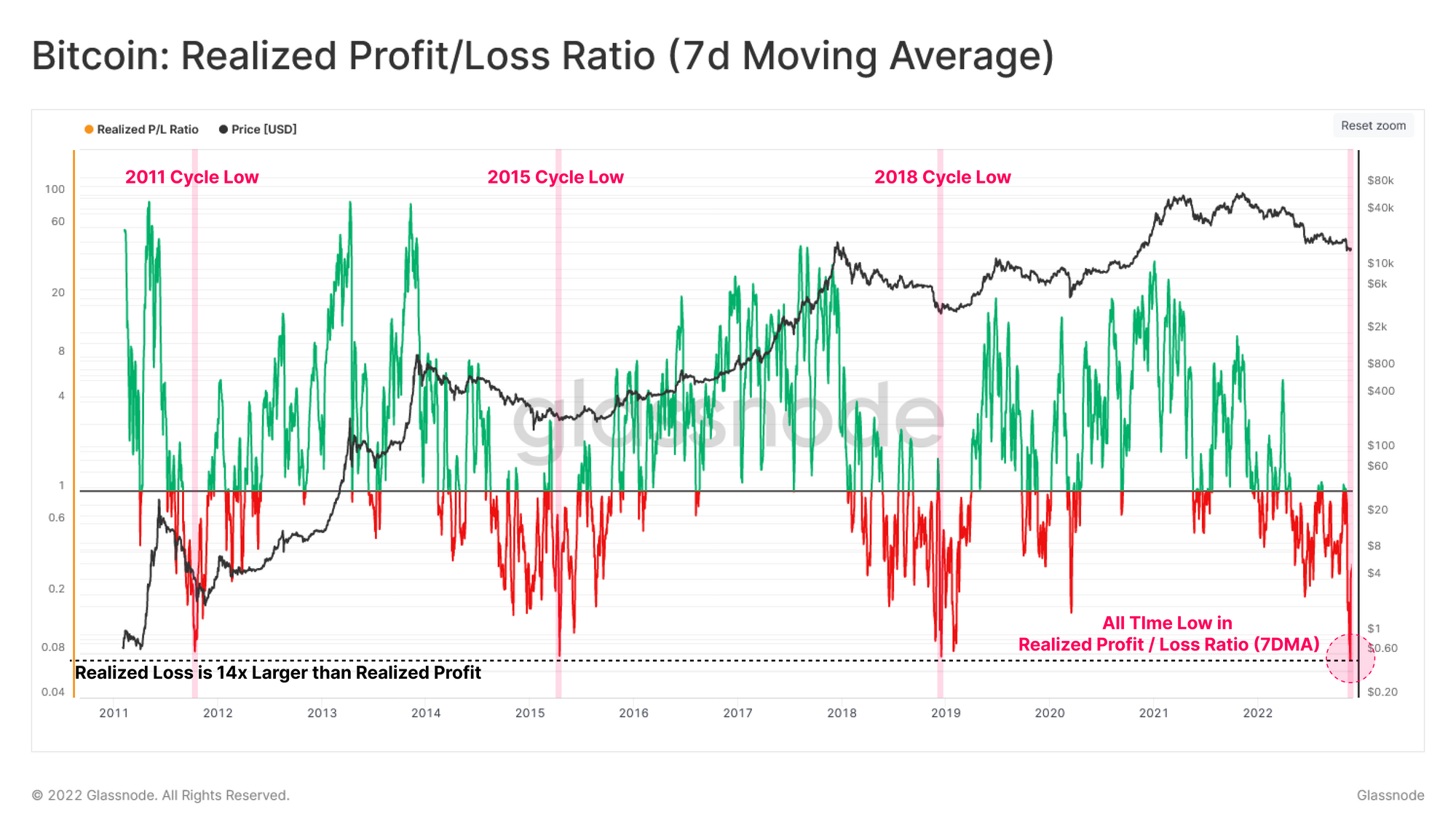
Analysts examined the ratio of realized gains to losses, which reached record-low levels — the gains were 14 times smaller than the losses. Previous similar situations preceded market-phase shifts, they warned.
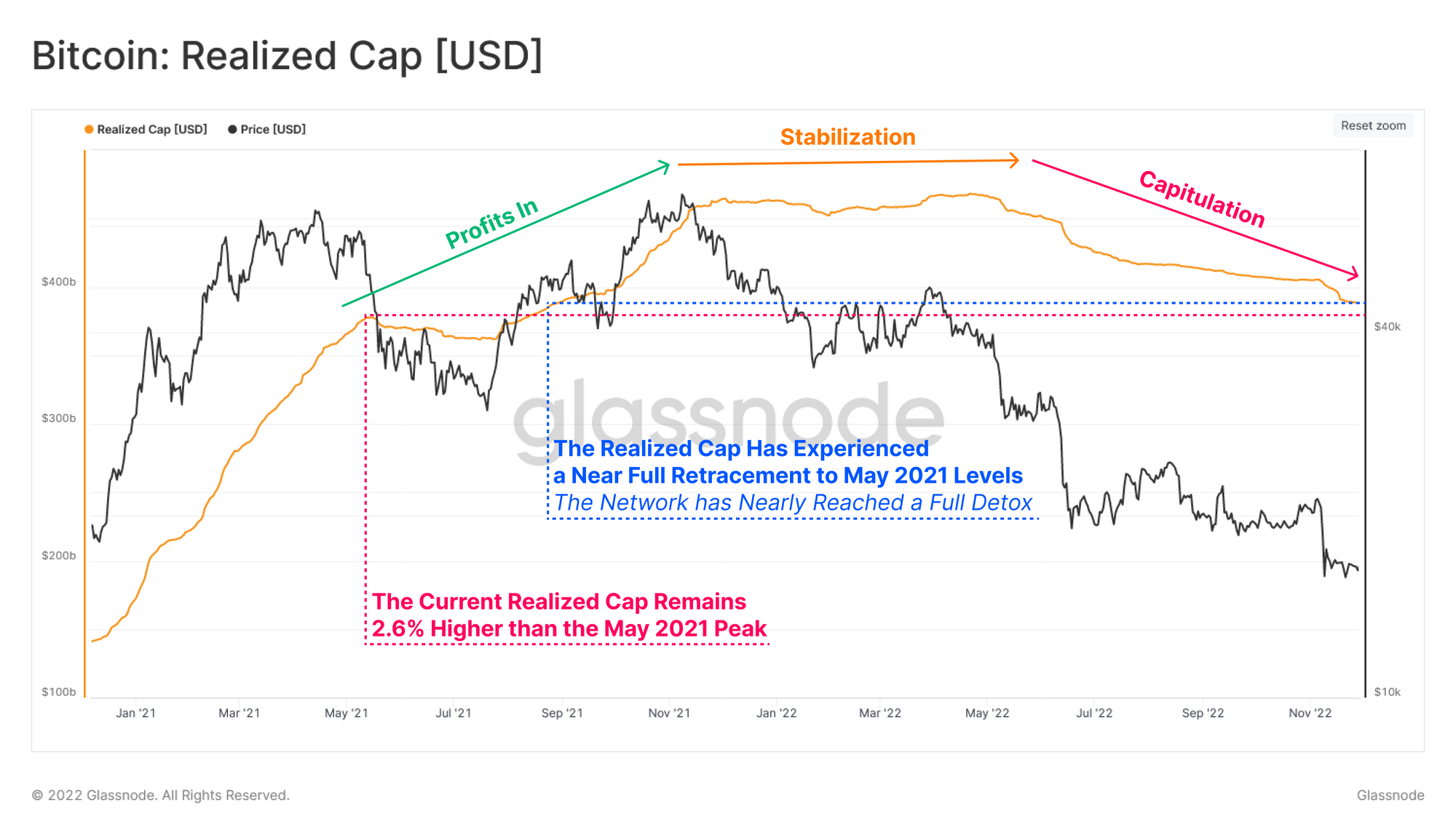
Based on the realized capitalization metric, analysts found that after Terra’s collapse in May 2022 there remains a capital outflow — participants are closing purchases made near market tops at a loss.
The metric returned to levels seen before the market moved toward its historical high (November 2021), indicating near-complete ‘detoxification’ of this excess liquidity, the specialists stressed. In fact, the observed outflow was the third-largest in history and exceeded the 2018 levels, the most relevant given the maturity of the market cycle.
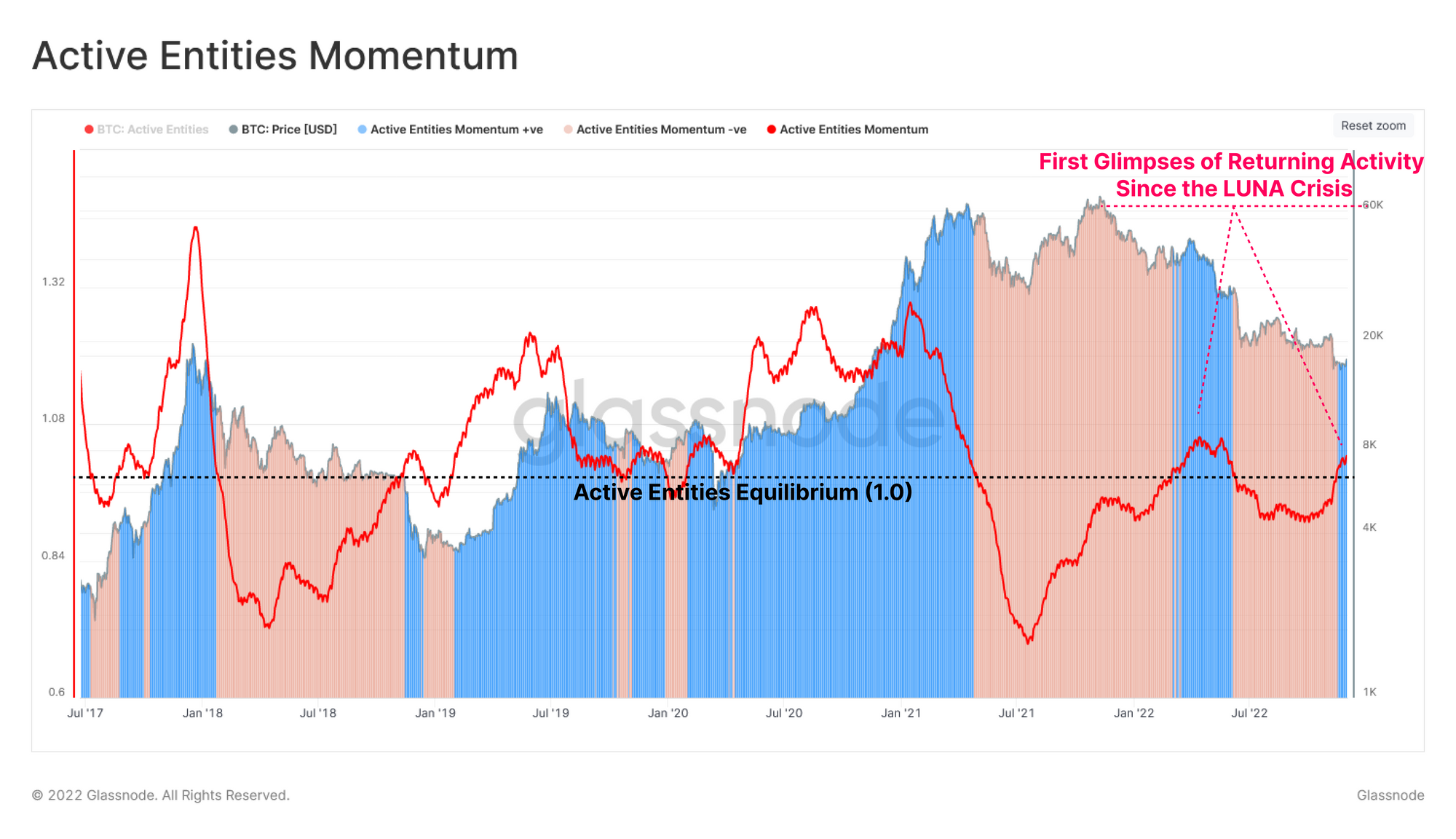
The decline in prices became a catalyst for improving on-chain metrics. For the first time since April 2022, when Bitcoin was valued at $48,000, the monthly moving average of the number of active address clusters exceeded the yearly moving average. A similar pattern is observed in the miners’ fee metric, indicating higher block utilization.
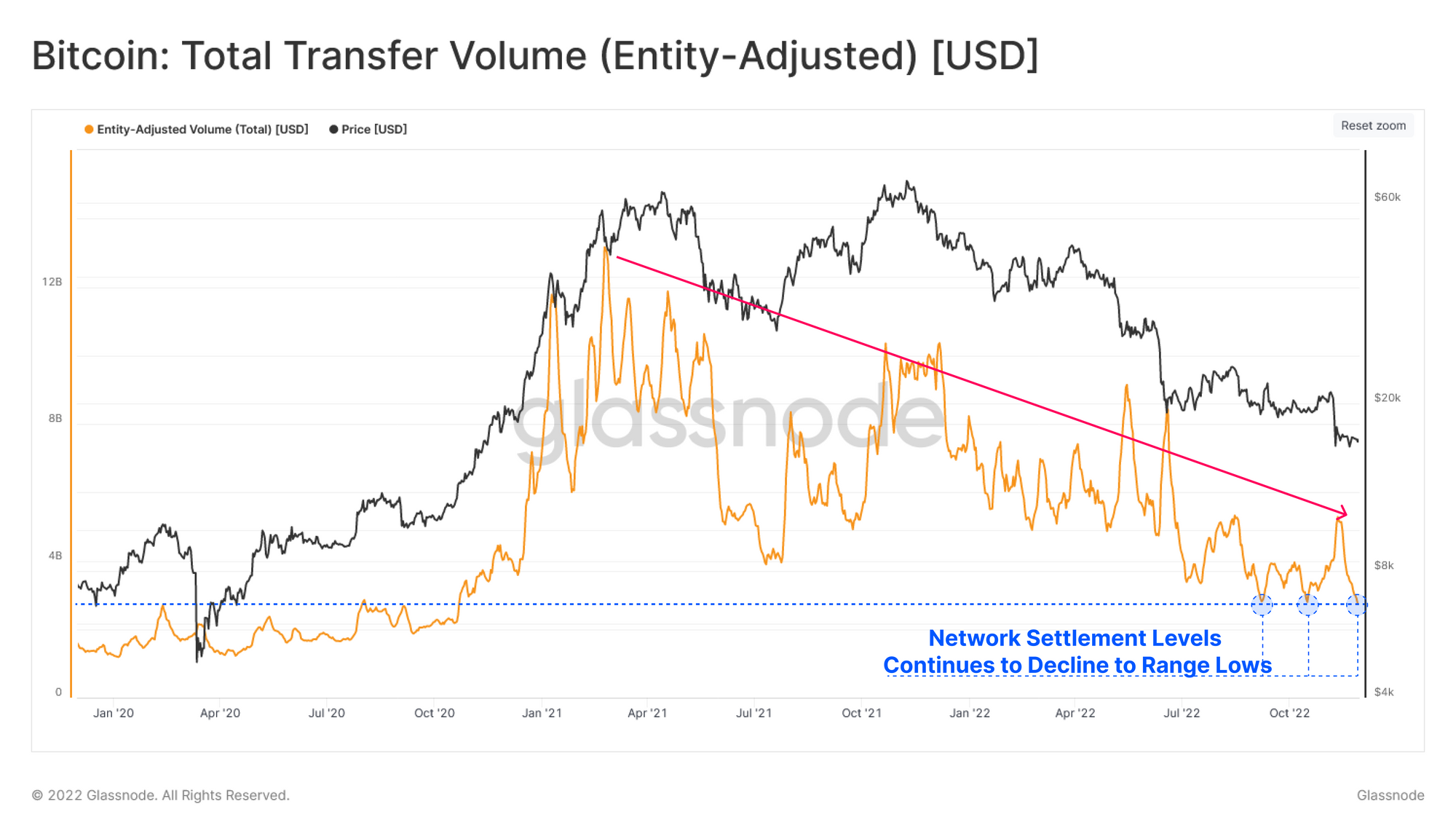
The weakness in the on-chain value transfer volume remains near the cycle’s minimum. Against rising active addresses and transaction activity, this suggests reduced whale dominance and greater use of the blockchain by smaller market participants.


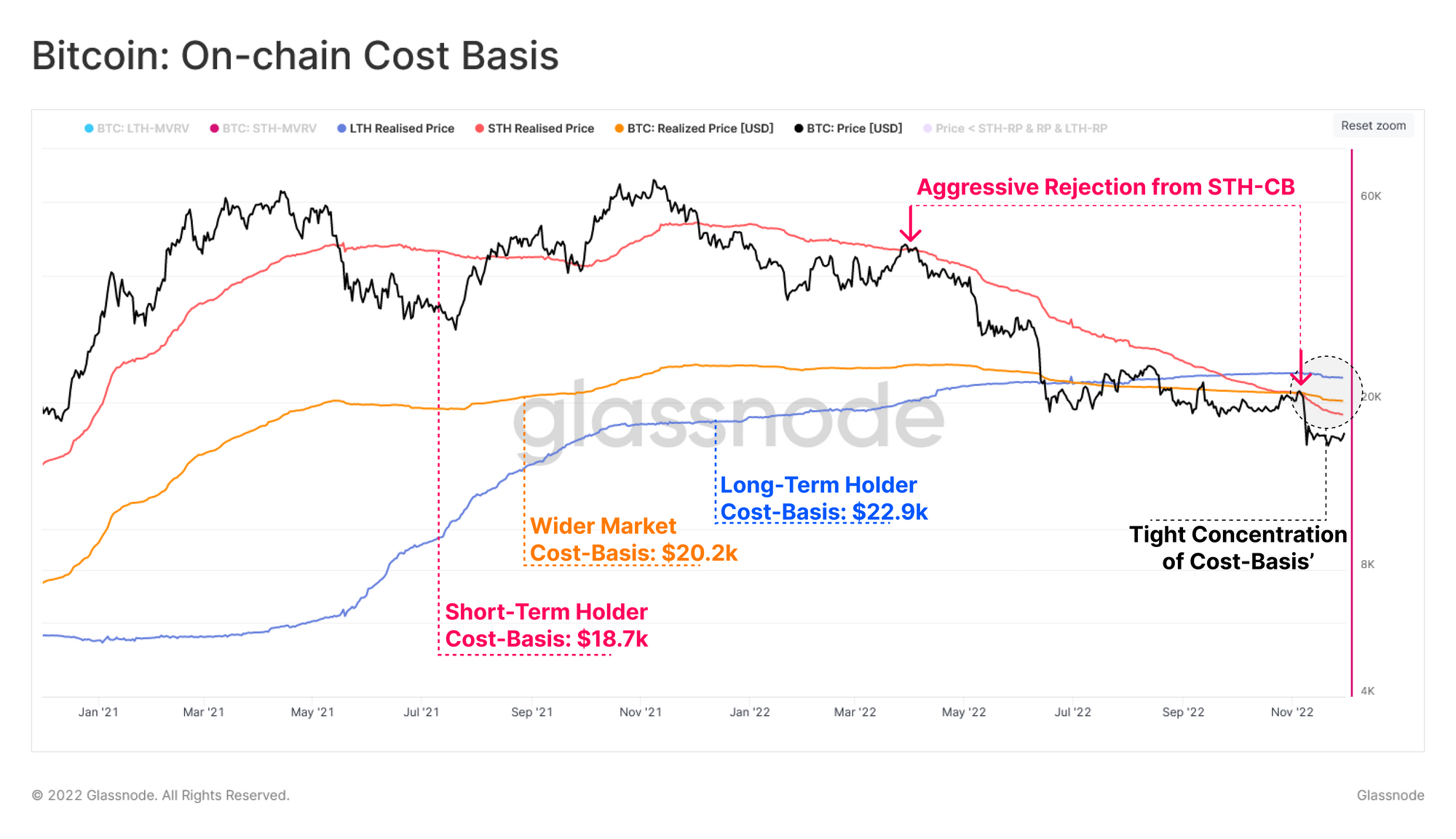
In conclusion, analysts examined the ‘cost basis’ of held Bitcoins for short- and long-term investors. The first measure was $18,700, the second $22,900.
The sharp decline in November in the price at which speculators acquired the first cryptocurrency recently reflected a large volume of coins moving hands. The convergence of these measures may lead the market to behave more coherently in response to volatility.
“The perceived risk and opportunities among all participants, old or new, have become the same. This will ensure the continuation of a full ‘detoxification’ of the market,” they explained.
In November, unrealized losses across all investor types stood at 56% of Bitcoin’s market capitalization. Against the extremes of previous bear markets, the indicator also exceeded 50%. This is stated in ForkLog’s analytical report for November.
Follow ForkLog’s Bitcoin news in our Telegram — cryptocurrency news, prices and analysis.