



Belarus’s Potential as a Regional Crypto Hub Evaluated by Experts
Lukashenko acknowledged the growing popularity of cryptocurrencies in the country.
Since the beginning of September, President Alexander Lukashenko has been actively promoting the development of digital assets in Belarus. ForkLog consulted experts to assess the readiness of the legislation and the country’s potential to become a new regional crypto hub.
Context
On September 5th, Lukashenko held a meeting on cryptocurrencies, reported BELTA. He called for clear and transparent rules and control mechanisms for the digital asset market, citing the economic downturn due to sanctions from Europe and the United States.
“It is important for us not to lose sight of trends and not to forfeit our technological leadership. Naturally, those who set trends gain the most benefit. God willing, we will manage to set this trend and not put the cart before the horse,” the president stated.
On September 9th, a meeting took place between the head of Belarus and the National Bank’s apparatus and the leadership of credit organizations. During the session, Lukashenko stated that commercial financial institutions need to more actively implement digital assets to ensure external payments.
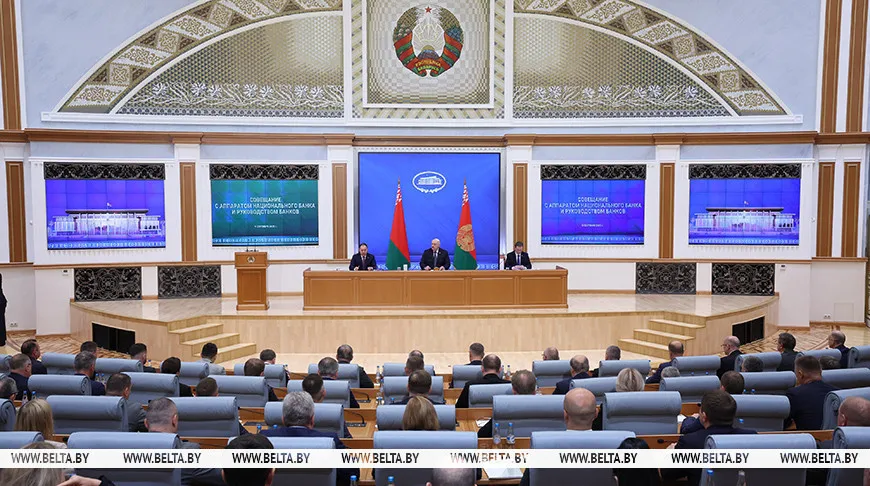
“Over the past five years, the economy, along with the Belarusian banking sector, has faced unprecedented challenges. The government and the National Bank have been given appropriate instructions. Now act,” he said.
Lukashenko acknowledged the growing popularity of cryptocurrencies. According to him, in the first seven months of 2025, the volume of payments through cryptocurrency exchanges in the country amounted to $1.7 billion. By the end of the year, this figure could reach $3 billion, he estimated.
The President of Belarus also instructed banks to accelerate the implementation of virtual payment systems, starting with QR codes. He stated that within the digital strategy, credit organizations should pay special attention to the use of biometric technologies and artificial intelligence-based solutions.
Expert Opinions
Andrey Tugarin, founder of GMT Legal, noted that Belarus has reached a critical stage in the regulation of digital assets. According to him, the existing framework in the form of Decree No. 8 and regulatory acts of the HTP creates legitimate conditions for the operation of crypto exchanges and exchangers.
“The chosen approach to regulation cannot be called spontaneous or a trend chase; everything is proceeding quite consistently. Many countries started with a similar scenario, looking back at past experiences,” he added.
According to the expert’s forecasts, future legislative initiatives in the country will contribute to the emergence of new participants and services. This “will only increase Belarus’s attractiveness in terms of both investment and innovation.”
“Technologies always develop more comfortably in regions with regulation, even at early stages,” Tugarin said.
Ignat Likhunov, creator of the legal agency Cartesius, pointed out a fundamental contradiction. On one hand, the authorities aim to create an attractive regulatory environment to attract foreign investment in the crypto sector. On the other hand, the active implementation of digital assets carries risks of macroeconomic destabilization.
“The effect is particularly pronounced in situations where there is too much money supply (relative to the real production potential), to briefly outline the fundamental and inevitable economic processes,” he noted.
Discussing Belarus’s potential to become a regional crypto hub, Likhunov highlighted both advantages and serious obstacles.
“The clear advantages include the relatively early regulation of cryptocurrency circulation (it was recognized as a commodity there as early as 2018), unique tax benefits for HTP residents – reduced tax rates and no VAT, which are in effect until 2049, as well as support for mining through investment agreements with fixed electricity prices,” he explained.
However, ambitions are hindered by restrictions for ordinary users. In particular, the ban on P2P transfers outside the HTP, the blocking of bank cards, and mandatory wallet identification. According to the expert, all this creates an unfriendly environment for private investors.
“Moreover, increasing regional competition and, most importantly, the sanction pressure from the EU and the US, which has not disappeared and has only intensified since 2020 and 2022, seriously limit the aforementioned opportunities for integration into the global financial system and attracting large international capital,” he added.
Likhunov also pointed to internal contradictions and bureaucratic obstacles that could hinder the implementation of the chosen strategy.
Back in the second half of 2026, Belarus will begin the full operation of the digital ruble.
Рассылки ForkLog: держите руку на пульсе биткоин-индустрии!