




August’s consolidated revenue of Bitcoin miners amounted to $551 million. The figure fell by 19% from the previous month, according to ForkLog’s report.
Revenue from transaction fees also declined from $10 million to $9 million. However, their share of the total for the month rose from 1.41% to 1.63%.
The decline in income occurred amid a modest increase in hashrate (+3.6%) and a relatively high mining difficulty. The latter metric only at the end of September fell by 2.14%, marking the first negative trend since July 21.


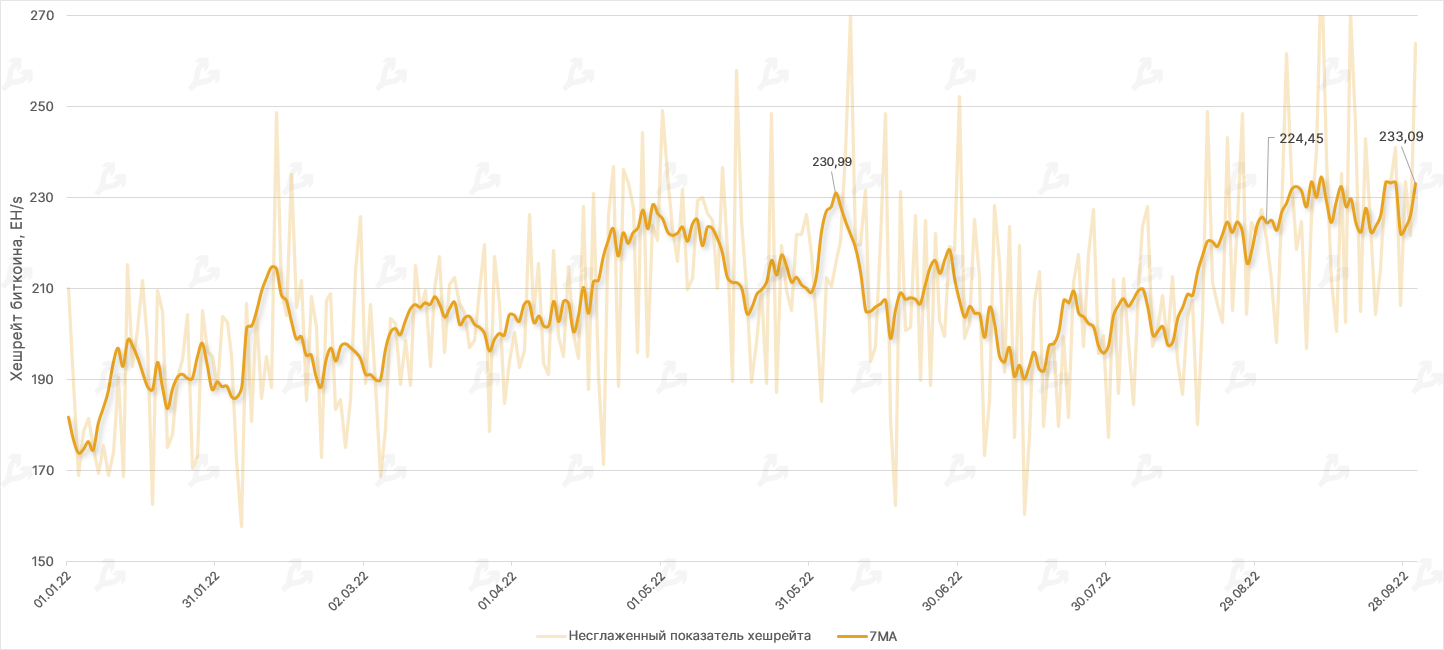
In parallel with Bitcoin’s stagnating price, this led to a contraction of the хешпрайс to levels last seen in July 2020. At that time, digital gold traded below $10,000.

This factor, together with irrational financial management and overly aggressive investments became the cause of losses for many publicly traded mining companies.
Foundry USA strengthened its lead among the largest Bitcoin pools — its share of total hashrate rose above 25%. AntPool also significantly expanded its market positions during the month — from 15.4% to 17.8%. The F2Pool share for September rose from 15.1% to 16.3%, and Binance Pool — from 9.8% to 12.1%.
Poolin’s share of total hashrate fell from 10.2% to 5.3% — last month the company acknowledged liquidity problems, and subsequently outlined a plan to resume withdrawals.

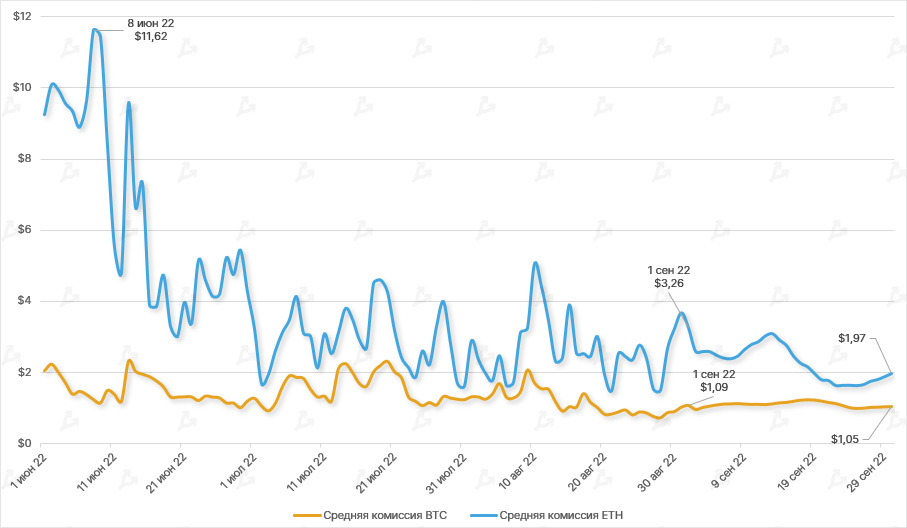
Following Ethereum’s migration to the Proof-of-Stake (PoS) consensus algorithm Proof-of-Stake as a result of the Merge upgrade, the network hashrate, as well as miner inflows, fell to zero. Over the month, the average Ethereum transaction fee dropped by 40% to $1.97. By contrast, Bitcoin’s corresponding figure, which remained around $1 throughout September, is almost half that level.
With Ethereum’s move to PoS, miners of the second-largest cryptocurrency began switching to other networks. Coins such as Ethereum Classic (ETC), Ravencoin (RVN), Ergo (ERGO) or Beam (BEAM) saw a sharp rise in hashrate.
By the end of the month, their metrics began to decline. ETC’s hashpower fell to 147 TH/s from around 300 TH/s at the peak. The hash rate of the largest PoW fork ETHW as of October 1 stood at 48 TH/s. In the Ethereum network on the eve of the upgrade, computing power continued to operate at roughly 750 TH/s.
Sponsor of the column “Bitcoin Industry in Numbers” — Bybit, the ecosystem for crypto-traders.
As ForkLog explained in a feature explained in a feature, The Merge did not solve Ethereum’s scalability problem and how the project will develop.
Follow ForkLog’s Bitcoin news in our Telegram — cryptocurrency news, prices and analysis.