



On May 25, following the latest adjustment, the mining difficulty of the first cryptocurrency fell 4.33% to 29.9T. The drop was the largest since July 2021.


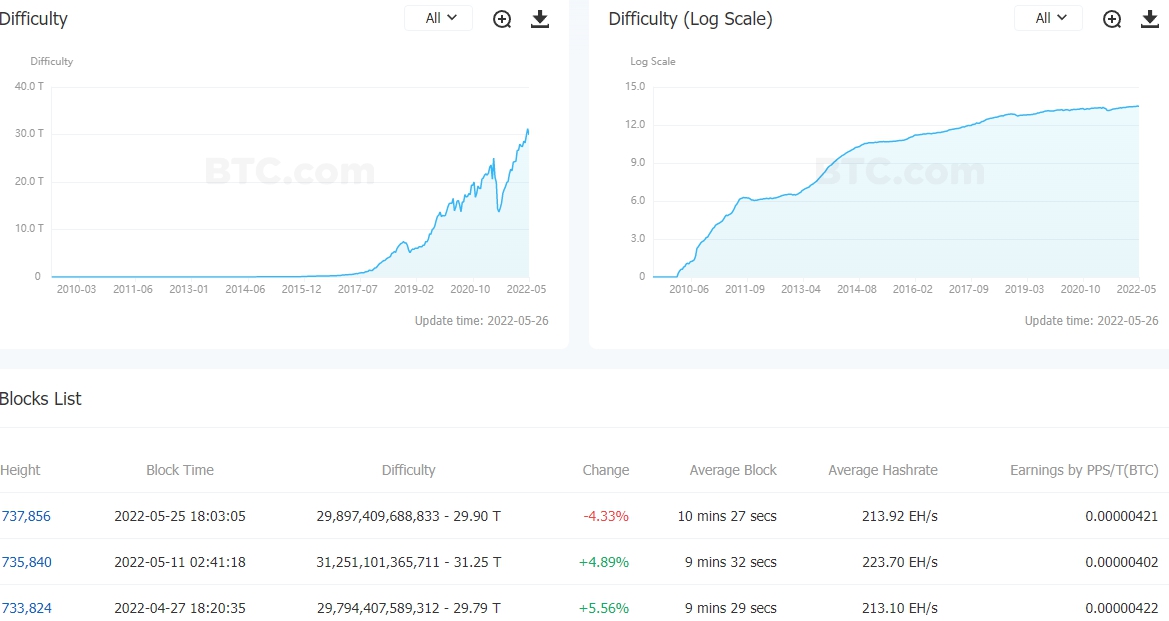
The average hashrate over roughly a two-week period since the prior difficulty adjustment stood at 214 EH/s, also retreating 4.3% from all-time high.
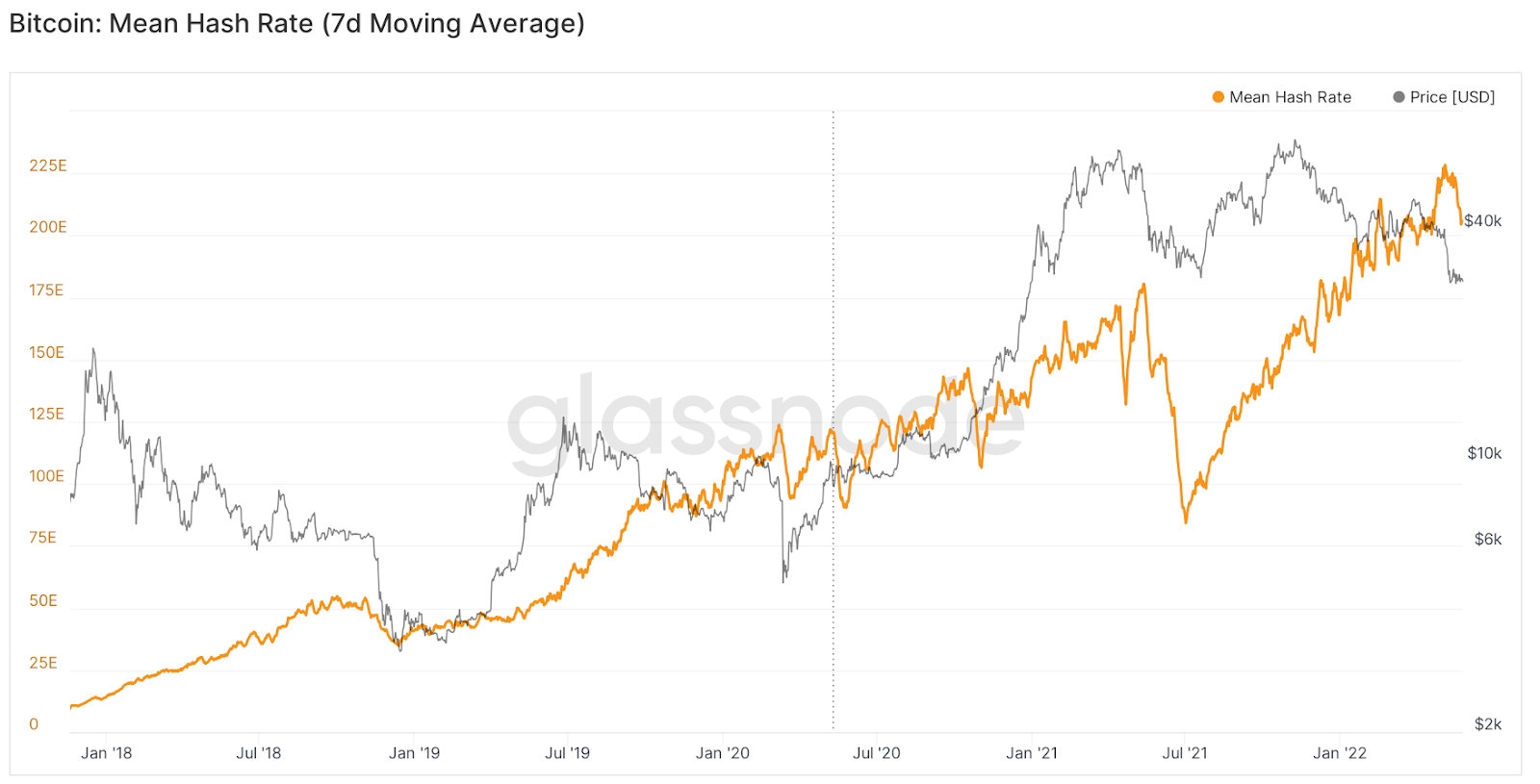
According to Glassnode, the smoothed 7-day moving average of the network’s computing power fell to 205.9 EH/s from a record high of 208.5 EH/s reached on May 5.


According to Arcane Research analyst Jaran Mellerud, mining profitability continues to fall rapidly.
The profitability of #Bitcoin mining continues plummeting.
In November, a miner could earn $500 by feeding an S19 with 1 MWh of electricity, but now this number has fallen to $146.
S9s with the industry median power price ($40 per MWh) are now close to the turn-off point.
⛏️⚡️ pic.twitter.com/TxGOayEexD
— Jaran Mellerud (@JMellerud) May 25, 2022
In November 2021, Bitmain’s Antminer S19 miners, consuming 1 MWh, yielded $500 to the owner. That figure is now down to $146. S9-series devices at the $40 level have approached the break-even point.
In April, company experts noted pressure on mining profitability due to the decline in Bitcoin price and rising hashrate.
The difficulty plummeted to a record low in July 2021 amid China’s ban on crypto mining.
In December, experts suggested that China accounts for up to 20% of Bitcoin’s hashrate despite expectations that miners would cease operations in the country.
Specialists at Cambridge’s Centre for Alternative Finance confirmed this — China remains second in the share of the network’s computational power.