



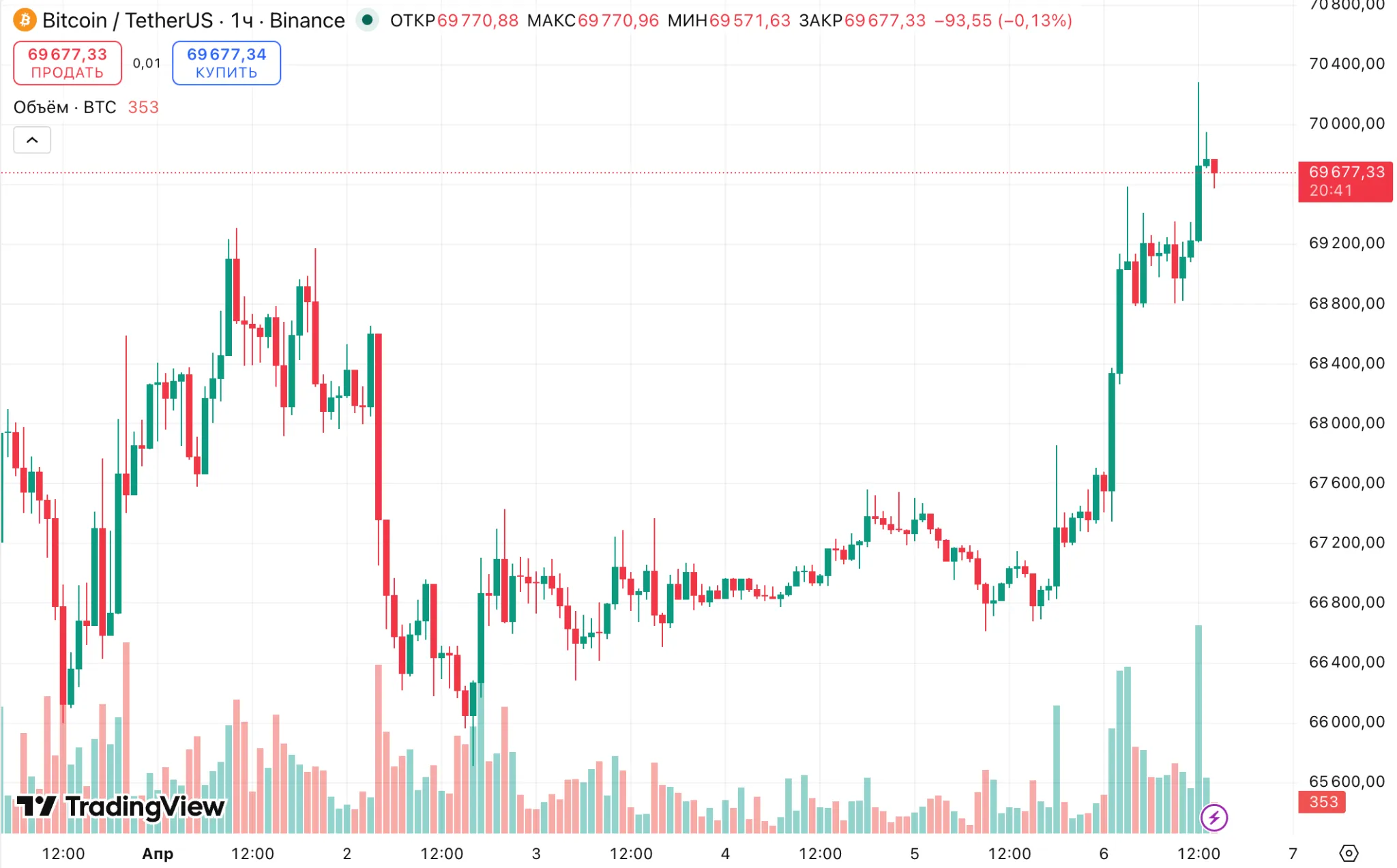
On April 6, the price of the leading cryptocurrency rose 4%, testing $70,000. The upbeat move in markets was driven by signs of a potential de-escalation of the conflict involving Iran.
At the time of writing, bitcoin is trading around $69,700.


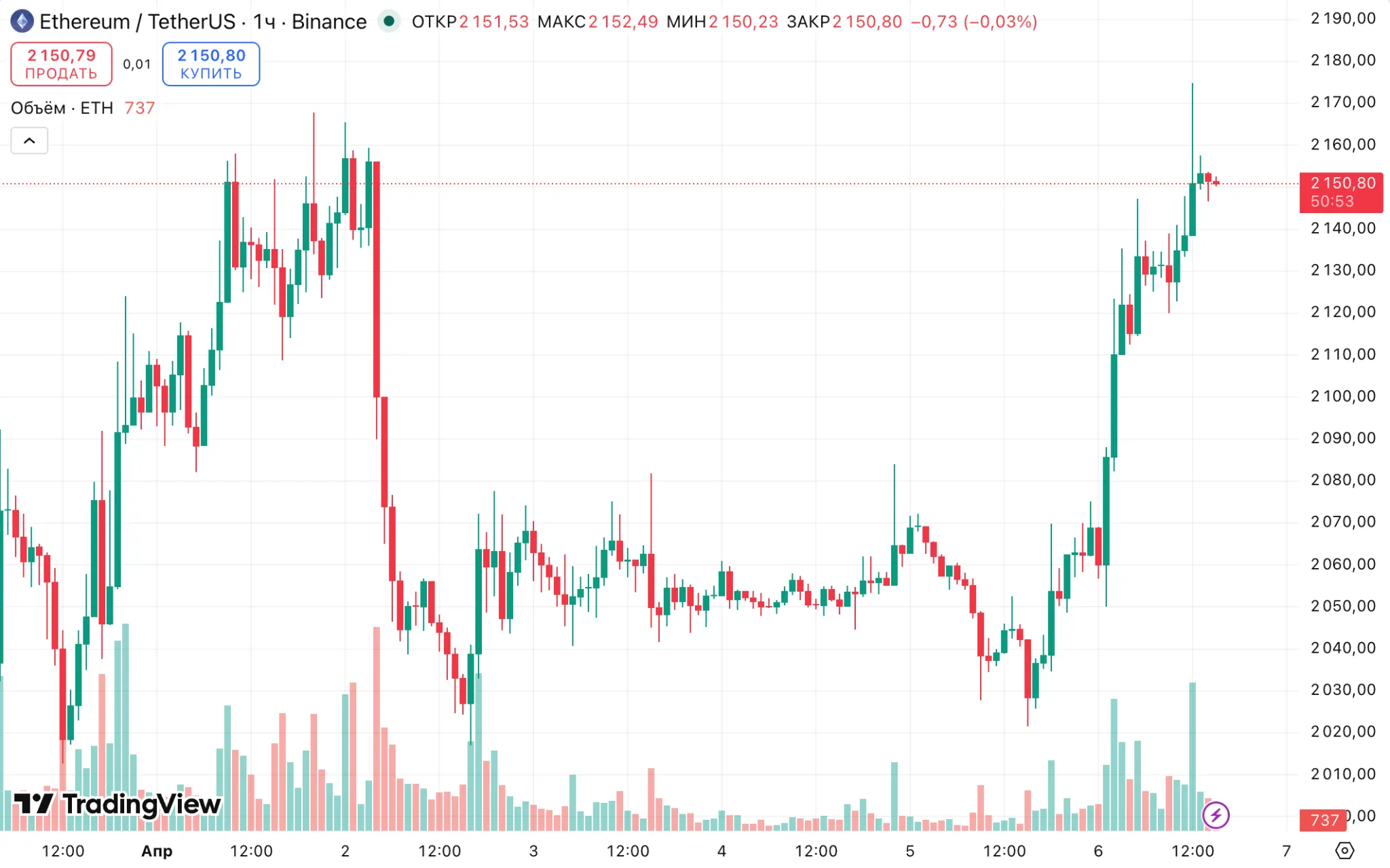
Ether rose 5.5% to $2,150.

According to Axios, the US, Israel and Iran are discussing a 25-day ceasefire. The report sparked hopes of easing tensions in the Middle East and the opening of the Strait of Hormuz.
Risk assets gained, while the dollar index fell. The greenback’s slide accelerated amid reports of Pakistan mediating the so-called Islamabad Agreement.
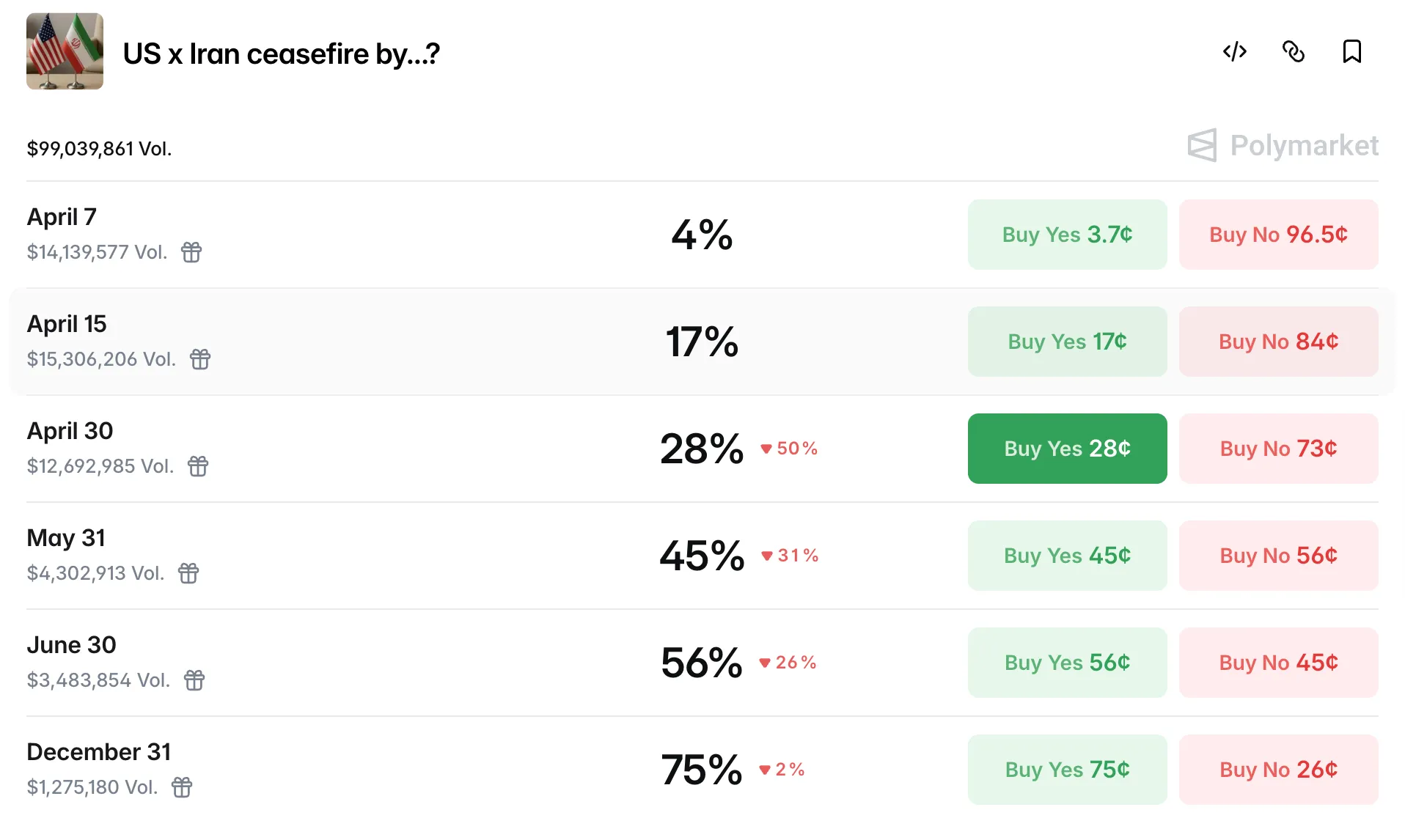
Under the deal, the truce and reopening of the strait are to take effect immediately. The probability of a ceasefire on Polymarket jumped from 18% to 28%.

MN Trading founder Michaël van de Poppe believes bitcoin’s next move depends on the outcome of the talks. If the cryptocurrency breaks $71,000, there is room for a further move higher to $80,000.
Pretty strong momentum on the markets of #Bitcoin.
Volatility picking up, and I think it’s fireworks during this week as we might be getting to the end stage of the entire situation in the Strait of Hormuz.
If #Bitcoin breaks $71K, then markets are in for a test at $80K. pic.twitter.com/EUgUuFAGxk
— Michaël van de Poppe (@CryptoMichNL) April 6, 2026
The derivatives market remains unconvinced
With prices rising, open interest in bitcoin and the leading altcoin jumped by 5.5% and 11%, respectively. That points to fresh capital entering the market.
On Deribit, the most popular option bets are a put on the first cryptocurrency with a $60,000 strike and a call with an $80,000 strike. Open interest in each contract exceeds $1.4bn.
The Bitcoin Regime Score turned positive (+14.1) for the first time in 14 days, signalling a tentative recovery, analyst Axel Adler Jr noted.
🔴 Bitcoin funding rate just dropped to -0.43% the most negative reading in two weeks.
At the same time, the Regime Score flipped positive: +14.1 after 13 straight bearish days.
Two signals. Opposite directions. One of them is wrong.
Morning Brief #141 — full breakdown at the… pic.twitter.com/gMn4yr81i3
— Axel 💎🙌 Adler Jr (@AxelAdlerJr) April 6, 2026
However, the funding rate remains at its lowest in two weeks (-0.43%). According to the analyst, derivatives traders are not yet convinced of a firm reversal in bitcoin’s price.
Negative funding alongside a positive Regime Score has created a divergence that implies two possible scenarios:
- The broader market signal proves right. As prices rise, short positions are closed and funding turns alongside the Regime Score, triggering a classic short squeeze.
- The price fails to hold, the components of the Regime Score weaken and the metric returns to negative territory. In this case, funding proves to be a leading indicator.
“The key indicator: whether funding rates will start to rise as the price continues to climb. That will confirm that the reversal is real, not just a technical bounce,” Adler Jr. concluded.
A positive on-chain signal
According to the analyst known as Darkfost, the supply of bitcoin held by long-term holders (LTH) is rising again. The gauge turned positive for the first time since November: on average, 308,000 BTC are moving into this cohort.
📈 Bitcoin LTH supply turns positive again
Between geopolitical tensions and their economic consequences, the current environment remains very challenging for markets, particularly for risk assets but some investors seem to be betting on the long term.
—> We can observe that… pic.twitter.com/KrHbNFRhgd
— Darkfost (@Darkfost_Coc) April 6, 2026
The expert called this “a constructive and favourable signal”. Historically, such behavioural shifts have preceded positive price moves in the leading cryptocurrency.
Because the metric is based on UTXO, it reflects not so much active accumulation by LTH as the age of outputs created six months ago. If assets have not been spent, they automatically move from short-term to long-term.
When overall investor behaviour tilts towards holding rather than selling, the LTH supply resumes growing. During bear phases such shifts can occur even without levels sufficient to signal a structural trend change.
Darkfost stressed the importance of monitoring the actions of long-term holders. If the trend persists, it will become a convincing signal for the market.
Earlier in April, Bloomberg Intelligence senior commodities strategist Mike McGlone predicted a bitcoin collapse to $10,000 if the $75,000 level is lost.