



An anonymous wallet has “awakened” after 13 years, transferring 909 BTC worth approximately $84.6 million. This was noted by Whale Alert.
💤 💤 💤 💤 💤 💤 💤 💤 💤 A dormant address containing 909 #BTC (84,588,851 USD) has just been activated after 13.2 years!https://t.co/Bn1F97iP78
— Whale Alert (@whale_alert) January 19, 2026
According to Lookonchain, the whale sent the funds to a new address.
A Bitcoin OG has woken up after 13 years of dormancy, moving all 909.38 $BTC($84.62M) into a new wallet.
When this OG first received $BTC 13 years ago, the price was under $7 — now up ~13,900×.https://t.co/gc0FeYxGkz pic.twitter.com/lxfikGdfNl
— Lookonchain (@lookonchain) January 20, 2026
Analysts noted that the major investor acquired the cryptocurrency between December 2012 and April 2013 when the price was below $7.
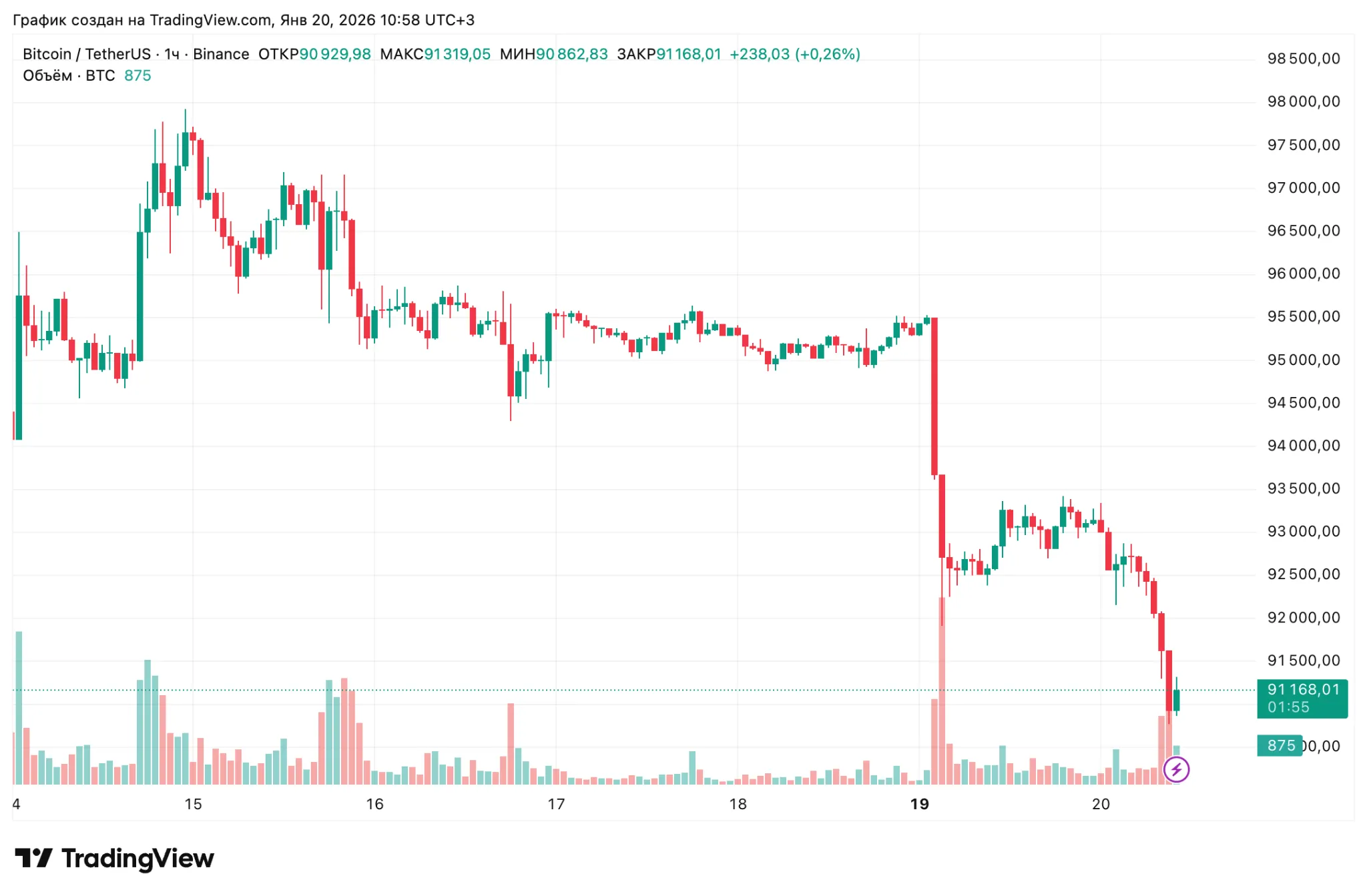
At the time of writing, Bitcoin is trading around $91,200. The user’s unrealized profit has exceeded 13,000%.


The owner of both the old and new wallets remains unknown.
Jacob King, founder and CEO of WhaleWire, believes the address belongs to Satoshi Nakamoto.
This Satoshi‑era Bitcoin whale has just woken up after well over a decade of dormancy. The entire 909.38 BTC was transferred into a new wallet, likely being set up for off‑chain settlements and synthetic exposure sells.
When this whale first received the BTC, the price was… pic.twitter.com/9civLKtRNX
— Jacob King (@JacobKinge) January 20, 2026
“Many investors naively believe that Satoshi only controlled the well-known wallet with 1 million BTC. In reality, it is much more likely that these coins were early fragmented into hundreds of ‘sleeping’ wallets, each intended to age independently and later be introduced into circulation without a recognizable pattern,” he wrote.
The surge in activity from Nakamoto-era whales occurred in 2025 when the price of digital gold first rose above $100,000.
The last recorded activation was in December, when a “sleeping” Bitcoin miner of 15 years moved 50 BTC worth $4.3 million to five new addresses.
Preparing for “Q Day”
Such “awakenings” typically spark lively discussions on social media about potential profit-taking and the impact on Bitcoin’s price.
However, the reactivated whale has not yet sent funds to exchanges. Instead, it transferred assets from a Legacy standard wallet to Bech32 — a more modern and efficient format.
In this context, a user under the nickname Dylan GraBowski speculated that the investor “awoke” due to growing risks from quantum computing.
They’re prepping for QDay.
— DylanΞGra₿owski (@GrabowskiDylan) January 20, 2026
“He’s just preparing for Q Day,” the user wrote.
Meanwhile, Bech32 addresses use the ECDSA transaction signature algorithm, which the community fears could be compromised.
Nick Carter, a partner at Castle Island Ventures, criticized developers for ignoring the threat of quantum computing. In his view, the reluctance to acknowledge the risks is already weighing on the price of the first cryptocurrency.
At the same time, Blockstream co-founder and cypherpunk Adam Back stated that quantum systems capable of breaking Bitcoin’s cryptography will not appear for at least another 20-40 years.