




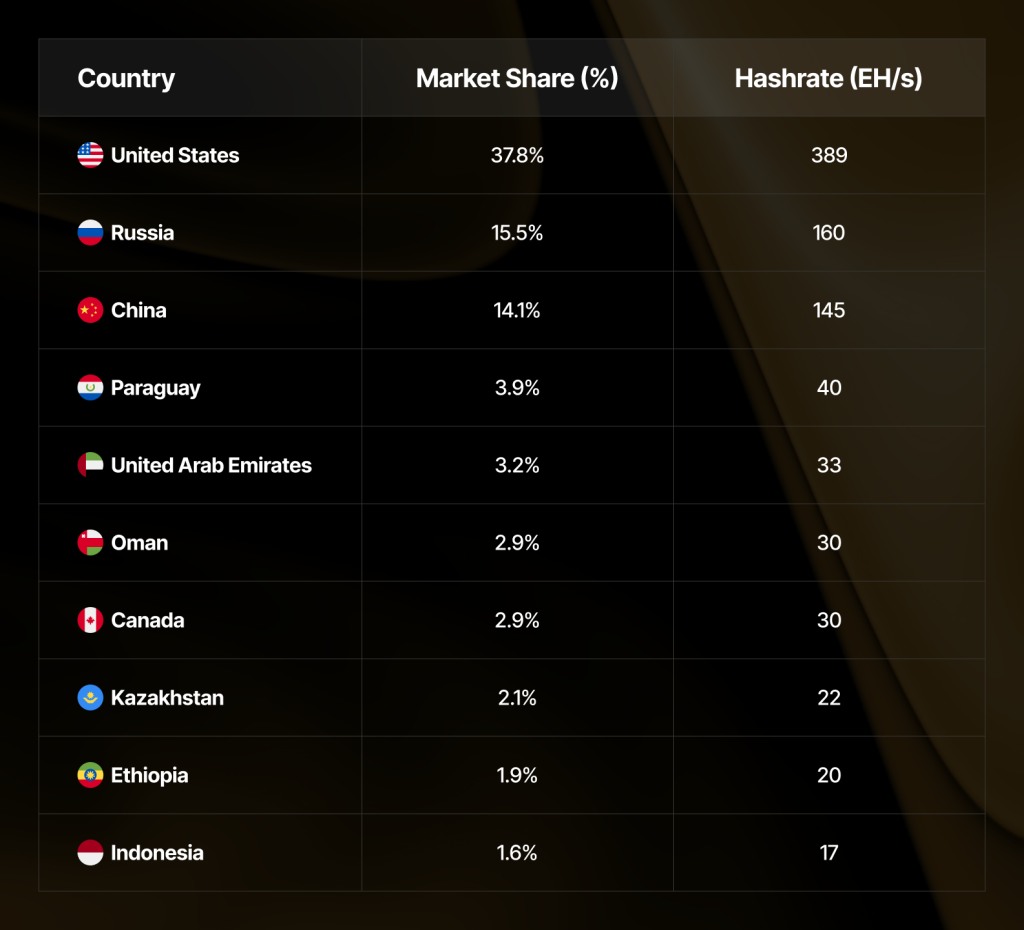
Cryptocurrency mining in China is experiencing a “quiet resurgence.” The country’s share in the global hashrate has risen to 14%, reports Reuters.
According to TheMinerMagazine at the beginning of October, this amounted to approximately 145 EH/s. Over one quarter, the figure increased by 13.8%. Experts emphasized that mining never left China — the activity simply “went underground.”
The former leader in cryptocurrency mining banned all operations with digital gold and its mining in 2021, citing threats to financial stability and energy security. After its share in the global market fell to zero, Beijing gradually returned to third place.


A private miner from the city of Xinjiang told the agency that he resumed cryptocurrency mining at the end of 2024.
“A lot of energy cannot be transmitted outside Xinjiang, so it is consumed through cryptocurrency mining. New facilities are being built — people mine where electricity is cheap,” he noted.
The Xinjiang Uyghur Autonomous Region is the largest administrative unit in China, covering an area of over 1.6 million square kilometers — about one-sixth of the country. The region is sparsely populated, and electricity is cheap, which has historically facilitated industrial activity outside centralized networks.
Before the official ban, Xinjiang was considered the informal capital of bitcoin mining, noted TheMinerMagazine.
In June, X users reported police raids on cryptocurrency mining farms in the region. According to unconfirmed reports, law enforcement seized hundreds of thousands of pieces of equipment.
One of the Most Important Signals
The revival of digital asset mining coincided with bitcoin reaching a new all-time high in October above $126,000 and the cryptocurrency-friendly policies of U.S. President Donald Trump’s administration.
“Chinese political flexibility emerges when economic incentives are strong in specific regions. The resurgence of mining activity in China is one of the most important signals the market has seen in recent years,” said Patrick Grun, CEO of the infrastructure provider for the crypto industry Perpetuals.com.
Beijing has not officially relaxed restrictions on bitcoin mining, but “even hints of policy easing could become a tailwind for the narrative of bitcoin as a sovereign asset, resistant to government intervention,” the expert noted.
Another Reuters source from Sichuan, who stopped mining digital assets due to the ban, said some of his friends have returned to the business:
“It’s a sensitive area… But people with cheap electricity are still mining.”
Man Kun law firm founder Liu Honglin emphasized that eradicating a profitable business is difficult.
“Personally, I believe that government policy on mining will gradually ease because it’s simply impossible to completely stop such activity,” he stated.
The revival of mining in China is also evidenced by the financial reports of some equipment providers. Canaan, a Singapore-based manufacturer of ASIC miners, has increased its revenue share from the Chinese market. The figure rose from 2.8% in 2022 to 30.3% in 2023.
In the second quarter of 2025, the value jumped to more than 50%.
The firm stated that its activities fully comply with local laws. The production and sale of equipment are not prohibited.
Back in January 2024, WSJ reported on methods to circumvent the ban on crypto trading in China.