



Chinese Authorities Investigate CoinGecko’s Counterpart Feixiaohao
Chinese police are investigating the cryptocurrency market data aggregator Feixiaohao, a platform akin to CoinGecko. This was reported by journalist Colin Wu.
Feixiaohao, the largest simplified Chinese cryptocurrency market data website similar to coingecko, was suspected of being arrested by the Chinese police. The reason is currently unknown and the investigation has lasted for more than half a year. Many of Feixiaohao’s exchange…
— Wu Blockchain (@WuBlockchain) August 30, 2024
According to the journalist, some key members of the project team were arrested more than six months ago. Several exchange partners of the platform have confirmed they are unable to contact them.
Wu’s sources are unaware of the reasons for the detention of Feixiaohao’s employees. They suggest that such a lengthy detention indicates the “case is serious.”
At the time of writing, the aggregator’s website continues to operate, with news updates available and the ability to open an account.
It is presumed that the project is controlled by a new team attempting to continue operations under its guise.
Upon visiting the platform, a warning appears about recent fake Feixiaohao sites. Users are strongly advised to interact with official domains to prevent the risk of losing money.
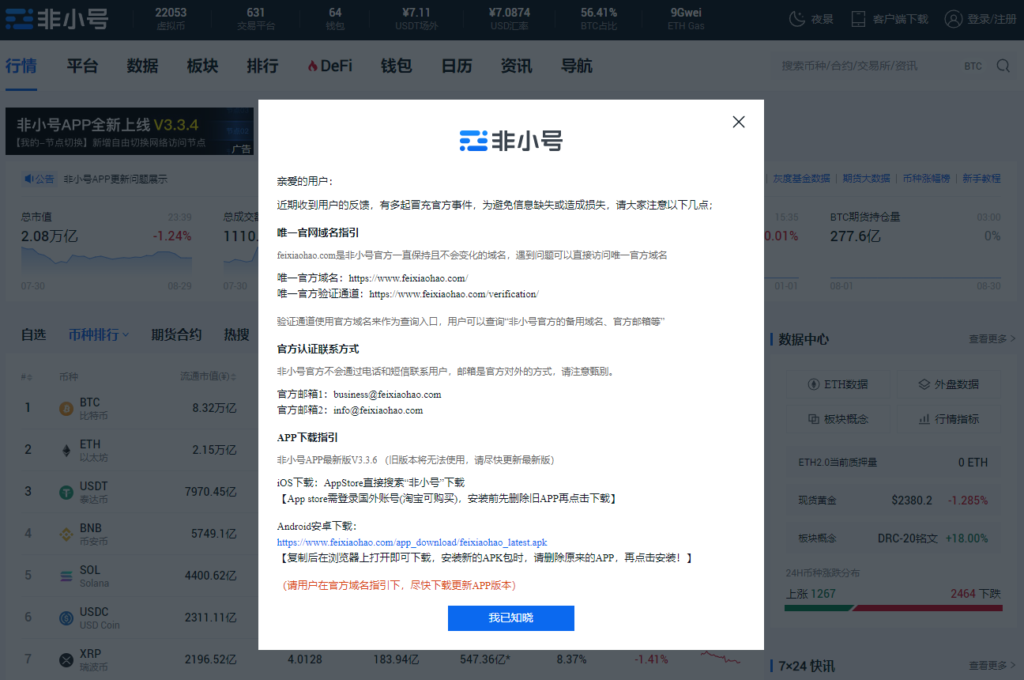
Feixiaohao has been operational since 2017 and remains one of two cryptocurrency data providers in the country alongside AICoin.
According to SimilarWeb, the platform received 200,000 visits in July, with the largest share of visits from China—23%.
In September 2021, Chinese authorities intensified their crackdown on mining and cryptocurrency trading. The central bank declared the activities of platforms facilitating digital asset exchanges illegal.
This led to a mass exodus of industry companies from the country. Additionally, platforms like CoinGecko and CoinMarketCap were blocked, and access to mining pool domains and cryptocurrency media was restricted.
However, the WSJ discovered that despite these measures, China remained a major hub for bitcoin mining, generating up to 20% of the network’s hash rate.
In January 2024, journalists reported on methods used by crypto traders to circumvent government bans and the thriving underground crypto market in the country. Their information was confirmed by Reuters.
In March, the Chinese state newspaper Jingji Ribao reminded investors of the bitcoin ban.
In August, China’s Supreme People’s Court recognized transactions with “virtual assets” as a method of money laundering and enshrined this in law. Offenders face fines of up to $28,000 or imprisonment for up to ten years.
Back in April, representatives of the STFIL protocol based on Filecoin reported that part of their technical team had been arrested in China.
Рассылки ForkLog: держите руку на пульсе биткоин-индустрии!