


Crypto Scams on Telegram: How They Work and What to Do
As the industry grows, Telegram channels increasingly share market analysis, coin and exchange reviews, signals and trends in the world of cryptocurrencies. There are now dozens of channels for both beginners and experienced investors. But there is a downside: recently the number of scam schemes criminals rely on in the messenger has risen. To help you stay safe, Magnetto.pro staff prepared this article describing current fraud methods in Telegram and how to counter them.
What tools do scammers use in Telegram
1. Advertising in Telegram Ads. Scammers post seemingly harmless adverts. They promise to teach how to work with crypto, share reviews and analytics. Earlier you could see many ads offering users to get rich in an instant, but now such messages in Telegram are banned, so ads have become less clickbaity.
With these ads, people are lured into a channel or bot that for a while shares useful information, and then begins actively selling coins (allegedly at an early stage) issued by the scammers themselves. The contract of such tokens is written so that they cannot be sold. We will describe this scheme later in this article.
The profitability of such a campaign is fairly high. Telegram ad pricing uses the CPM model — cost per 1,000 impressions. It is not fixed and varies by topic. For example, in crypto the average CPM can be around €7. Compared with the profits scammers will gain, the advertising budget is tiny.
2. Invitations from “friends.” Links to dubious sites may be sent by people from your contacts or trusted communities. To do this, scammers compromise your friend’s device or create an account using their photo/logo. This lowers your guard and increases trust in the link.
As a result you are directed to a fake site. It could imitate a mining service or a crypto exchange, where you are asked to deposit and quickly profit. The criminals may even show how your “deposit” grows. Soon such a site closes, along with your deposit.
3. Fake support service. If you have an account on a financial service, scammers may text you on Telegram, posing as an administrator. They will offer to resolve a problem or check the protection of your wallets.
The scheme is very similar to the famous “bank calls,” when scammers try to extract your CVC code. They may request codes from SMS, verify your login and password or suggest installing extra programs (spyware).
4. Buying channels. Scammers purchase existing channels with many subscribers to reach a broad audience. They then spread fake news, phishing links or ads for scam projects. The costs are high and depend on the audience size and topic popularity. For example, a top crypto channel with 50,000 subscribers can cost about 500,000 rubles, but the fraud proceeds will cover it.
5. Use of bots. Here are some of them:
- bots — community members. They are used to build trust in the channel by posting comments and reactions;
- bots that blast out links. They send links en masse, in private messages and in post comments. They lure readers to phishing resources or fraudulent channels;
- bots that send signals or information for traders. At first they deliver seemingly useful, expert content to gain trust, then offer to buy an exclusive coin, follow a secret link, etc.
These ploys have high margins. Scammers often use warming-up tactics to win trust.
Example of a scam scheme with warming up
- Criminals hire an actor to run the channel. Usually, the actor is unaware that he is joining a fraudulent project.
- The actor daily highlights “his” trades and backs them with screenshots (often Photoshop).
- For a while the warming up continues until the audience trusts the actor, his posts and the portrayed professionalism.
- When the Telegram Ads budget is spent, the channel is made private to prevent sharing a link or reporting it.
- Then the scam begins. The perpetrators publish posts claiming insider information about a coin that will appear on all exchanges and rise in price in a matter of days.
- They even create it on a BSC contract and list it on PancakeSwap. The contract is written so that selling the asset is impossible.
- Daily the scammers publish screenshots that supposedly confirm the coin’s appearance on a given exchange, creating demand and a Fear of Missing Out (FOMO) effect.
An Example of How the Scheme Works
First, creatives are published through Telegram Ads. At first glance they seem harmless and lead to a fairly safe channel. In the ad copy, too, nothing promises overnight riches.
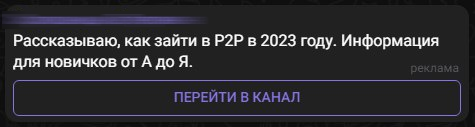
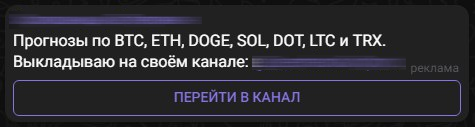
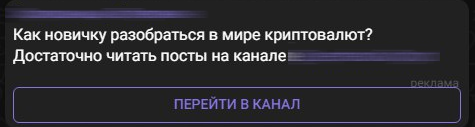
Some adverts highlight that the channel is for beginners. This is probably deliberate to recruit inexperienced users who are easier to mislead.
To build trust, authors publish market analyses, trades and other content. For now, nothing suspicious.
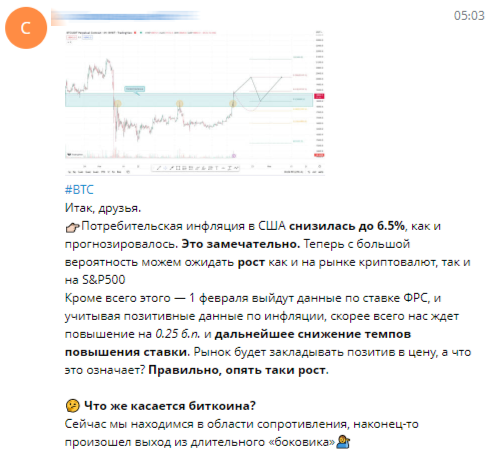
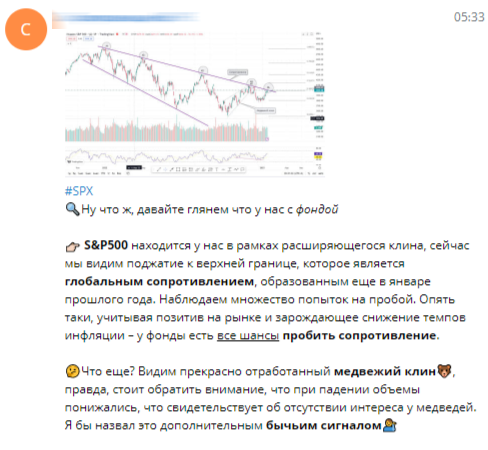
After the audience starts to trust the content, posts appear asserting insider information.
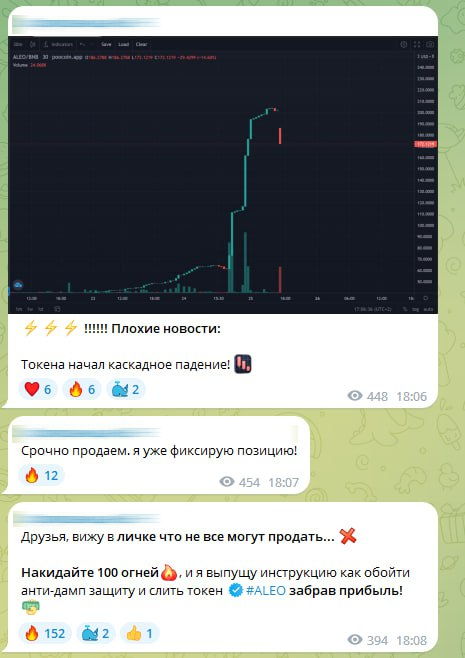
Then posts claim that the developer has been contacted and secret information obtained.
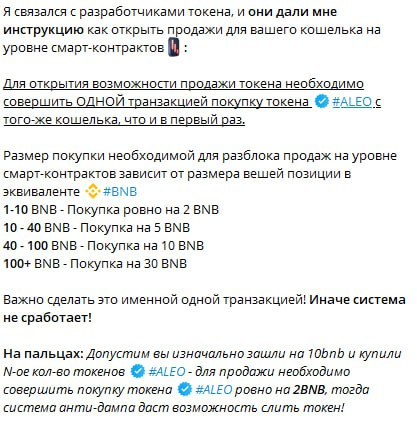
The token saw 1,250 transactions in total in the discussed case.
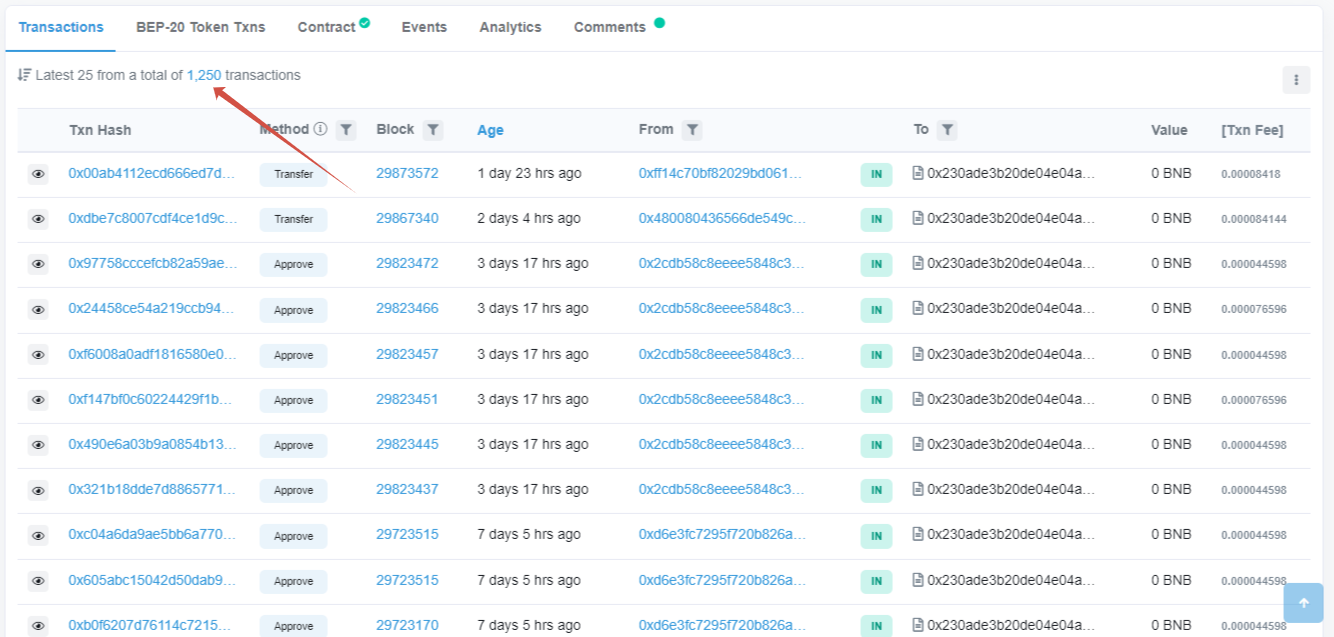
Of course we cannot say what profit this particular scheme yielded, but profits are typically very high and can exceed the initial budget by a factor of two or more. There are cases where profits reached 500%.
Telegram actively fights scams and regularly takes new measures to protect users. The platform constantly monitors suspicious content, blocks fraudulent channels and ads.
Moderation Principles
- in Telegram Ads: do not promise huge profits or inflate expectations. It is also not allowed to publish adverts leading to closed channels or to channels that publish only signals or redirects. External links are not allowed, except for a few companies in test mode;
- in bots: it is also forbidden to send messages that promise cosmic percentages or profits in five minutes. You must not send messages more than once a day. Telegram also prohibits bots used solely for redirects;
- in channels: posts should not promise fast and unbelievable enrichment. Channels must provide value and not be used solely for redirects;
- in Telegram: any illegal topics are prohibited: gambling, adult content, fraud schemes, etc. This rule also makes it harder for scammers to operate;
- all adverts and landing pages undergo repeated checks by Telegram to prevent channel or bot impersonation;
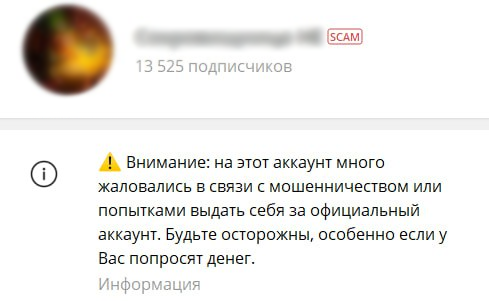
- Telegram uses the SCAM tag — it helps highlight potentially fraudulent channels and projects. It looks like this:
Basic Safety Rules
The main principles used by crypto scammers on Telegram are credulity, persuasiveness and hype. They rely on the fact that:
- the crypto topic is sufficiently complex; many people do not understand it well;
- they create convincing content that can be mistaken for expert commentary;
- they evoke a sense of missed opportunity: if you don’t buy now, others will and will get rich by X millions.
How to stay safe:
- Stay vigilant and think critically. Remember, few people are eager to share money with you. If someone offers quick riches or exclusive information, what is their motive?
- Avoid clicking links inside Telegram — don’t click links in posts or channel descriptions unless you trust the source.
- Check information in specialist services or channels. Inside Telegram you can find many communities that collect data on scammers.
- Don’t forget about two-factor authentication. Even if scammers obtain your passwords, they cannot log in without the verification code.
We hope these tips help you secure your account and wallet, and enable you to view content and its authors critically.
Рассылки ForkLog: держите руку на пульсе биткоин-индустрии!