



The All-Seeing ID: Tracking the Rise of State and Corporate Digital Identifiers
How countries are rolling out digital IDs
In recent years, many countries have launched new digital identity (Digital ID) systems. They are being deployed by both public and private institutions: banks, universities and tech firms.
These services allow citizens to use electronic documents via online platforms, but they also pose risks to personal security. ForkLog examined which flagship digital-ID initiatives have been launched recently by governments around the world.
Europe
United Kingdom
In September 2025, the UK government announced the launch of a nationwide Digital ID system. The main aim is to counter illegal migration and simplify bureaucracy. It is meant to help combat unlawful employment while making it easier for the vast majority to access essential public services—driving licences, benefits, tax records and so on.
The BritCard digital credential, stored in a phone app, is expected to be issued free to all citizens and residents of the United Kingdom.
The government emphasises that nobody is required to carry the credential at all times—it will be requested only for specific checks. However, by 2029 a digital ID will be necessary for employment.
Work is under way on the GOV.UK Digital Wallet, which will store digital driving licences alongside the Digital ID.
The British initiative stresses protection for vulnerable groups: alternatives are planned for people without smartphones, and developers are consulting organisations representing homeless and elderly citizens.
Switzerland
In Switzerland the electronic ID law (e‑ID) was put to a referendum twice. In 2021 voters disliked the excessive role of the private sector, after which the project was revised: the state itself will issue e‑IDs on a free and voluntary basis.
On September 28, 2025, a majority of Swiss voters backed the law (50.4%).
The e‑ID will be tied to a citizen’s smartphone and used for online identification to access services, confirm age and so on. It can also be presented offline—for instance, when opening a bank account.
For security, the e‑ID will be bound to a single device—changing phones will require obtaining a new credential. Physical passports and ID cards remain valid, and from late 2025 a new biometric plastic card with fingerprints will be introduced. In practice, a citizen may have a physical passport or ID card alongside an e‑ID on a smartphone.
The approved e‑ID is seen as a step towards e‑government and removing bureaucratic barriers—especially for ~10% of Swiss citizens living abroad.
Austria
In 2023 Austria moved from the Handy-Signature mobile signature to a full national digital ID, ID Austria. The new identifier is delivered via the Digitales Amt and eAusweise apps. It allows citizens to store a digital passport, driving licence and other documents.
ID Austria has basic and advanced levels: the latter requires in-person identity verification and supports smartphone use, including recognition in other EU countries.
ID Austria enables identity proofing nationwide, access to online services and remote document signing.
France
France has launched the France Identité app, which works with the chip embedded in ID cards. In November 2023 the government announced full deployment.
France Identité allows citizens to prove their identity online without oversharing and to store digital versions of documents (ID card, driving licence and more).
Since February 2024 a digital version of the driving licence has been available via the app, and by the end of 2025 the health insurance card is slated for integration. The service uses advanced safeguards (Face ID/biometrics for access) and complies with European security requirements.
Spain
In 2023 Spain began rolling out the mobile DNI (MiDNI)—an app for storing the national identity card on a smartphone. The launch took place in April 2025.
With MiDNI citizens can undergo electronic identification to access public services. Functionality will expand to support online document signing and remote identity verification for private services.
After full rollout MiDNI will allow citizens to vote, open bank accounts, register at hotels, rent cars and more—entirely online. Enrolment occurs via the website or police terminals, with verification of the physical DNI.
Poland
Poland has made significant progress popularising its mDowod e‑ID.
Since July 2023 the digital credential has been officially recognised as equivalent to the paper identity card in all major scenarios. Citizens can present mDowod in the mObywatel app in government offices, banks, the post office and even when voting.
By October 2024, mDowod users exceeded 8m. In parallel, the mojeID system (electronic identification via banks and the KIR clearing house) has around 22m users.
Bosnia and Herzegovina
In 2025 Bosnia and Herzegovina launched the e‑IDDEEA mobile app. It lets citizens obtain digital versions of their documents—passports, ID cards and driving licences.
The system complies with the eIDAS regulation. Through e‑IDDEEA users can apply electronic signatures remotely to interact with public services (taxes, insurance, social benefits) and commercial services (banks, telecoms).
Registration requires an in-person visit to an office and issuance of login credentials for the app, after which digital documents become legally valid.
Other European countries
In Germany the number of users of the BundID digital access portal is growing. Denmark has completed the transition to the new national e‑ID MitID from the legacy NemID, and legalised digital versions of driving licences and health cards that are fully equivalent to paper documents.
Ireland successfully ran a pilot of a national digital wallet, preparing to implement it in line with eIDAS 2.0 (since May 2024 the EU has set the legal basis for such wallets).
Broadly, countries are aligning with EU plans: by the end of 2026 every citizen should have access to a single European Digital Identity (EUDI Wallet).
It is being developed as an open app to store in one place an identity card, driving licence, diplomas and other attestations, to be presented on request online or offline. Some 550 organisations (public bodies and companies) from EU states, Norway, Iceland and Ukraine are participating in pilots.
Ukraine
Ukraine was one of the first countries where a digital passport gained full legal force. The country runs “Diia”—a mobile app and web portal for access to public services and documents. The internal and foreign passport, driving licence, diplomas, vehicle registration certificate, children’s birth certificates—all are stored in one place.
Diia also enables identification and registration/login across different resources.
The service supports more than 70 government resources (business registration, paying fines, applications to authorities).
In 2025 Ukraine adopted Resolution 689, regulating the use of a digital ID wallet in which individuals and legal entities will be able to store identity credentials and digital signatures and use them remotely without payment functionality.
Russia
In Russia, creating a full digital identity is at the stage of planning, draft laws and pilots.
In some cases the provision of passport data in electronic form has been equated to presenting the original, and in some instances will be legally equivalent to the paper document.
The digital passport project is under discussion: it would contain QR codes with selective information (for example, to confirm age). To obtain a digital passport a citizen must submit biometric data (face, fingerprints) to authorised Interior Ministry bodies.
Asia and Oceania
China
On July 15 the Chinese government launched digital identity credentials for online use, shifting responsibility for citizens’ online identification from private firms to the state.
Users provide personal information to the police via an app and scan their face. They can then sign in to apps and websites via a unique identifier.
China’s ID system also limits the information that online services receive about users. People will be able to log in to websites and apps without disclosing personal data. Technically they provide only a private string of characters.
South Korea
In 2025 the Republic of Korea launched a digital version of the Resident Registration Card (national ID) for all citizens and residents. The solution is a mobile identity credential that fully replaces the physical ID card in a range of areas. It is implemented in an app and protected with advanced encryption and blockchain technology.
Initially the digital ID is used to prove identity in banking and financial transactions, with broader use planned.
To obtain the eID, a citizen scans the chip on their plastic ID or registers at a local public centre with identity verification. Additional biometric verification prevents counterfeiting. A distinctive feature is that each digital ID is linked to a specific smartphone. If a device is lost, the credential can be quickly deactivated via the mobile operator.
The model resembles Switzerland’s, where the e‑ID is also tied to a single device.
By the end of 2025 South Korea plans to standardise digital IDs internationally. The ETRI institute has begun developing a global standard for digital ID wallets so that various credentials (government ID, driving licence, student cards, bank cards) can be stored and presented in a unified format worldwide.
Sri Lanka
In 2025 Sri Lanka launched the Unique Digital Identity (SL‑UDI) programme. The digital ID integrates with the eLocker mobile app and is based on the national biometric ID. Physical ID cards, issued with Thales’s support, will remain valid for a 3–5 year transition period.
All biometric and personal data will be collected and stored under the control of the Department for Registration of Persons, with multi-layer encryption in transmission and storage.
Despite court battles, the authorities say that after full localisation (bringing all processes under the state), the digital ID will become a key element of service delivery. Special attention is paid to the legal basis for data ownership—by law the data belong to the government department to prevent unauthorised access.
India
India introduced the Aadhaar system in the 2010s, but over the past year it has gained fresh momentum. The service covers almost 1.38bn residents (97% of the population) and remains the world’s largest biometric ID system.
The Indian government actively uses Aadhaar in social programmes: by linking digital IDs to bank accounts, aid and subsidies are sent directly to those in need, cutting out intermediaries and reducing fraud. In January 2025 the system handled 2.84bn authentication transactions—32% more than a year earlier.
According to World Bank estimates, over a decade extreme poverty in India fell from 16.2% to 2.3%, in large part thanks to Aadhaar’s digital infrastructure. The service also identified and removed 58m fake beneficiaries of food rations.
Singapore
Singapore’s Singpass digital identity has long been in place, but continues to be improved.
It now provides access to 2,000+ services from both public bodies and private firms. In 2023–2024 the authorities strengthened safeguards: Face ID checks were introduced for higher-risk transactions (for example, operations with the CPF pension fund), which significantly reduced fraud. After a Sender ID registry was introduced to filter SMS scams, fake messages fell by 70% in three months.
Singpass combines an account, biometrics and multi-factor authentication for a wide range of services—from taxes and medical appointments to banking and e-commerce.
Australia
In April 2025 the Australian state of Queensland introduced a Digital ID, replacing the previous QGov system. The new digital ID supports biometric authentication and passkeys for passwordless login. The goal is to streamline interactions with public services via a single app.
At the federal level Australia is debating a Digital ID Act, seeking to make government digital IDs secure, voluntary and widely accepted nationwide. Similar regional steps have been taken in New Zealand (RealMe system) and Japan (expansion of the MyNumber card, including integrating driving licences from 2024).
Other Asia-Pacific countries
Malaysia announced completion of its digital-government ecosystem by 2024, of which a national digital ID is a part.
Vietnam on July 1, 2024 brought a digital-identity law into force, requiring biometrics to be added to national e‑IDs. A new ID system with fingerprints and face is being built.
Indonesia and the Philippines are digitising their ID cards (e‑KTP and PhilID), with mobile apps and QR codes that complement plastic cards.
Americas
Brazil
Brazil—the largest economy in Latin America—rolled out a national blockchain-based digital-identity programme in 2023. Under a presidential decree, by November 6, 2023 all 27 states were to connect to the system for issuing electronic identity credentials.
The pilot began in the states of Rio de Janeiro, Goiás and Paraná, where IDs are issued via a platform developed by the state IT service Serpro.
Agency head Alexandre Amorim noted that the decentralisation of blockchain makes it an ideal foundation for the project, ensuring the protection of personal data and preventing fraud.
Authorities expect a unified digital ID to help fight organised crime, simplify inter-agency data exchange, expand access to services and bring order to document administration.
Several years of preparatory work unified government databases across the 27 states, and the blockchain platform is designed to link the Federal Revenue Service with other bodies on a secure basis. Thus, Brazil has become one of the pioneers of national blockchain IDs.
Canada
In 2025 Canada focused not on issuing a single ID, but on standardisation.
In August the Digital Governance Standards Institute (DGSI) approved the CAN/DGSI 103-0:2025 digital identity code of practice. It sets principles for public bodies and businesses implementing digital IDs and trust policies, taking into account international approaches (European eIDAS, recommendations from FATF, principles of UNCITRAL).
The standard focuses on interoperability across systems, which matters in Canada where digital IDs are developing at provincial level. For example, Ontario is preparing its own Digital ID (the project was delayed but was reprioritised in 2024), while British Columbia has long used the BC Services Card to access online services.
Canada also participates in experiments with decentralised identifiers: several provinces and banks took part in the Verified.Me project based on Hyperledger technology.
Canada’s policy is to create a trusted ecosystem where citizens can use multiple credentialing systems (government, banking and others) that adhere to common security and privacy standards.
United States
The United States lacks a single national e‑ID, but at the state level and in the private sector progress is rapid.
More than 30 states have adopted or are testing mobile driving licences, displayed via apps on smartphones (Apple Wallet, Google Wallet or state apps). These digital licences comply with ISO/IEC 18013‑5 for mobile IDs, enabling secure storage, offline verification and selective data sharing.
In 2023 Louisiana mandated age verification on “18+” websites via LA Wallet, which, after the law took effect, led to a 300% spike in new app registrations in a single day. LA Wallet was also used to remotely verify 210,000 disaster victims receiving aid after hurricanes. The digital ID helped confirm identity for payments without fraud.
Arizona, Colorado, Maryland, Georgia and other states support loading driving licences into Apple Wallet, which are recognised, for example, at TSA checkpoints in airports. In parallel, several federal agencies have worked with private companies on online verification. ID.me (a digital identity provider) had by 2024 enrolled 130m Americans, 60m of whom underwent enhanced identification (IAL2).
The use of such solutions has been accompanied by debates over privacy and the exclusion of low-income people without access to smartphones. In response, the US government launched “better identity” initiatives, viewing digital ID as key to developing fintech and Web3.
Latin America
Following Brazil, Costa Rica in September 2025 rolled out a digital ID card (IDC‑Ciudadano) equivalent to the physical one. The digital credential is officially accepted as proof of identity by banks, telecoms, public bodies and businesses (an exception is the 2026 elections, where the original is required by law). The Bank of Costa Rica and several organisations are already ready to work with the e‑ID; others have time to adapt.
Citizens obtain the digital ID via online registration and an app; activation takes place through FaceID/photo verification.
Mexico launched a digital driving licence, so far only for commercial drivers working abroad—a QR code with a digital signature on a smartphone.
Argentina implemented a mobile version of the DNI and driving licences in the Mi Argentina app.
Peru and Chile also are experimenting with e‑ID and biometric registries, and Uruguay in 2023 started the eCedula project—a smart card with NFC and its mobile version.
Africa and the Middle East
Across Africa a large wave of identity digitisation is under way with support from international donors (the ID4Africa initiative, the World Bank).
Nigeria
Nigeria has modernised its platform for citizens abroad: from 2025 all diaspora centres are connected to an updated system for issuing the national identification number (NIN). Overseas partners have been trained, and Nigerians abroad can now obtain/confirm the NIN online more quickly. By the end of 2026 at least 59m new NINs are planned.
Kenya
Kenya in 2023 announced the Maisha Namba digital identity—a new system of lifelong personal numbers and biometric IDs for citizens. After two months of testing, President William Samoei arap Ruto confirmed that by the end of 2023 digital IDs would start being issued to all who want them.
Maisha Namba will serve as a single identifier from birth, allowing Kenyans to access public services, open accounts and travel, with identification by fingerprint or iris via a digital profile.
Southern African region
In southern Africa, integration of identity systems between countries is planned. In September 2025 the SADC Committee of Central Banks, together with the non-profit Co‑Develop, announced the creation of the first regional cross-border digital identity infrastructure for 16 southern African countries. The goal is to implement a federated e‑KYC system, whereby banks and fintechs across countries can verify customer identities via a compatible digital ID platform.
This should simplify cross-border payments, boost financial inclusion and eliminate duplication across national ID systems.
The project is part of the global 50‑in‑50 campaign to develop secure, shared digital infrastructure in countries of the Global South.
Middle East
In the Middle East, Saudi Arabia stands out: via the Absher app it has implemented a digital identity, and by the end of 2024 more than 28m citizens had used it for access to services.
The UAE introduced UAE Pass back in 2018—a single digital identity for citizens, residents and even visitors. The service enables login to all government portals and many private services, document signing, requests for certificates and so on. Registration is via Emirates ID scan and facial recognition or via kiosks with fingerprint biometrics.
The Emirates position UAE Pass as the backbone of smart government. In 2025 virtually all public services are accessible through it. Qatar, Bahrain, Oman and other Gulf states are also developing similar digital IDs (often linked to SIM cards or apps with biometrics).
In February 2025 Etihad Credit Insurance—the UAE’s federal export credit agency—joined the KYC Blockchain platform, becoming the first company in the insurance sector to do so.
The system is designed to standardise KYC processes between companies and government entities. Blockchain ensures secure exchange and verification of customer data without excessive disclosure. The platform is already in practical use, and participation is growing.
UAE Verify is a government platform for verifying digital documents on blockchain. It enables private and public organisations to confirm the authenticity of documents issued by government bodies using an immutable distributed record.
The platform supports identity credentials, certificates, licences and other official documents. It is already operating and used by many ministries as part of the “paperless government” strategy.
Total control and discrimination
Digital IDs are convenient, but they also create a greater capacity for control over citizens. This was drew attention to by Pavel Durov as well:
“Once-free countries are introducing dystopian measures such as digital identity cards (the UK), online age verification (Australia) and mass scanning of private messages (the EU).”
“Germany prosecutes anyone who dares to criticise officials on the internet. The UK jails thousands of people for their tweets. France conducts criminal investigations against tech-industry leaders who defend freedom and privacy.”
“A dark, dystopian world is fast approaching—while we sleep. Our generation risks going down in history as the last to have freedoms—and the one that allowed them to be taken away.”
In Canada, 2.9m people signed a petition against the introduction of digital passports.
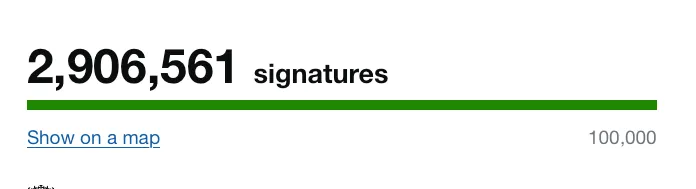
Critics compare the idea to the plots of George Orwell and other dystopias. The Daily Mail called Britain’s policy “East German” and “despotic”.
“[Adopting the initiative] will be a step towards mass surveillance and digital control; no one should be forced to register in a state identity system,” the petition’s authors said.
Other countries are seeing criticism too, since such initiatives can strengthen state control over citizens. There is a risk that the system becomes a tool of total surveillance. For example, in China the police could compile a list of every website and app a person uses. In addition, data from digital identity credentials could be connected to a new, more comprehensive online-monitoring system.
In Kenya the High Court temporarily halted the rollout of Maisha ID due to lawsuits filed by activists. They cite the lack of a data-protection framework and the risk of excluding citizens without access to technology.
Nevertheless, the government insists on the need for the new e‑ID, stressing its benefits for e‑commerce, banking and combating fraud.
Beyond the risks of total surveillance, the competent management of personal information remains an open question. Officials, seeking profit, may sell valuable data.
External attacks are another possibility. In 2022 a hacker stole 1bn personal records from Shanghai police by breaching an unsecured database.
External interference is another potential negative factor. In Sri Lanka the project is funded by an Indian grant, which sparked disputes: petitions to the Supreme Court seek to suspend SL‑UDI, citing possible violations of data sovereignty, threats to national security and financial legislation.
Some of the above problems could be mitigated by blockchain thanks to its transparency, fault tolerance and reliability. Yet only a few countries are building their solutions on distributed ledgers.
In October Bhutan announced the migration of its National Digital Identity (NDI) system from Polygon to Ethereum. The authorities said this was intended to bolster data security.
NDI uses self-sovereign identity technology. It allows nearly 800,000 people in the country to store and present digital credentials to access online services.
In the context of digital ID, blockchain promises greater trust, security and convenience—but requires care: balanced regulation, privacy protections and inclusion are vital so that the technology serves people rather than creating new barriers.
Рассылки ForkLog: держите руку на пульсе биткоин-индустрии!