



The DeFi boom, sparked by the COVID-19 crisis, reached its peak at the end of 2021. The DeFi ecosystem’s TVL began to decline. The drop was accelerated by the Terra crash, which weighed on the entire crypto industry.
Many market participants are banking on the forthcoming The Merge upgrade. In the medium to long term, Ethereum could become more attractive as an investment. The upgrade should also aid scaling solutions, with rollups and sharding taking a prominent role, and Rollups.
The market and the DeFi ecosystem in particular could benefit from a new token standard — EIP-4626. It aims to improve interaction among dapps and expand opportunities for yield farming.
- Many DeFi platforms lack a single standard of implementation. This complicates development and integration of applications, exposes security vulnerabilities and hampers scalability.
- EIP-4626 aims to address these problems, opening the next chapter in DeFi 2.0 development DeFi 2.0.
- The new standard is being actively adopted by well-known projects, including yEarn, Alchemix, Balancer and Fei Protocol.
Advantages and drawbacks of yield farming
The DeFi segment is gradually moving toward standardisation as users want to transfer assets between various blockchains as simply and securely as possible.
Interoperability is aided by cross-chain solutions, many of which require wrapped tokens. Using wrapped tokens entails additional steps and gas costs.
Moreover, not all cross-chain bridges are safe. For instance, recently hackers drained Nomad of about $190 million. Analysts at Chainalysis estimated $2 billion worth of assets stolen since the start of the year across 13 cross-chain protocol attacks.
Notwithstanding the risks, the DeFi sector continues to grow — many users are chiefly interested in the prospect of relatively high returns compared with traditional markets.
Yield farming (or farming) opens up wide opportunities for profitable investment. Its essence is simple: participants provide tokens to a platform and receive a reward in return. The process resembles a bank deposit, but it involves no onerous KYC/AML procedures or other bureaucratic frictions.
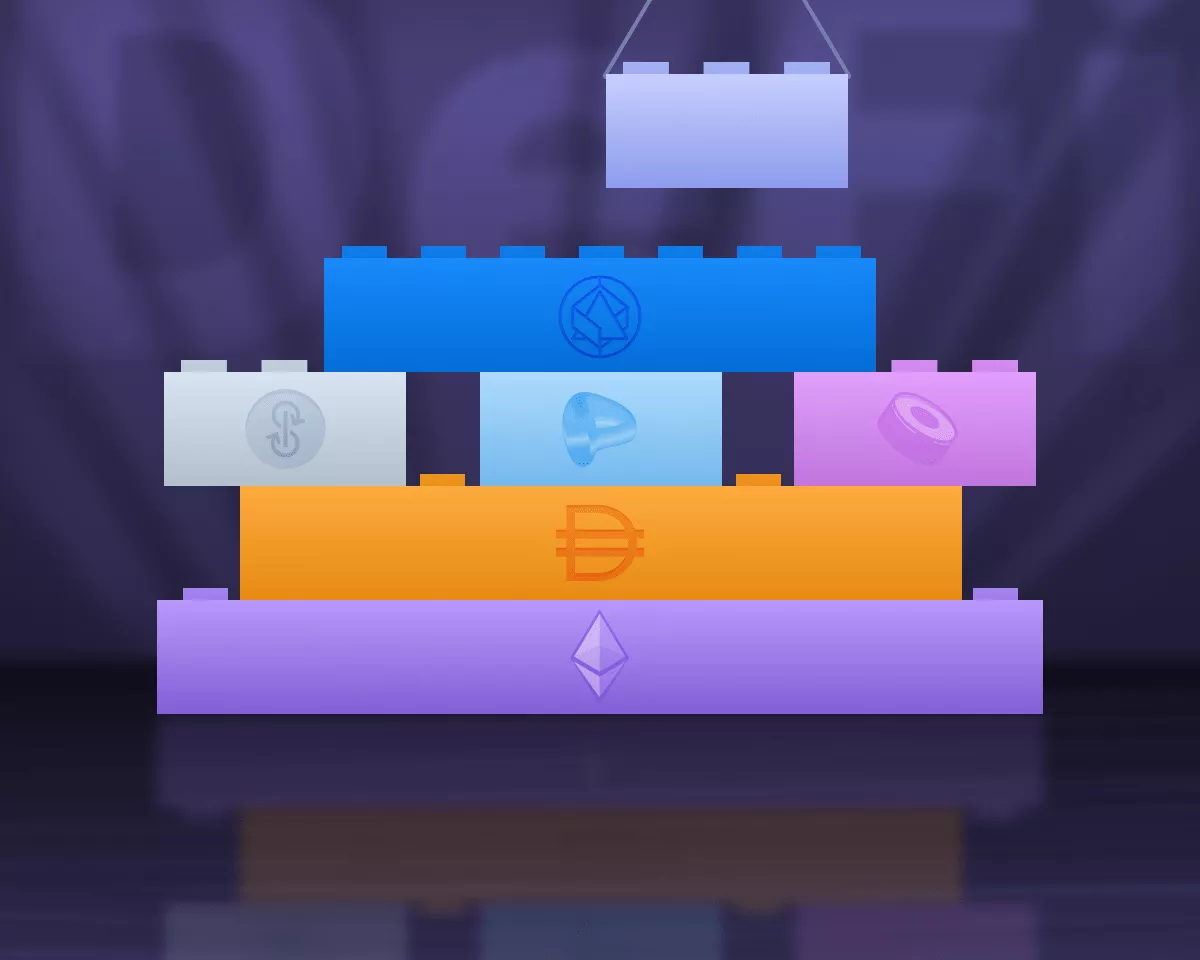
Because of its composability, DeFi resembles a kind of financial LEGO. The interaction of different applications unlocks a vast range of complex profit-maximising strategies, demanding a fairly deep understanding of the processes and research into the \”pitfalls\”.
To ease life for farmers, yield aggregators — platforms offering automated yield farming — have been created. They implement complex strategies themselves, saving time, effort and transaction costs. For interacting with such platforms a user needs only a few clicks.
In a separate category are concentrated-liquidity-position optimisers such as Popsicle Finance. Such platforms aim to improve the efficiency of liquidity providers on Uniswap v3 and reduce impermanent loss risks.
Yearn Finance by Andre Cronje — one of the first yield aggregators in DeFi. Let’s consider the platform’s workings using the example of the yvETH vault.
Users can deposit ETH into the yvETH vault and receive yETH in return. The smart contract then places the funds in the lending protocol MakerDAO, creating DAI. The stablecoin is deposited in Curve’s Y Pool, generating income in CRV tokens. The latter are converted back into ETH to be periodically distributed to yETH holders.
Similar aggregators and vaults have proliferated. However, before ERC-4626 there was no universal standard for implementing such solutions, which led to various risks and complexities.
2/ Here’s the tldr on ERC-4626:
Yield-bearing tokens are a mess
Yield aggregators, vaults, lending markets and native yield tokens like $xSUSHI are often implemented with slight variations
— yearn (@iearnfinance) April 5, 2022
«Yield tokens are in complete disarray. Yield aggregators, vaults, lending markets and native yield tokens like xSUSHI are often implemented with small variations», — noted the developers of yEarn.
Much time was also spent on platform development. Also, technical differences gave rise to interoperability and scalability issues, exposing vulnerabilities.
«To create a single DeFi yield-token-based application you would have to write dozens of complex, error-prone adapters able to handle every unique variation», — added representatives of Cronje’s platform.
ERC-4626 — the standard for tokenised vaults
In early April, the developers of yEarn announced the completion of ERC-4626 and the start of the \”Great Vault Standardisation\”.
According to them, a vault built on the new standard can interact with any ERC-4626 tokens.
4/ It’s composability at its finest
Build an app on top of one ERC-4626 vault, and it will work for all other ERC-4626 tokens
— yearn (@iearnfinance) April 5, 2022
Work is underway on Yearn’s V3 vaults. Well-known projects such as Alchemix, Balancer, Rari Capital, Fei Protocol, OpenZeppelin are also actively adopting the new standard.
5/ Yearn V3 + ERC-4626 = inevitable
Contributors are already working hard implementing the standard for Yearn’s V3 vaults
So are devs at @AlchemixFi, @balancer, @RariCapital, @feiprotocol, @OpenZeppelin and elsewhere
Perhaps one day, we’ll even see a Erc4626 tab on @etherscan
— yearn (@iearnfinance) April 5, 2022
«Perhaps one day we’ll even see an ERC-4626 tab on Etherscan», — suggested the developers.
Developers at yEarn expressed confidence that ERC-4626 will become the “gold standard for any yield token,” and drew a parallel with ERC-721 in the NFT context.
«Standardising vault implementations simplifies the integration of apps, modules and other tools», — said the erc4626.info site.
As Huobi Research experts explained, ERC-4626 unifies the following parameters:
- cost savings. The new standard provides a universal framework for developers. To connect to new vaults using yield tokens, only a unified API is required. There is no need to create special adapters, wrapped tokens or other tools that entail extra steps. Auditing costs will also be reduced;
- further improvement of DeFi protocol composability. ERC-4626 eliminates barriers to the integration of decentralized applications. The synergistic effect increases the value of dapps;
- increased capital efficiency thanks to widespread support for yield tokens. The latter can move freely between protocols like base assets;
- promotion of the DeFi 2.0 concept. Huobi Research experts believe that, alongside yield aggregators, lending platforms will actively adopt the new standard. This should foster more sophisticated profit-generating strategies.
The inventor of the standard, Joey Santoro is convinced, that ERC-4626 also saves development time, lends flexibility to integration, improves user safety when interacting with applications, and drives innovation.
Conclusions
The DeFi segment and the crypto industry at large are developing rapidly. Venture investment, the volume of which is rising even amid a bear market, helps drive this.
Many DeFi apps would benefit from a single standard like ERC-721 in the NFT context. This gap is expected to be filled by ERC-4626, which will simplify protocol integration and enable broader interoperability.
Applications built on ERC-4626 can easily interact with any other platforms that have adopted the new standard. This expands the range of yield strategies and eases developers’ workloads. It is not unlikely that ERC-4626 will indeed become the “gold standard” for the DeFi segment of the new generation. Or, at least, a significant addition to the familiar ERC-20.
Read ForkLog’s bitcoin news in our Telegram — cryptocurrency news, rates and analysis.