


From risk to regulation: how South Africa became Africa’s crypto leader
South Africa is emerging as a key player in the continent’s crypto ecosystem. According to Statista, industry revenue in the country will reach $615.5m this year and rise to $637.9m by 2026.
Unlike jurisdictions where digital assets flourish amid economic crises, South Africa’s growth stems from clear regulation, mature infrastructure and strategic deployment of the technology.
Scale of adoption
About 10% of South Africa’s population—roughly six million people—already own or use cryptocurrencies. Awareness of digital assets among adults reaches 98%.
Most users are people aged 18 to 44 with higher education and middle incomes. The main motives for buying cryptocurrencies are inflation hedging, access to global finance and belief in the technology as the money of the future.
From speculation to practice
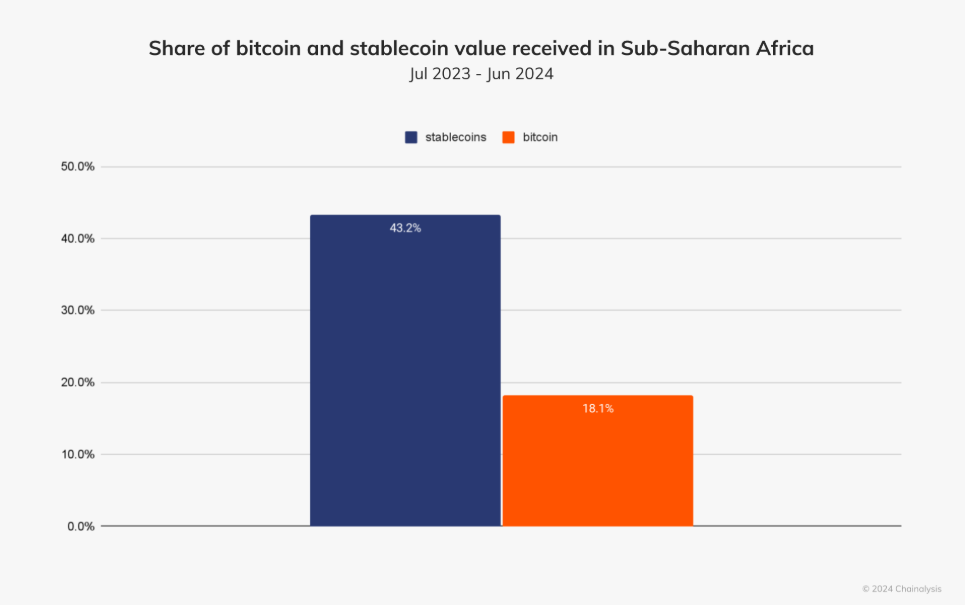
Stablecoins are becoming more popular than bitcoin for everyday tasks such as saving and cross-border transfers. According to Chainalysis, 43% of trading volume in Sub-Saharan Africa involves stablecoins.
Locals use them as a dollar analogue to hedge risks linked to the local currency. OVEX and SentiPay have already launched the ZARP and ZARC stablecoins, pegged to the South African rand.
Regulation and market growth
In 2022 the authorities designated cryptocurrencies as financial products, bringing their circulation under the Financial Sector Conduct Authority (FSCA), South Africa’s financial regulator.
By mid-2024 the FSCA had issued approvals to 138 crypto-asset service providers (CASPs). All licensed firms must register with the Financial Intelligence Centre to comply with AML norms.
Since April 2025 the country has enforced the Travel Rule, requiring CASPs to collect sender and recipient data for crypto transactions above 5,000 rand (about $280 at the time of writing). This aligned South African legislation with global FATF standards.
Amid regulatory clarity, banks have begun to take a closer look at the market. Absa Bank has signalled interest in cross-border stablecoin payments, and the exchange VALR already serves corporate and institutional clients.
A regulator as partner, not a threat
South Africa’s success in adapting cryptocurrencies rests on mature infrastructure and a cooperative stance from the regulator, which sees the industry as a partner. This enables organic growth rather than treating digital assets solely as a crisis hedge. So said Ray Youssef, head of the P2P platform NoOnes, in a comment to ForkLog.
In his words, unlike in other developing countries, in South Africa cryptocurrencies have become tools of empowerment, especially for the young.
South Africa is ahead of many African countries thanks to a developed financial infrastructure and high smartphone and internet penetration. But the FSCA’s approach has been decisive.
“They [the FSCA] are not merely going through the motions. They understand that cryptocurrency is part of the future financial stack. The agency has officially classified digital assets as financial products, fitting them into the existing legal framework. That means better consumer protection and more trust from the average South African,” Youssef explained.
He added that market maturity shows in the diversity of crypto use cases. Assets are used not only for hedging against inflation or devaluation, but also for business, freelancing and learning new technologies.
The CASP licensing model used by South Africa could serve as a template for other countries in the region, he noted. It provides transparency and weeds out questionable operators. However, there is a risk that regulation becomes a barrier for small firms and entrepreneurs.
“You cannot write rules only for big players: corporations, banks and venture-funded exchanges. If a local entrepreneur trying to build a wallet or a P2P marketplace is pushed out, the whole system will become a copy of the broken, outdated system—only on a blockchain,” the head of NoOnes warned.
According to the FSCA at the end of 2024, 248 of 420 CASP licence applications had been approved. Youssef believes such filtering may deter smaller innovators and hamper the growth of the crypto ecosystem.
In the stablecoin market USDT and USDC dominate thanks to liquidity and network effects. Users pick them by habit for cross-border transfers and preserving value. In the expert’s view, rand-pegged stablecoins have potential mainly for domestic use—such as payroll or retail payments.
“Why should a resident of Nigeria or Kenya take on rand-linked risks? However, for the domestic market a stablecoin pegged to the national currency offers a stable digital option without dependence on the dollar. That is a powerful tool,” he noted.
Youssef stressed that to compete with global rivals, local projects need deep liquidity, trust and real utility. Their very existence is an important step, but displacing dollar-denominated assets in Africa will be extremely difficult.
Ghana: on the road to regulation
The Bank of Ghana plans to finalise a comprehensive regulatory framework for crypto platforms and submit it to parliament by September 2025. The project’s authors say this marks a significant shift toward mass adoption of digital assets.
According to governor Johnson Asiamah, the proposed legislation will allow the country “to license firms, stimulate cross-border trade, attract strategic investment and gather vital financial data.”
The initiative responds to the widespread uptake of cryptocurrencies among Ghana’s 33m people, where about 3m already use digital currencies, Bloomberg writes.
From July 2023 to June 2024 crypto transaction volume in the country reached $3bn, indicating significant economic activity outside traditional banking. The authorities acknowledged they “reacted late,” as many economic agents already settle in cryptocurrencies beyond regulatory oversight.
Nigeria: leadership through legislation
Nigeria has already implemented a comprehensive framework for digital assets and stablecoins under the Investments and Securities Act 2025, positioning itself as a leader in Africa’s crypto ecosystem.
The country’s Securities and Exchange Commission (SEC) now treats virtual assets, cryptocurrencies and tokens as securities, giving it clear powers to regulate the sector. The agency’s head, Emomotimi Agama, stressed a focus on “responsible innovation” that ensures market stability and consumer protection.
The new rules require stablecoin issuers to maintain verifiable reserves, undergo regular audits and comply with AML and KYC protocols. Foreign virtual-asset service providers (VASPs) must enter mutual-recognition arrangements with their home regulators.
This policy shift marks a departure from earlier enforcement moves such as the lawsuit against Binance, toward integrating digital assets into the country’s financial ecosystem.
Earlier, the authorities blamed the exchange for instability in the local currency and in 2024 detained two of its top executives: Binance’s director for West and East Africa, Nadeem Anjarwalla, and the vice president for global intelligence and investigations, Tigran Gambaryan. The latter spent eight months in Kuje Correctional Centre in Abuja, after which all charges against him were dropped.
As part of the new strategy, the SEC has already granted in-principle approvals to local firms Busha Digital Limited and Quidax Technologies Limited.
Earlier, ForkLog examined why emerging economies chose crypto adoption.
Рассылки ForkLog: держите руку на пульсе биткоин-индустрии!