


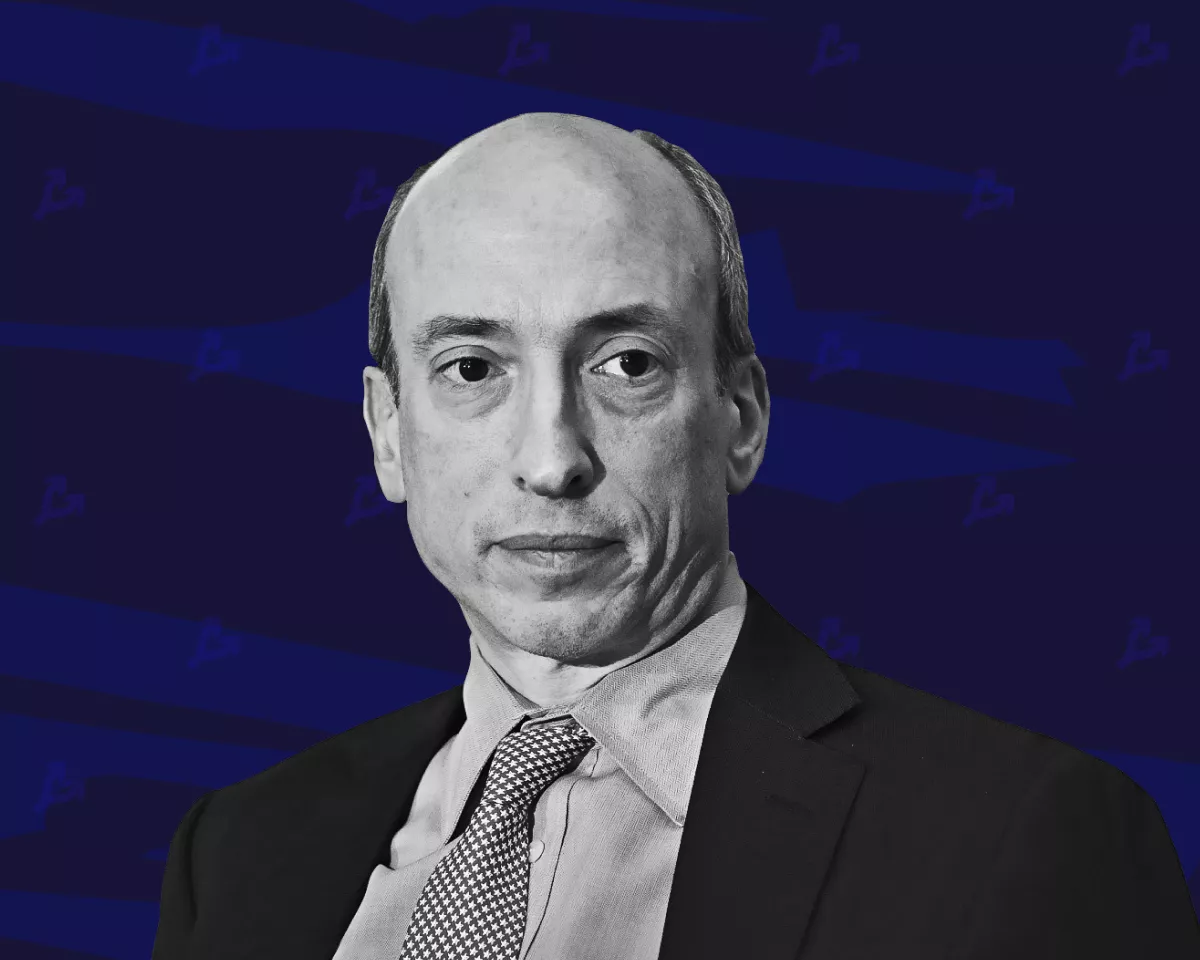
Gary Gensler’s Departure: A Retrospective on the SEC Chair’s Tenure
On January 20, 2025, one of the most unpopular figures in the cryptocurrency community, Gary Gensler, will step down as the head of the SEC.
On January 20, 2025 I will be stepping down as @SECGov Chair.
A thread ?⬇️
— Gary Gensler (@GaryGensler) November 21, 2024
“I thank President [Joe] Biden for entrusting me with this incredible responsibility. The SEC has fulfilled its mission and enforced the law without fear or favour,” he commented.
Gensler’s term was supposed to last until 2026. He leaves amid a change in the U.S. presidential administration, with his official resignation coinciding with Donald Trump’s inauguration day, who during his campaign promised to dismiss the SEC chair.
A Look Back
Gensler, the 33rd chair of the U.S. Securities and Exchange Commission, assumed the role in April 2021 as one of Joe Biden’s team nominees.
Before his appointment, he led the CFTC and was involved in several financial reform projects under Barack Obama’s administration. During this period, he was noted for his stringent regulatory approach.
Even before becoming SEC chair, Gensler spoke on cryptocurrencies, including arguing against comparing them to Ponzi schemes.
In 2018, he engaged in one of the longest-running disputes between the crypto industry and authorities, stating that Ethereum and Ripple were issued in violation of U.S. securities laws. This issue is likely to remain unresolved until a new SEC chair takes over.
SEC Chair nominee, Gary Gensler:
“#Bitcoin and other cryptocurrencies have brought new thinking to payments and financial inclusion, but they’ve also raised new issues of investor protection… If confirmed at the SEC, I will work to promote innovation” pic.twitter.com/AlAsUPJONY
— Bloqport (@Bloqport) March 2, 2021
“My fellow commissioners and I will work to promote innovation, but we will also ensure investor protection. If something is a security, it should fall under securities laws and be within the SEC’s jurisdiction,” Gensler stated in his speech.
He emphasized the importance of innovation in finance and noted that legislation must keep pace with technological advancements:
“In my current role as a professor at the Massachusetts Institute of Technology, I research and teach the intersection of technology and finance. I believe financial technology can be a powerful force for good—but only if we continue to apply the SEC’s core values in the interests of investors, issuers, and the public.”
Soon after Gensler’s appointment, SEC Commissioner Hester Peirce described his leadership and “fresh perspective on old topics” as productive for the crypto industry.
His positive remarks on cryptocurrencies and fintech were encouraging, but his regulatory approach was marked by the strictness he exhibited during his time at the CFTC and work on financial reforms.
At the start of his term, Gensler faced growing distrust of traditional finance and government institutions amid an economy battered by the pandemic and the aftermath of the GameStop stock surge.
Under Gensler, the Commission filed several major lawsuits against crypto companies suspected of issuing unregistered securities, including Binance, Coinbase, FTX, and Kraken, as well as continuing the legal battle with Ripple.
In May 2022, he urged Congress to collaborate on creating a legal framework for crypto exchanges, emphasizing that without it, users of cryptocurrency platforms would remain at risk.
Besides enforcing existing regulations, Gensler sought to expand the SEC’s authority over the digital asset market, which once again provoked the crypto community’s ire. In September 2022, he stated that most existing tokens could be considered securities, meaning businesses dealing with them are accountable to the SEC.
His tenure also saw the launch of major cryptocurrency ETFs, including funds for Ethereum and Bitcoin. The SEC had long refused to approve issuers’ applications, sparking a sharp reaction from the community and additional legal battles. Later, according to Gensler, “circumstances changed” and several funds were approved.
Notably, by the end of Gensler’s term, the Howey Test remains one of the Commission’s primary tools for identifying securities among a multitude of digital assets.
Farewell Words
During his three years as SEC chair, Gensler became one of the most disliked politicians in the crypto community, alongside Senator Elizabeth Warren, known for her opposition to digital assets.
Let’s all be clear on one thing. @GaryGensler is evil. He should never again have a position of influence, power, or consequence. Any company, university, or organization that hires or works with him post-SEC is betraying the crypto industry and should be boycotted aggressively.…
— Tyler Winklevoss (@tyler) November 16, 2024
Commenting on the rumors of his departure, Gemini co-founder Tyler Winklevoss called him “evil” and accused him of pursuing personal interests at the expense of destroying an entire industry and tens of thousands of jobs. Previously, he urged the SEC chair’s dismissal.
Tron founder Justin Sun offered to hire Gensler, forgetting past disagreements, if he could “sincerely relate to the crypto industry.”
Finally, the end of an era—though, Gary, it’s a little too late. The damage is done, and it’s massive, scarring U.S. markets, the global economy, and everyday people. Let’s hope the next chapter brings accountability. If you need a job, contact me! https://t.co/4bPl8QJggO
— H.E. Justin Sun ? (@justinsuntron) November 22, 2024
“Gary Gensler is leaving, and everyone in the crypto community is incredibly happy,” said Blockchain Association CEO Kristin Smith in an interview with BBC News.
According to Smith, the official only “attacked the industry with lawsuits,” so they are “glad to get him out of the way.”
Throughout the past year, experts repeatedly stated that the SEC’s policy under Gensler negatively impacted the Democrats’ chances of winning the presidential election. This view was shared by billionaire Mark Cuban, Ripple CEO Brad Garlinghouse, and Uniswap founder Hayden Adams.
What Next?
In the early months of 2025, a new leader is expected to replace Gensler. With the change in power, many in the crypto community anticipate positive changes for the industry.
CLO of Coinbase, Paul Grewal, hopes for the Commission’s inclination towards open dialogue and innovation rather than litigation.
“I love America to bits. We’re back,” wrote former Messari CEO Ryan Selkis in a now-deleted post, who previously declared “war” on the SEC.
According to Variant Fund’s chief legal officer Jake Chervinsky, deregulation will be the main vector in the agency’s policy, indicating the new administration’s intentions regarding the crypto market.
“We suspect that cryptocurrencies will have their way, and the next SEC chair will be much more favorable to the industry than Gensler,” stated Ian Katz of Capital Alpha Partners.
Among the potential candidates for the SEC chair position are billionaire Mark Cuban, Robinhood CLO Dan Gallagher, former CFTC chair Chris Giancarlo, SEC Commissioner Hester Peirce, and former SEC general counsel Robert Stebbins.
Earlier, 18 U.S. states filed a lawsuit against the SEC, accusing the Commission of overstepping its authority and unfairly targeting the crypto industry.
Рассылки ForkLog: держите руку на пульсе биткоин-индустрии!