



Glassnode: 6 Million BTC at Risk from Quantum Attacks
6.04 million BTC are at risk of quantum attacks, says Glassnode. Public data is already on the blockchain.
6.04 million BTC (30.2% of the market supply) are at risk of potential quantum attacks, according to analysts at Glassnode.
— glassnode (@glassnode) May 20, 2026
The public data of these coins is already available on the blockchain, theoretically allowing the computation of private keys using powerful quantum computers. Analysts have categorized the vulnerable bitcoins into two groups.
- Structural Vulnerability (1.92 million BTC). Public identifiers are visible due to script features. This includes coins from the Satoshi Nakamoto era and modern Taproot (P2TR) addresses.
- Operational Vulnerability (4.12 million BTC). Keys have become known due to user actions: address reuse or partial spending.
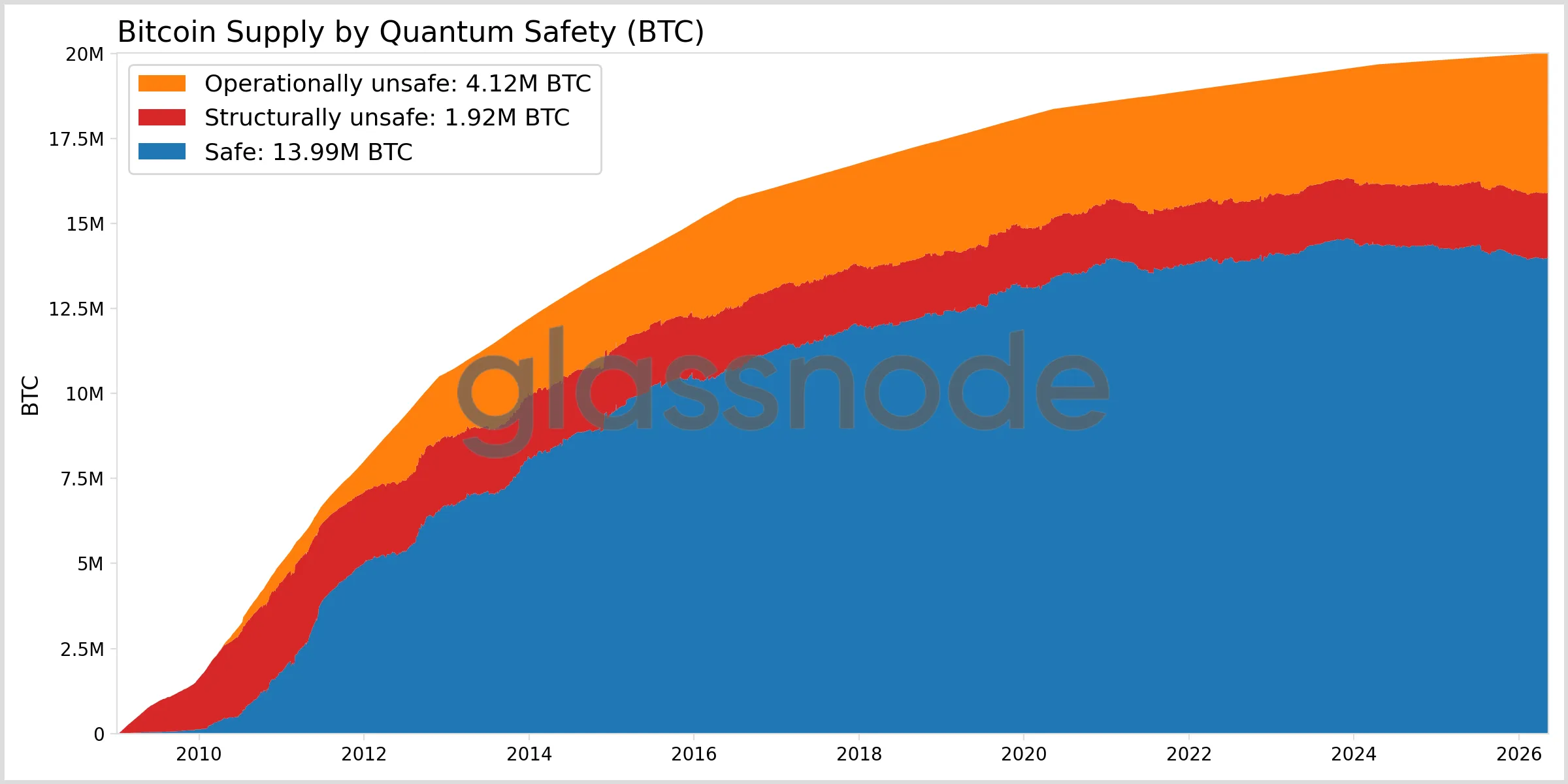
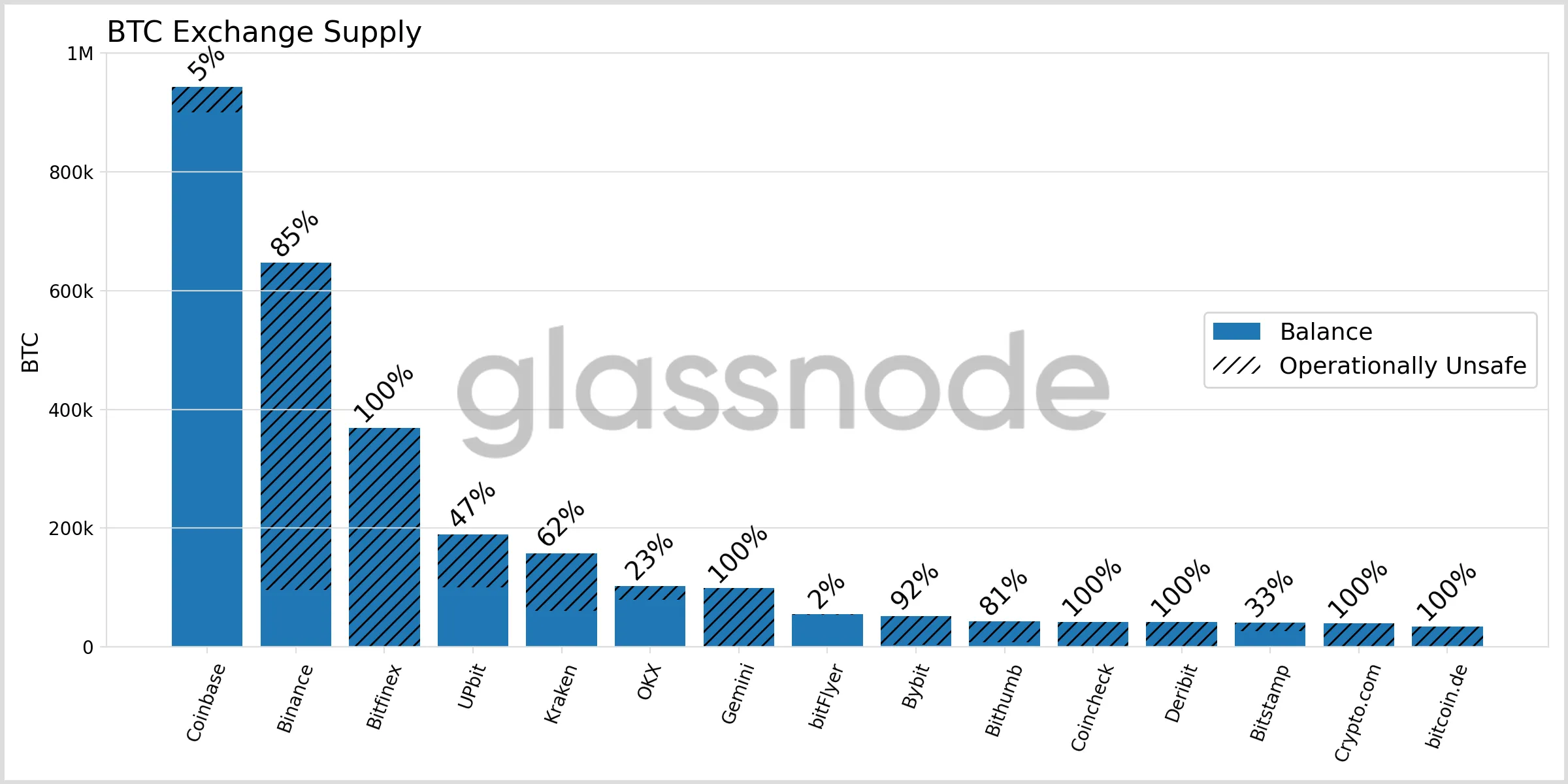
The main burden falls on the operational sector, which is twice the size of the structural one. A significant portion of such coins (1.66 million BTC) is held by exchanges.
The situation varies among platforms: only 5% of Coinbase’s assets are vulnerable, while this figure reaches 85% for Binance, and 100% for Bitfinex and Robinhood. Meanwhile, government funds in the US, UK, and El Salvador are fully protected.
Glassnode emphasized that the study does not predict the timeline for the emergence of quantum threats. It is merely a way to assess current wallet management hygiene. To mitigate risks, exchanges and users should stop reusing addresses and implement change output rotation.
Preparing for the Quantum Threat
Developers of digital assets are accelerating the transition to post-quantum encryption. This has been prompted by new forecasts: experts expect powerful quantum computers to emerge by 2030.
In April, Google published a study suggesting that breaking existing encryption methods may require fewer resources than previously thought.
Ripple plans to update its infrastructure within two years, focusing on wallet protection. The Ethereum Foundation has also formed a team to develop a roadmap for transitioning to resilient algorithms. Circle and TRON have announced plans to protect their networks.
Senior analyst at Bernstein, Gautam Chhugani, told the FT that the industry’s preparation could take three to five years and “several billion, if not hundreds of billions of dollars.”
Bitcoin poses the greatest challenge. The network is decentralized, and transitioning to new cryptography requires coordination, which is currently lacking.
“Bitcoin has no leader,” noted RippleX’s head of engineering, Ayo Akinyele.
According to him, there are many proposals, but no single solution to protect all holders.
Some experts consider the threat to be exaggerated.
“This is a theoretical computer that does not yet exist. The danger is decades away,” said Mysten Labs’ chief cryptographer, Kostas Chalkias.
He believes that vulnerabilities to AI are far more serious.
Akinyele countered: skeptics underestimate artificial intelligence. Last month, Nvidia introduced AI models that accelerate the development of quantum computers.
“AI helps bring the quantum threat closer. We cannot react after the fact,” he added.
Back in May 2026, Cisco’s global director of innovation, Guy Diedrich, announced that the company would prepare network infrastructure ahead of the quantum leap.
Рассылки ForkLog: держите руку на пульсе биткоин-индустрии!