




Bitcoin miners remain confident in the prospects of digital gold due to the rising hash rate, yet they may increase sales if further corrections occur. This is possible due to a general reduction in risk appetite, according to Glassnode.
The competitiveness of the Mining landscape and their conviction in the #Bitcoin Network continues to rise, with the Hash Rate blasting towards new ATHs.
However, investors remain unconvinced in the short term, with exchange-related onchain volumes beginning to languish.… pic.twitter.com/MQBsKh6QeF
— glassnode (@glassnode) September 10, 2024
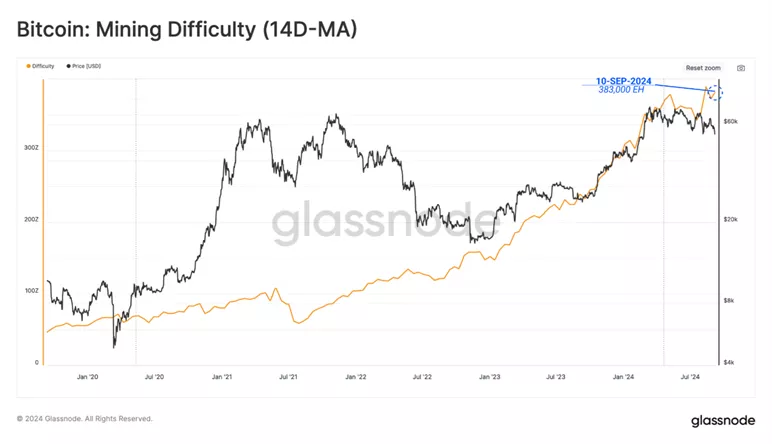
As computational power increases to 666.4 EH/s (14 DMA), just 1% below the ATH, mining difficulty also rises. According to experts’ calculations, on September 10, the volume of hashes required to create a block rose to 338,000 EH — the second-highest in history.


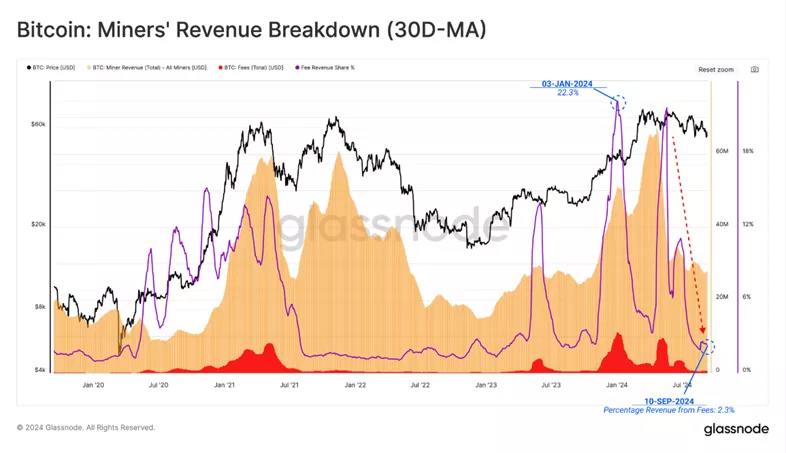
Increased competition and the recent halving have led to a decline in miners’ revenues. The reduction in fee income also played a role, with its share plummeting from 22.3% in January to the current 2.3%. Experts noted that the driving force behind the decline was reduced demand for transfers and a weakening of activity related to Runes and “inscriptions.”
As a result, daily fee volume dropped to $20.3 million, and the reward for a found block fell to $824 million.

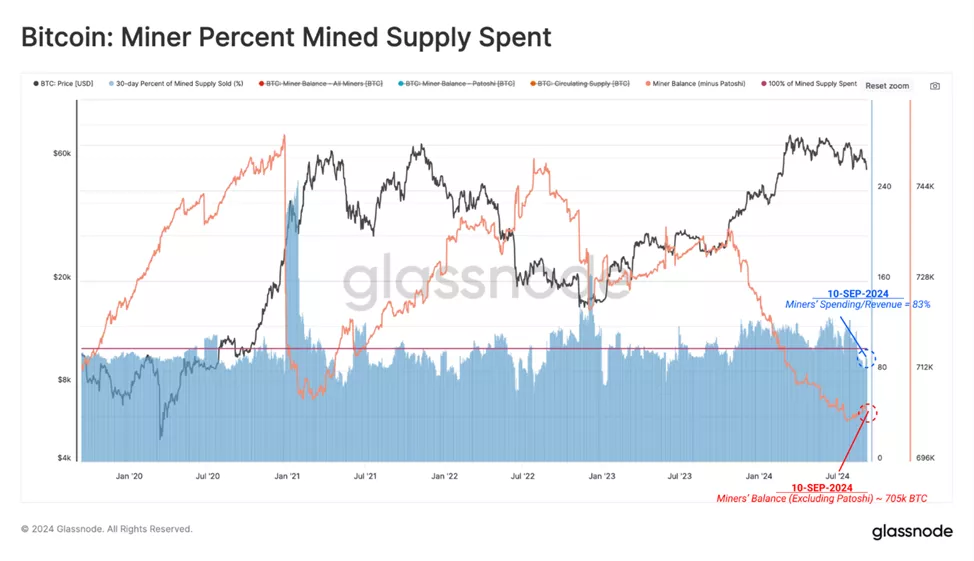
Analysts noted that the aforementioned operating environment could negatively impact miners’ profitability. They reminded that this group of participants tends to be pro-cyclical, acting as sellers during downturns and hodlers during uptrends.

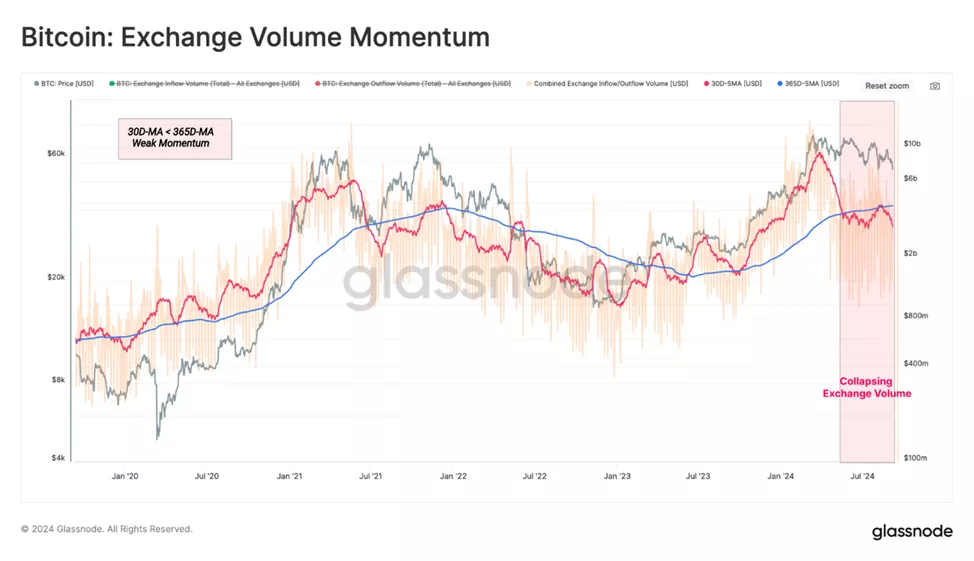
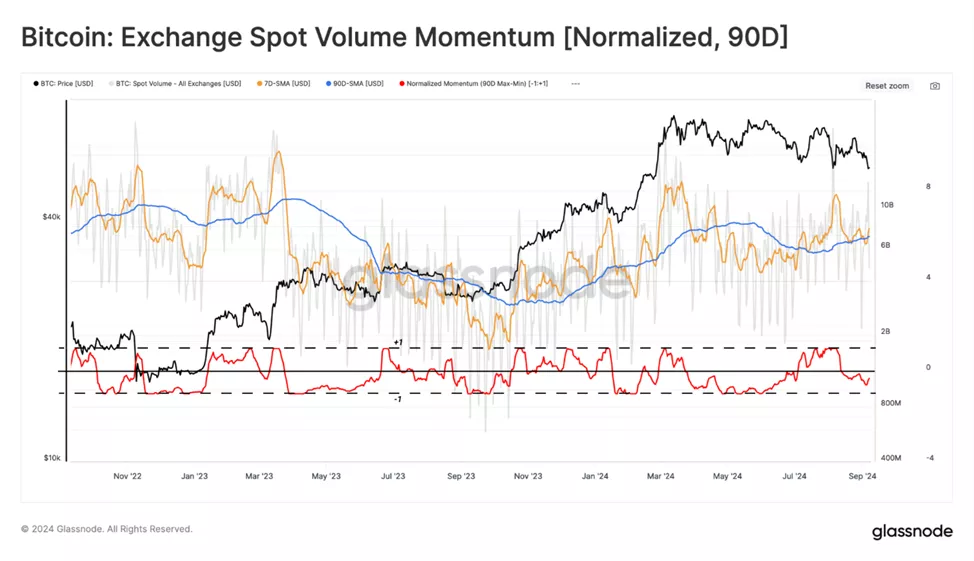
As a next step, experts evaluated aggregated onchain volumes on CEX as an indirect indicator of trading activity and speculative appetite.
According to their observations, the average monthly inflow/outflow figure fell below the annual level. This indicates a decrease in investor demand and a reduction in speculative transactions within the current price range, experts explained.
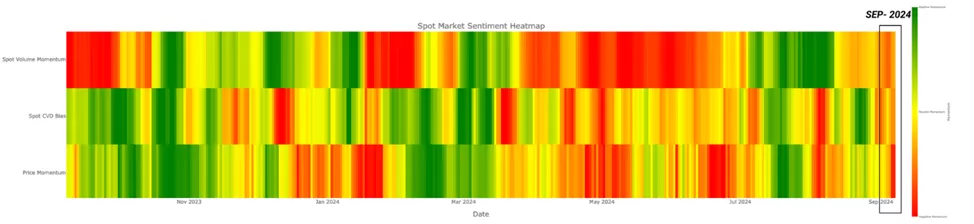
A similar conclusion is drawn from the 90-day normalized spot turnover indicator. Meanwhile, according to the CVD metric, analysts recorded an increase in selling pressure, reflected in a downward price trend.
By combining MinMax transformations for trading volume, CVD, and Price Action, experts created a sentiment heatmap where feature values range from 1 to -1:
? Values of 1 indicate high risk;
? Values of 0 indicate moderate risk;
? Values of -1 suggest low risk.
All three indicators suggest that the market is entering a low-risk zone compared to the last 90 days. Such a structure may be susceptible to external forces and potentially result in a sharp price jump in either direction, specialists noted.

Earlier, QCP Capital reported that implied volatilities of Bitcoin options remain elevated. Traders expect significant price fluctuations in light of the Trump-Harris debates and consumer inflation data.
Previously, analyst and MN Trading founder Michaël van de Poppe predicted “final corrections” before a bull run.