



Google, at the I/O 2023 developers conference, unveiled new AI features for its services.

PaLM 2 Multimodal Model
Google unveiled an updated version of the PaLM 2 language model, which is now called multimodal. The developers did not disclose technical details of the algorithm.
However, they noted that the model was trained on Google’s JAX architecture and TPU v4. They also used scientific-text corpora, which, the company says, makes PaLM 2 more adept at solving mathematical and logical tasks.
The model features improved code-generation capabilities. PaLM 2 was trained on 20 programming languages, including JavaScript and Python.
Additionally, during development, text corpora in 100 languages were used. The company asserts that this will improve the model’s performance for multilingual tasks.
PaLM 2 is already available via the API, as well as in Colab and Firebase.
Bard chatbot
The conversational AI Bard has been moved to the PaLM 2 multimodal model. It can now process images and include them in its responses. Bard can also work with maps and generate tables.
The developers said that soon the tool will gain extension support. Among the announced partners are Google’s own services such as Documents, Sheets and Gmail. Among external partners are the image generator Adobe Firefly and the Wolfram Alpha knowledge base.
Additionally, developers expanded Bard’s coding capabilities with Lens and added the feature to export Python code to Replit.
Google also dropped the waitlist for the chatbot and opened access in 180 countries. For now the tool supports English, Korean and Japanese, but in the near future the company plans to expand to 40 languages, including Russian and Ukrainian.
Google published a list of countries where Bard is available. It excludes all of Europe except the United Kingdom, as well as Canada, China and Brazil. This is likely tied to the issues OpenAI faced after launching ChatGPT in these countries.
Also Bard is not available in Afghanistan, Iran, Syria and North Korea.
Google Search
During the presentation, Google demonstrated an integrated conversational AI directly in the search window. This approach will help users quickly grasp a topic, discover new perspectives, and study information more conveniently, according to the developers.
The company gave an example of how the new search can handle a complex query such as “what’s better for a family with a child under three and a dog: Bryce Canyon or Arches National Park”.


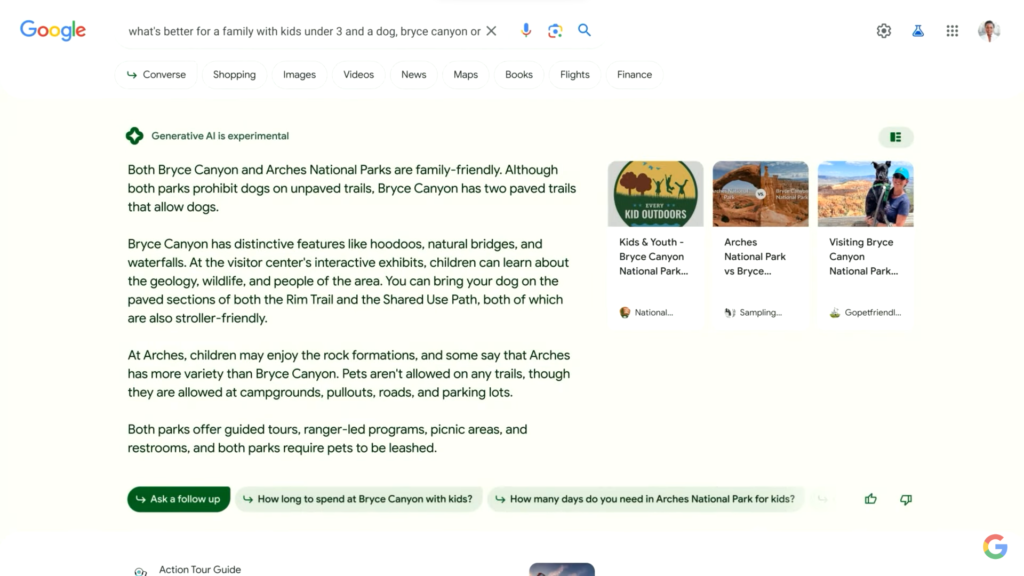
As a result, the generative AI provided a synthesized overview of the requested locations, along with links to further research.
After that, the search will suggest the next steps or recommend refining the query by entering dialogue mode. The system remembers the full conversation context.
The developers demonstrated the potential of the new search for shopping. The tool can locate a product, compare it with other offers, and help the user make a choice.
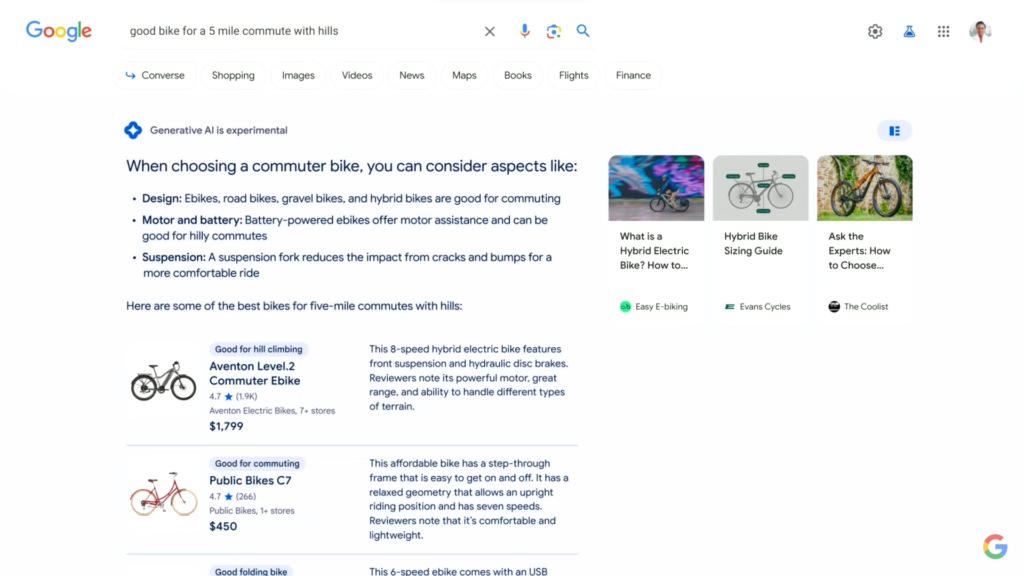
Generative AI forms a concise overview of the key factors to consider when buying, as well as relevant offers.
The feature is built on the Shopping Graph database, which contains more than 35 billion products.
For now, the feature is available in the experimental Search Labs app for iOS and Android, as well as for Google Chrome on PCs in the United States.
Duet AI for Workspace
The Duet AI toolkit will allow Workspace users to deploy generative AI within office apps:
- writing texts in Documents and Gmail;
- analyzing and populating spreadsheets in Sheets;
- generating images and summarising presentations in Slides;
- automatic summarisation of video meetings in Meet.
The developers also emphasised the importance of the Help me write feature for mobile devices. They say it will let users quickly create long texts without a full keyboard in Documents or Gmail.
The company also introduced Sidekick, a side panel for analysing the open document. It can answer questions based on the content and make suggestions.
Some features are already available to Workspace Labs members. The company has also opened a waitlist for all users.
Responsible AI
A portion of the presentation was devoted to the approach to responsible AI. One of the new features in Search will be marking images generated by algorithms.



Google will also begin providing information on when and where the requested image first appeared. The idea, according to Google engineers, is to direct users to fact-checking sites and help them evaluate image provenance.
The features will start rolling out in the coming weeks.
Android 14
The next version of the mobile OS Android 14 will also receive a number of AI features. Among them is a wallpaper generator for the home and lock screens.
Users will be able to create images from emoji by selecting the desired symbols and color palette. The emojis will respond to touches.
The Cinematic Wallpapers feature allows creating 3D wallpapers from the user’s photos. The AI will automatically analyze the chosen image and generate depth with a parallax effect.
The developers also announced a feature to generate wallpapers from textual descriptions.

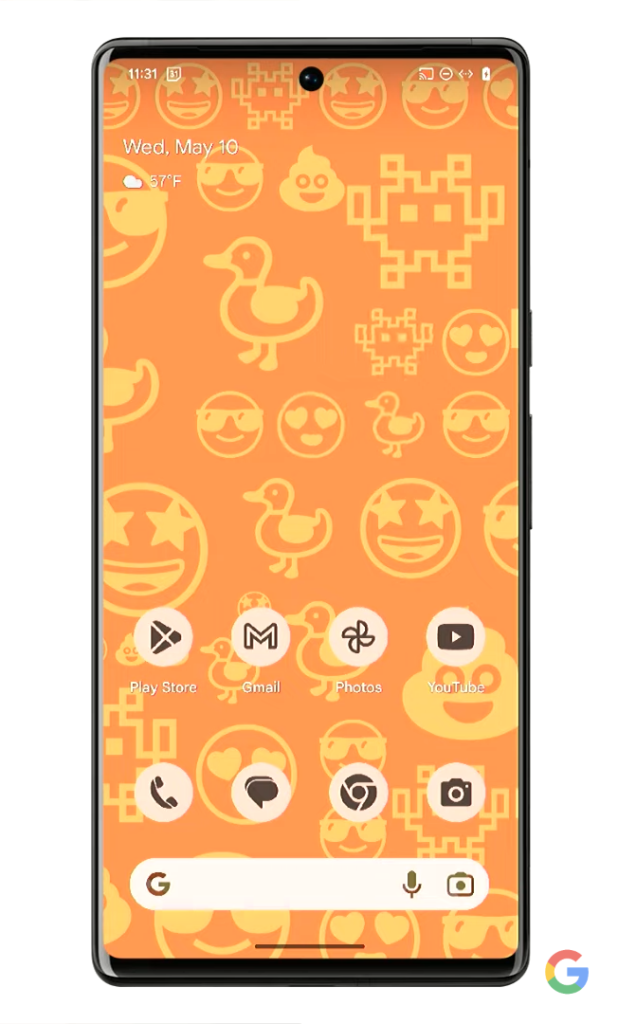

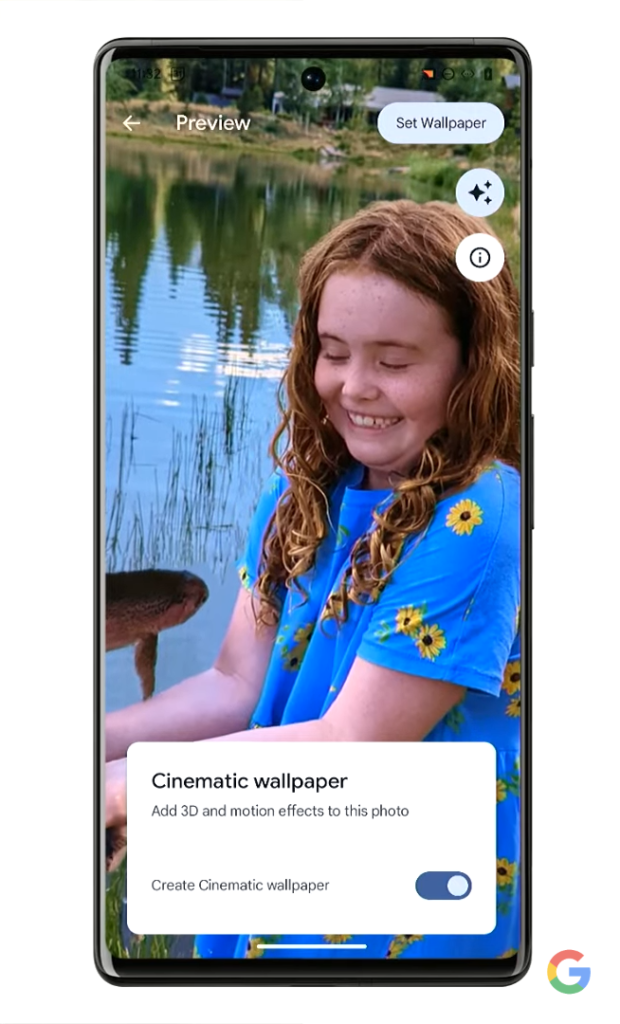

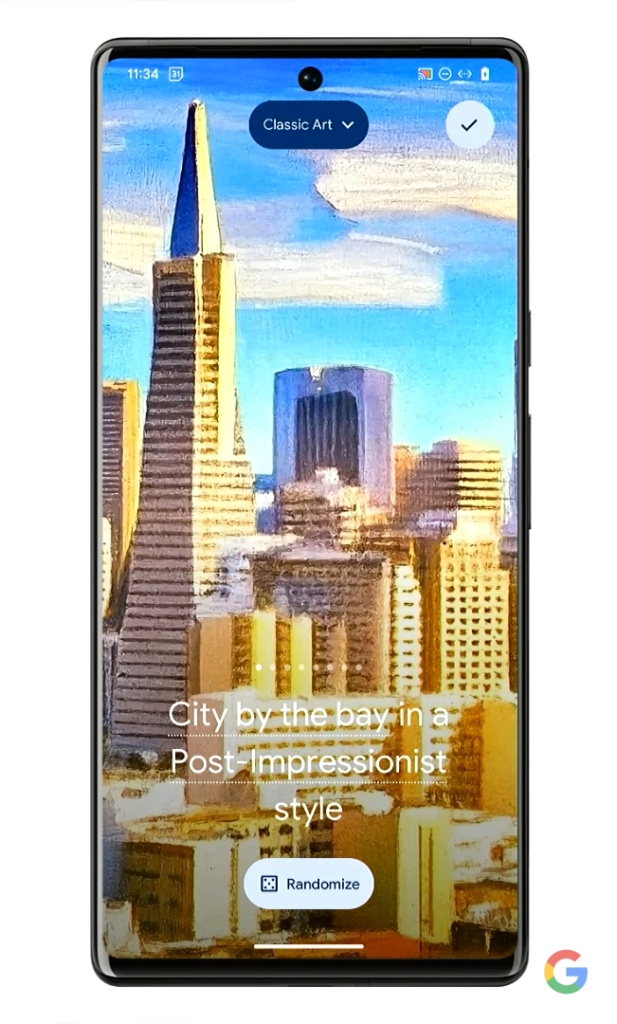
Cinematic Wallpapers will arrive on Pixel devices in June, with generative wallpapers coming in fall 2023.
In addition, Android 14 will bring security and lock-screen customization improvements. A beta of the OS is already available to Pixel devices and a small number of vendors. The final release is planned for August–September 2023.
Pixel devices
During the presentation, Google showed several new devices from the Pixel line. These include:
- the affordable Pixel 7a;
- the Pixel Tablet with dock;
- the foldable Pixel Fold.
All three devices are built on Google’s own Tensor G2 chip. The company noted that owners of the new devices will have access to all the features announced at the autumn Pixel 7 launch.

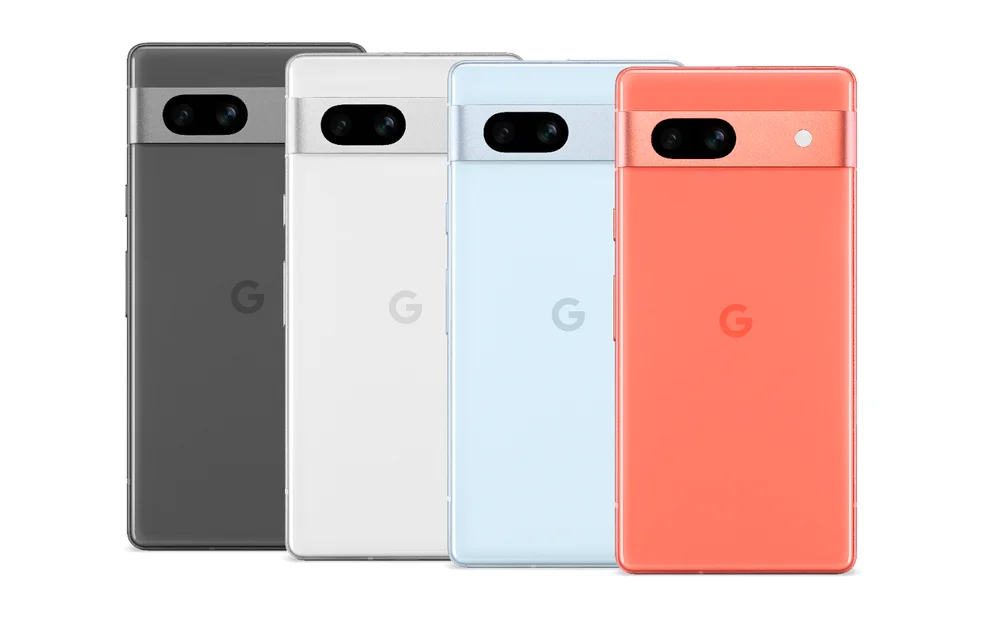

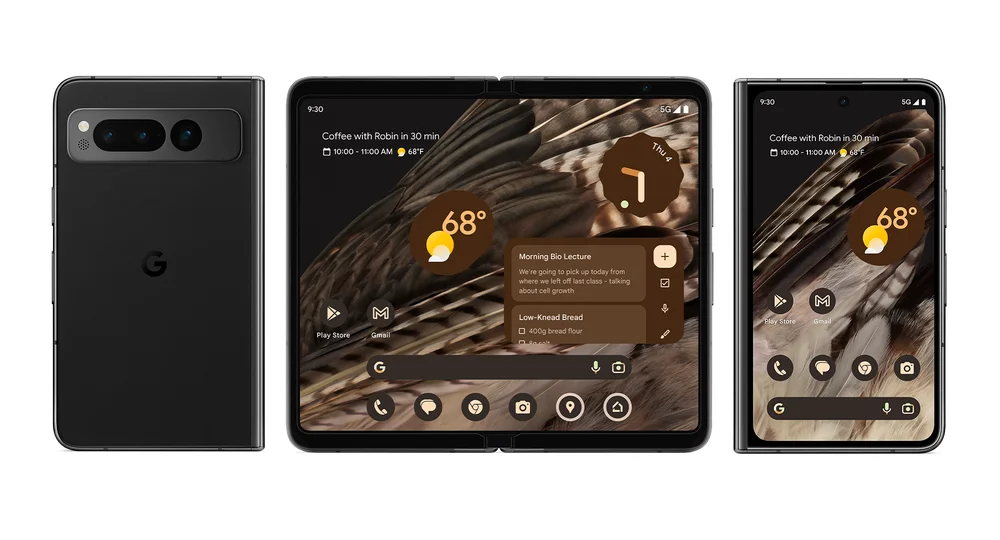

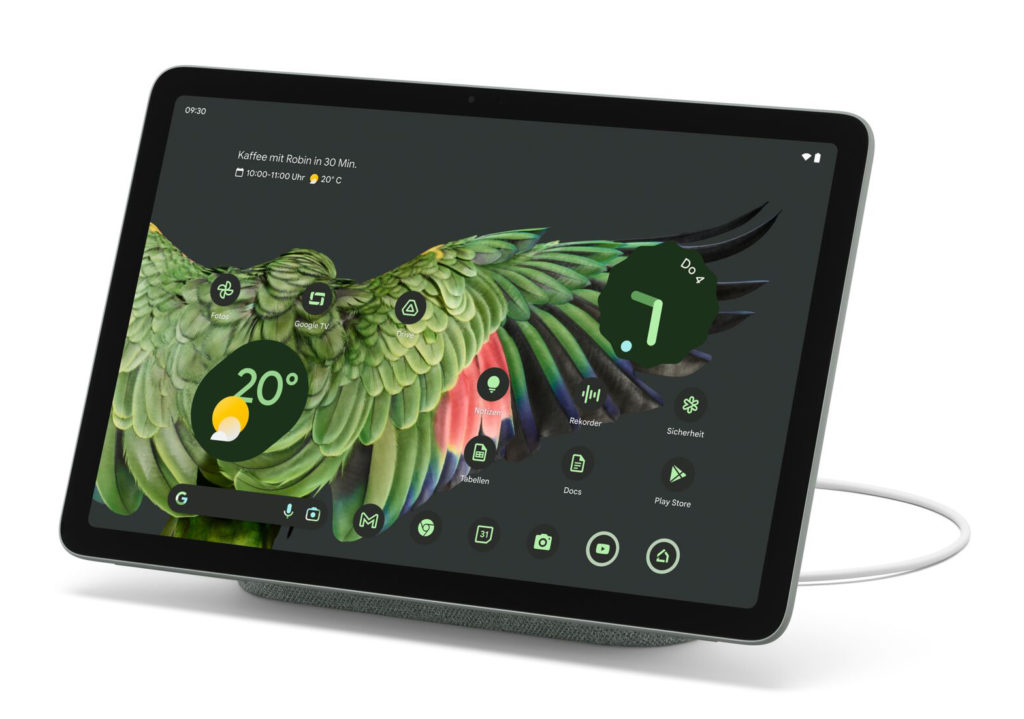
Pixel 7a is already on sale from $499. Pixel Tablet and Pixel Fold are available for pre-orders, with shipments due in June. Prices start at $499 and $1,799 respectively.
Other novelties
In addition, the company unveiled a range of updates for other apps and services:
- a waitlist for MusicLM, the music-generation service from text descriptions;
- an immersion effect when routing in Maps;
- Magic Editor in the Photos app for AI-assisted image edits;
- automatic video dubbing technology;
- generative AI to simplify publishing apps in Play Market;
- Project Starline for creating 3D images of people;
- WebGPU support in Chrome to accelerate AI-powered web apps.
Earlier this year, Google merged Brain and DeepMind into a single team.