



The quantum threat to the leading cryptocurrency may be more of a social issue than a technical one, according to Zach Pandl, head of research at Grayscale.
Grayscale Research’s analysis of the @Google Quantum AI paper suggests breakthroughs may come in sudden leaps, not gradual steps. That means preparation can’t be delayed.
The good news:
• Post-quantum cryptography already exists
• Some chains like $SOL and $XRP Ledger are… pic.twitter.com/r5vtnnWCJj— Grayscale (@Grayscale) April 6, 2026
The community has reignited discussions on this topic following Google’s research, released in late March. The company concluded that a quantum computer could crack Bitcoin’s cryptography using significantly fewer resources than previously thought.
However, Pandl suggested that the real danger to digital gold lies not in the technical solution. According to him, the network is less vulnerable due to the UTXO model, PoW consensus, absence of native smart contracts, and quantum-resistant address types. The challenge is different — the community must decide on the way forward.
Three Options for the Bitcoin Community
Supporters of the first cryptocurrency have debated the fate of old coins for years — particularly concerned about approximately 1.7 million BTC still held in early P2PK addresses. Of these, about 1 million BTC belong to Satoshi Nakamoto.


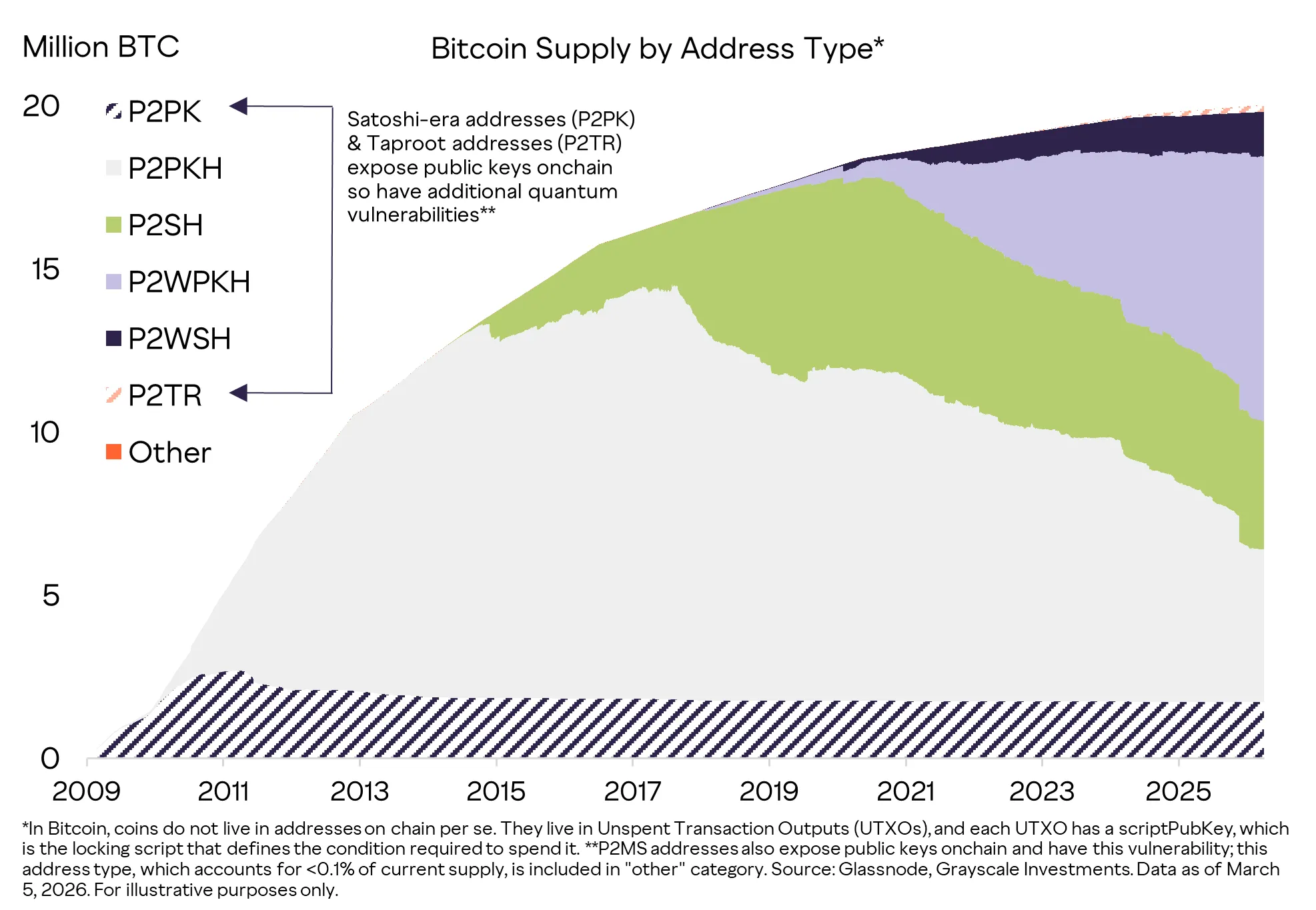
Pandl believes the community has three options:
- burn the coins;
- intentionally slow their release by limiting the spending rate from vulnerable addresses;
- do nothing.
“All options are conceptually feasible, but the problem lies in reaching consensus. The Bitcoin community has a rich history of disputes over protocol changes — recall last year’s debates on storing images in blocks,” the expert noted.
He referred to the conflict that erupted in 2023 over the use of block space for Ordinals — a technology allowing data like texts and images to be inscribed in satoshis.
Two years later, the disputes have subsided, but the parties still hold opposing views.
Time for Preparation
Pandl urged developers to take action. He agreed with Google’s researchers that blockchains should transition to post-quantum cryptography now.
“Investors need not worry yet. We believe there is no current threat to the security of public blockchains from quantum computers. But it’s time to accelerate efforts to prepare for a post-quantum future,” added Grayscale’s head of research.
Developers have already begun transitioning to post-quantum standards:
- Solana is testing quantum-resistant transactions;
- the Ethereum Foundation research team proposed four key network updates;
- BTQ Technologies launched a quantum-protected Bitcoin testnet.
In March, Alex Thorn, head of research at Galaxy Digital, called the threat of Bitcoin being hacked by quantum computers exaggerated.