



IBM claims a breakthrough in quantum computing
IBM unveils Nighthawk processor and plots path to fault tolerance by 2029
IBM unveiled a new processor and an experimental chip for fault-tolerant computing. The firm also set out plans to achieve quantum supremacy by 2026.
“Creating truly useful quantum computing requires solving many fundamental challenges. We are confident that only IBM has everything needed to develop and scale quantum technologies simultaneously: from software and hardware to manufacturing and error correction,” said Jay Gambetta, director of IBM Research.
According to the developers, the new Nighthawk is the most advanced quantum processor today. Key features include:
- 120 qubits, linked by improved tunable couplings to nearest neighbours. The number of connections is up 20% versus the previous Heron model;
- the ability to run quantum circuits that are 30% more complex than before, without an increase in errors;
- an architecture capable of tackling problems requiring up to 5,000 two-qubit operations—the basic building blocks of quantum computing, based on the phenomenon of entanglement.
IBM expects Nighthawk processors’ performance to rise steadily: by end-2026 they should handle up to 7,500 quantum operations, in 2027 up to 10,000, and by 2028 up to 15,000.
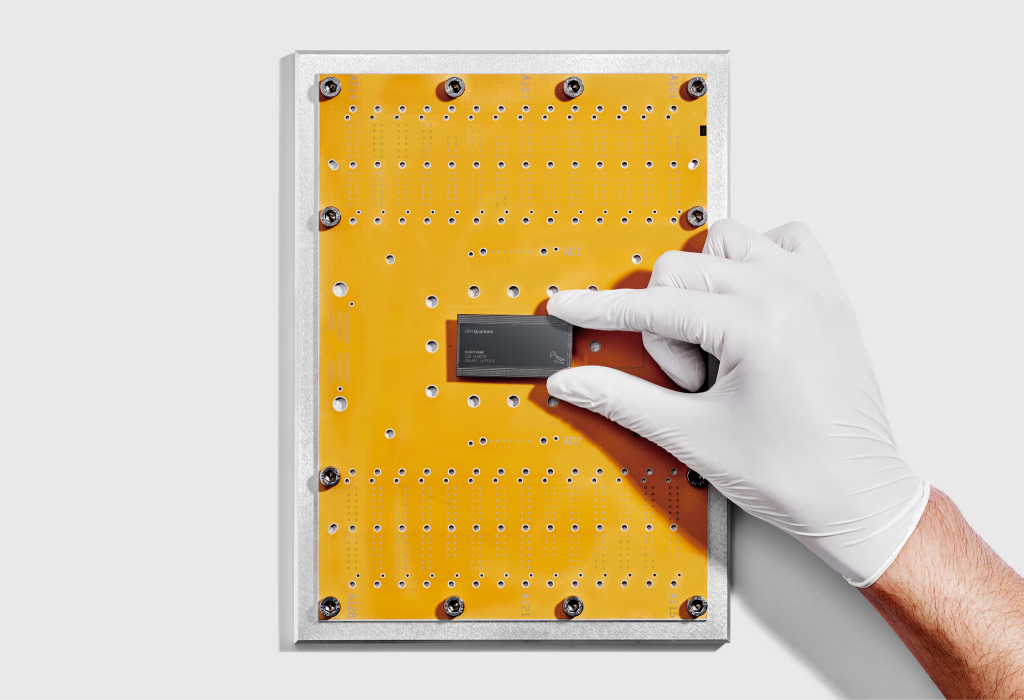
The first Nighthawk systems will be available by the end of 2025.
Another update concerns the flagship Qiskit software. The new release gives developers greater control over quantum circuits: dynamic circuits have been implemented, improving accuracy by 24% when working with more than 100 qubits.
Additionally, IBM has added to Qiskit an enhanced job-execution system and a C-API interface, which, combined with HPC acceleration, reduces the cost of processing quantum errors by more than 100x while maintaining accuracy.
By 2027 the firm plans to add computational libraries for machine learning and optimisation to help researchers model physical and chemical systems.
Fault tolerance
The company also unveiled Loon, an experimental processor that brings together key hardware components for fault-tolerant quantum computing. Such systems can detect and correct failures in real time.
Developers said the company achieved a tenfold speed-up in error correction, performing it in under 480 nanoseconds. The milestone was reached a year ahead of schedule.
After moving production to a new fab in New York, IBM doubled the pace of chip development, the press release said.
The company argues these milestones mark steady progress towards scalable quantum systems and lay the groundwork for practical quantum applications in the near future.
IBM promises to present the world’s first large-scale fault-tolerant quantum computer by 2029.
Earlier, Google announced the achievement of “verifiable quantum supremacy” using a new algorithm, Quantum Echoes.
Quantum computing and Bitcoin
Quantum computing remains at an early stage. Breaking Bitcoin’s elliptic-curve cryptography would require roughly 2,000 logical qubits.
With the necessary error correction, that translates to tens of millions of physical qubits.
By comparison, IBM’s new Quantum Nighthawk processor contains 120 qubits and is designed to execute complex workloads while keeping error rates low. Its capabilities are still an order of magnitude below what is needed to crack the first cryptocurrency’s cryptography.
Even so, the prospect that quantum computers could break the encryption of digital assets built on the Proof-of-Work consensus mechanism has become one of the most debated topics in the crypto industry.
According to the Quantum Doomsday Clock project, quantum computing will become genuinely dangerous in two years. Many researchers disagree.
For instance, Christopher Peikert, a professor at the University of Michigan, believes there will be no real threat in the next few years.
Others urge action now. Among them is Charles Edwards, founder of the Capriole fund.
If Bitcoin doesn’t solve Quantum in the next year, Gold will keep outperforming it forever. This risk is starting to be a drag on BTC. https://t.co/eWp6rsH1BC
— Charles Edwards (@caprioleio) October 15, 2025
“If we do not solve the problem of quantum computing by next year, gold will continue to outperform bitcoin,” he wrote in October.
In July, a group of developers found a way to protect the first cryptocurrency’s network from potential threats posed by quantum computers.
Рассылки ForkLog: держите руку на пульсе биткоин-индустрии!