



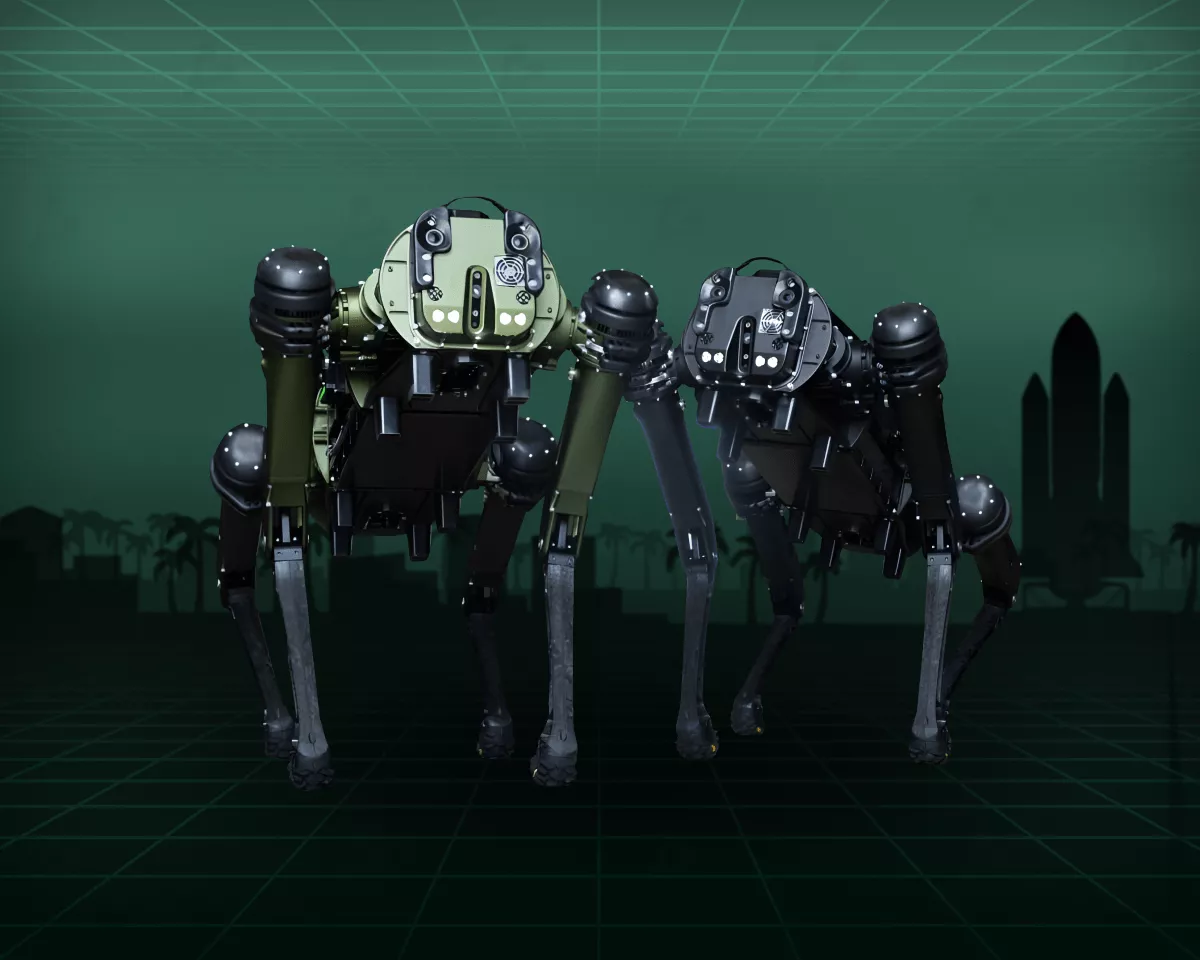
Swedish AI startup IntuiCell has developed a robot dog named Luna, equipped with a functional digital nervous system. The company claims it can learn and adapt similarly to humans and animals.
Swedish AI startup IntuiCell says it has created a robot dog named Luna that has a functional digital nervous system capable of learning and adapting like humans and many animals https://t.co/5Wz0ExSrR4 pic.twitter.com/oFEGxZMxYO
— Reuters (@Reuters) March 20, 2025
The device is positioned as one of the first instances of a physical AI agent capable of making decisions and taking actions to achieve specific goals, rather than merely performing narrow tasks or generating content.
Currently, Luna can stand on its legs. In the future, the dog will perceive, process, and refine information through direct interaction with the world.
IntuiCell plans to hire a dog trainer to teach the robot instead of integrating a generative AI model and extensive datasets.
“We have created the first software that allows any machine to learn like humans and animals. There is no pre-training, no autonomous simulators, no billion-dollar data centers, but a nervous system that enables the machine to learn,” commented the firm’s CEO, Viktor Lutman.
According to him, advancements in the dog’s development will aid in improving humanoid robots.
“The next step is exploring humanoid, autonomous robotics in unpredictable conditions, such as space exploration, deep-sea research, or disaster relief,” asserts Lutman.
The CEO of IntuiCell believes that intelligent machines could be sent to Mars to construct future human habitats. There, robots must solve unforeseen problems as they arise. In such conditions, a pre-training approach will not suffice.
In March, at the annual GTC conference, Nvidia announced a simulation engine for robot movement called Newton and the Groot N1 model.
Earlier, the Chinese company UBTech Robotics introduced a humanoid bot priced at 299,000 yuan ($41,200).