


Nepal’s Discord Revolution
How young Nepalis fought back against digital censorship
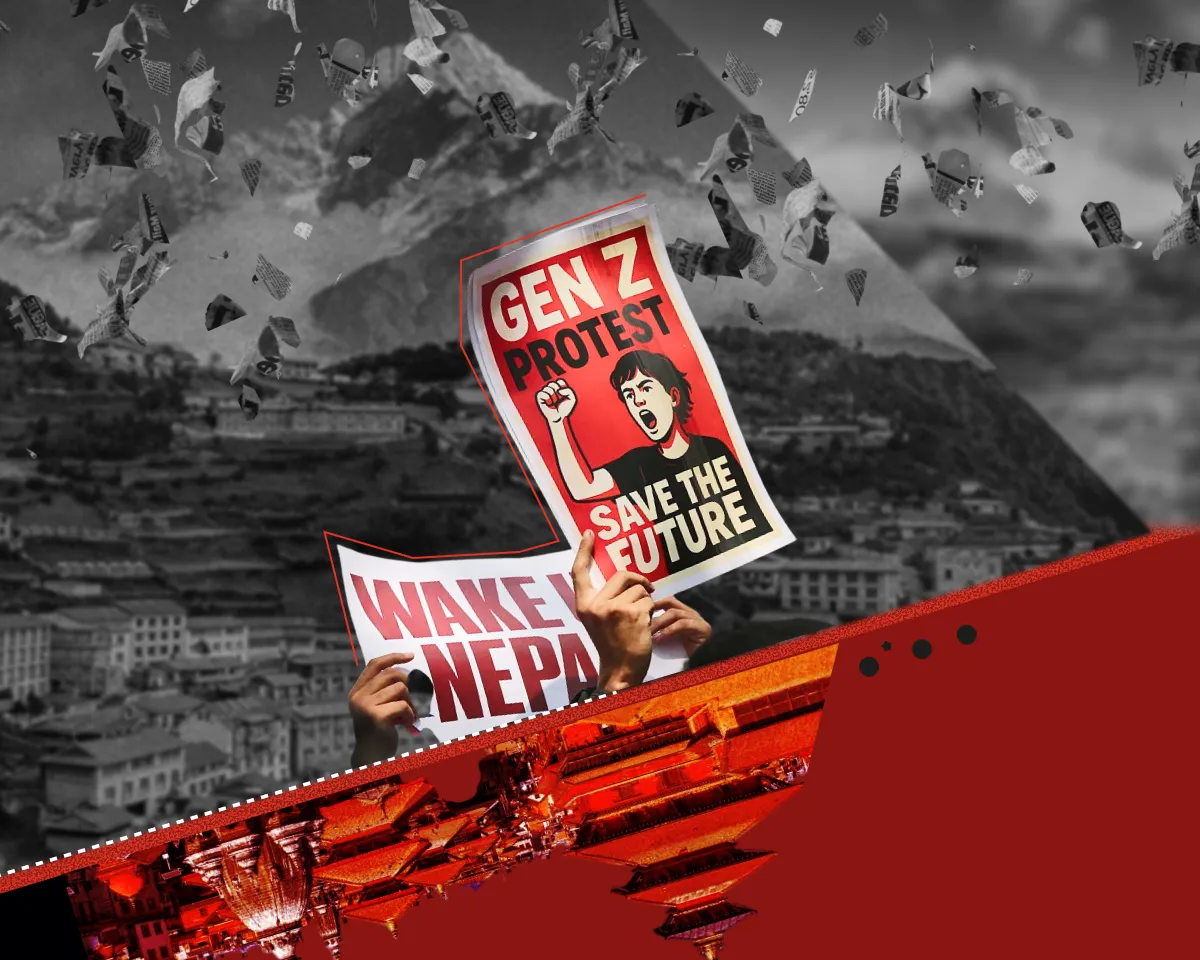
In September, Nepal was gripped by unrest that the media dubbed “Generation Z protests”. The formal trigger was the blocking of social networks, but the roots run deeper: a clash between a young generation for whom the internet is almost the only ladder of social mobility, and an archaic state apparatus mired in corruption.
ForkLog examined how an attempt by the authorities to control the net sparked a revolution, and asked Nepalis what they think about the country’s future and the role of technology in it.
Chronicle of the September crisis
On 4 September, Nepal’s government blocked 26 social networks and messengers, including Facebook, X, YouTube, LinkedIn and Signal. Officials said the platforms had refused to register under new information-ministry rules introducing a digital-services tax. The blocks followed repeated notices and the expiry of a set deadline.
Critics argue the authorities were trying to stop a social-media trend that mocked nepotism and the lavish lifestyles of officials’ children—the so-called nepo kids. The blocks also threatened young Nepalis’ incomes. Remittances from migrant workers account for around 33% of GDP, and 20% of young people lack steady jobs and are forced to seek livelihoods online.
To coordinate, protesters used platforms like BitChat. To bypass the blocks, they relied on VPNs and distributed flyers with QR codes linking to organisational resources.
The first rally on 8 September in Kathmandu was peaceful, but after demonstrators tried to push towards the parliament building, police used tear gas, water cannon and live ammunition. Nineteen people died on the first day alone. Against this backdrop, the government lifted the social-media blocks and imposed a curfew in major cities.
On 9 September, Prime Minister Khadga Prasad Sharma Oli resigned. The protests turned into riots. Demonstrators set fire to parts of the government complex, the president’s and prime minister’s residences, and party headquarters.
Among the destroyed buildings was Singha Durbar—a historic palace complex built in 1908 that served as the government’s administrative centre. According to official figures, at least 72 people were killed in the unrest and more than 2,100 were injured. Prisons were also attacked, and more than 13,500 inmates escaped. The army was deployed to the capital to restore order.
After Oli’s departure, the military leadership met opposition representatives and asked them to propose candidates for interim head of government.
The discussion took place in a Discord channel its participants call “Nepal’s parliament”, which has more than 145,000 members. After several votes, participants chose former chief justice Sushila Karki.
On 12 September, she was appointed Nepal’s interim prime minister. Karki had earlier become the first woman to head the country’s Supreme Court. The president dissolved parliament and set new elections for 5 March 2026.
The interim government promised compensation for the families of those killed and an investigation into the violence. By 13 September, the situation had stabilised and the curfew in Kathmandu was lifted.
Historical context
To grasp the depth of the crisis, it helps to look at Nepal’s history and social structure. In 1956, after the overthrow of the Rana dynasty’s century-long isolationist dictatorship, Nepal entered the modern era—but on a rocky path.
In 1990 an absolute monarchy gave way to a constitutional one, which did not bring stability. From 1996 to 2006 the country was engulfed in a civil war between government forces and Maoist insurgents that claimed more than 17,000 lives. In 2008 the monarchy was abolished and Nepal became a federal democratic republic. But political instability, revolving-door governments and pervasive corruption have been hallmarks of the republican period.
High import duties on cars and many other goods create fertile ground for smuggling and bribery at the border. The caste system, though officially abolished, still exerts a strong influence on business and society, creating informal networks and barriers.
Elites linked to political clans move money out of the country, as is evidenced by information on Nepal-linked accounts in Swiss banks, while ordinary residents face limits on buying foreign currency.
The Nepalese rupee is not freely convertible, so the main forms of savings for households are property, land and gold. Public-sector pay remains low, pushing many officials to seek illicit sources of income.
There is a yawning gap between expensive, high-quality private schools—to which the middle class aspires to send its children—and underfunded state institutions. That widens social inequality and curtails opportunities for young people from poor families.
It is this youth, which forms the majority of the population (the median age is 25), that took to the streets—demonstrations that escalated into bloody clashes.
External influence
Nepal is a buffer between two nuclear powers with opposing ideological systems—democratic India and authoritarian China. Both are competing for influence in Kathmandu, using economic projects, humanitarian aid and political lobbying.
It is also worth noting the role of a third, historic force—the United Kingdom. Long-standing diplomatic ties and the status of a major aid donor make London an important player in Nepalese politics. This centuries-old bond helps explain the traditionally heightened activity of Western intelligence services in the region, which since the 1960s have viewed Nepal as a strategic foothold for watching China.
Alongside the protests, a monarchist movement has gathered strength since late 2024. Royalists are demanding the restoration of a Hindu state headed by a king. The call resonates with some of the public, weary of corrupt republican politicians and seeing the monarchy as a symbol of stability and national unity.
Voices of Thamel
To see how abstract economic problems play out in practice, look at small businesses in Thamel—the tourist heart of Kathmandu. Local entrepreneurs face the consequences of state policy every day.
Rajnesh, who owns a silverware shop, and Shivaram, who sells Buddhist goods and antiques, shared their views with ForkLog.
Both confirm a heavy dependence on foreigners. Shivaram notes that tourists bring in most of his revenue. Rajnesh, who has regular clients abroad, is less exposed to seasonality but faces another problem: a state monopoly on raw materials.
“Most of my buyers are foreigners. But I am forced to buy silver, my main material, from the state. It, in turn, buys it from India and then sets prices for us. If I could buy silver directly in India, that would be better for me. But that is a matter of state rules,” Rajnesh said.
For Shivaram, who deals in antiques, the main headache is export bureaucracy. He explained:
“There are rare expensive buyers. These are big deals, but irregular. Paperwork plays a big role. The state prohibits exporting culturally and historically significant items. The process is complicated by collecting documents, and that is only on Nepal’s side. There is also the recipient country’s bureaucracy.”
International transactions account for up to 30% of Rajnesh’s business; for Shivaram they are marginal. Both say access to global markets is easy thanks to the internet, but bureaucracy remains the bottleneck.
Cryptocurrencies elicit mixed reactions. Rajnesh knows little about them:
“I have heard they are banned and that they cost a lot of money.”
Shivaram, by contrast, sees potential in digital assets:
“Some of my clients, especially those interested in antiquities, regularly mention cryptocurrencies. If this were allowed in Nepal and I could freely buy or sell them, we would use them for trade. It’s money; what difference does it make how it works.”
Asked about the odds of a policy shift on cryptocurrencies, the two are pessimistic.
“It seems to me Nepal has other tasks right now,” says Rajnesh.
“I would like many things. But I am just a trader,” concludes Shivaram.
Their views on the country’s political future reflect a broader split. Rajnesh takes a neutral stance:
“I want the situation to improve as soon as possible and for us to have a stable government interested in developing the country. Whether it is a monarchy or a republic does not matter to me.”
Shivaram supports restoring the monarchy, seeing it as a bulwark of stability and a way to fight corruption:
“Honestly, restoring the monarchy is what Nepal needs. Now, instead of one king we have dozens of ‘deputies’ sitting in government. And many of them have quite kingly appetites for money. Many politicians have nothing tying them to Nepal’s future. That affects the level of corruption. Restoring the monarchy will bring stability and greatly improve relations with India and China.”
Challenges on the path to development
Despite the deep crisis, Nepal has hidden potential. Favourable climatic conditions in high-altitude, hard-to-reach regions make them ideal for data centres that benefit from natural cooling.
That could spur growth in remote areas. In addition, uranium deposits have been found in the Mustang region, opening prospects for energy independence while also raising the risk of heightened interest from major powers seeking control over strategic resources.
Comparing Nepal with its neighbours reveals different models of development. Bhutan offers an example of calibrated growth with an emphasis on ecology and preserving tradition. Bangladesh, despite its problems, shows impressive economic growth on the back of the textile industry.
India and China are giants with which Nepal cannot compete—but with which it must build pragmatic relations.
For Nepal to embark on digitisation and develop IT, the authorities will have to tackle obvious problems:
- Ensuring political stability. Without a predictable, legitimate government there can be no long-term planning or investment.
- Building a legal framework. Draft and pass laws to govern the digital economy, including cryptocurrencies, data protection and e-commerce—creating clear rules of the game.
- Combating corruption. Radically curbing graft, especially at customs and licensing bodies, is essential to attract both foreign and domestic capital into high-tech sectors.
- Investing in education and infrastructure. Reform education with a focus on technical disciplines and English, and expand internet infrastructure nationwide, not just in the Kathmandu Valley.
The main hurdles are a deep split between republican and monarchist camps, entrenched clan-based corruption, and constant pressure from India and China pursuing their own interests.
Nepal’s protests echo events elsewhere. In Morocco, a traditionally stable country, “Generation Z protests” against corruption and inequality also erupted amid lavish spending on preparations for the 2030 football World Cup.
During an attempted storming of a police station there, protesters were also killed. The pattern suggests a global trend: youth armed with digital technology are becoming a serious force challenging entrenched, corrupt elites.
Рассылки ForkLog: держите руку на пульсе биткоин-индустрии!