


A taxi show and regulator brainstorms
In 2022, the cryptocurrency exchange Binance set up a Kazakh subsidiary, BN KZ Technologies. It is now a fully regulated company with licences for exchange operations, custody and brokerage services.
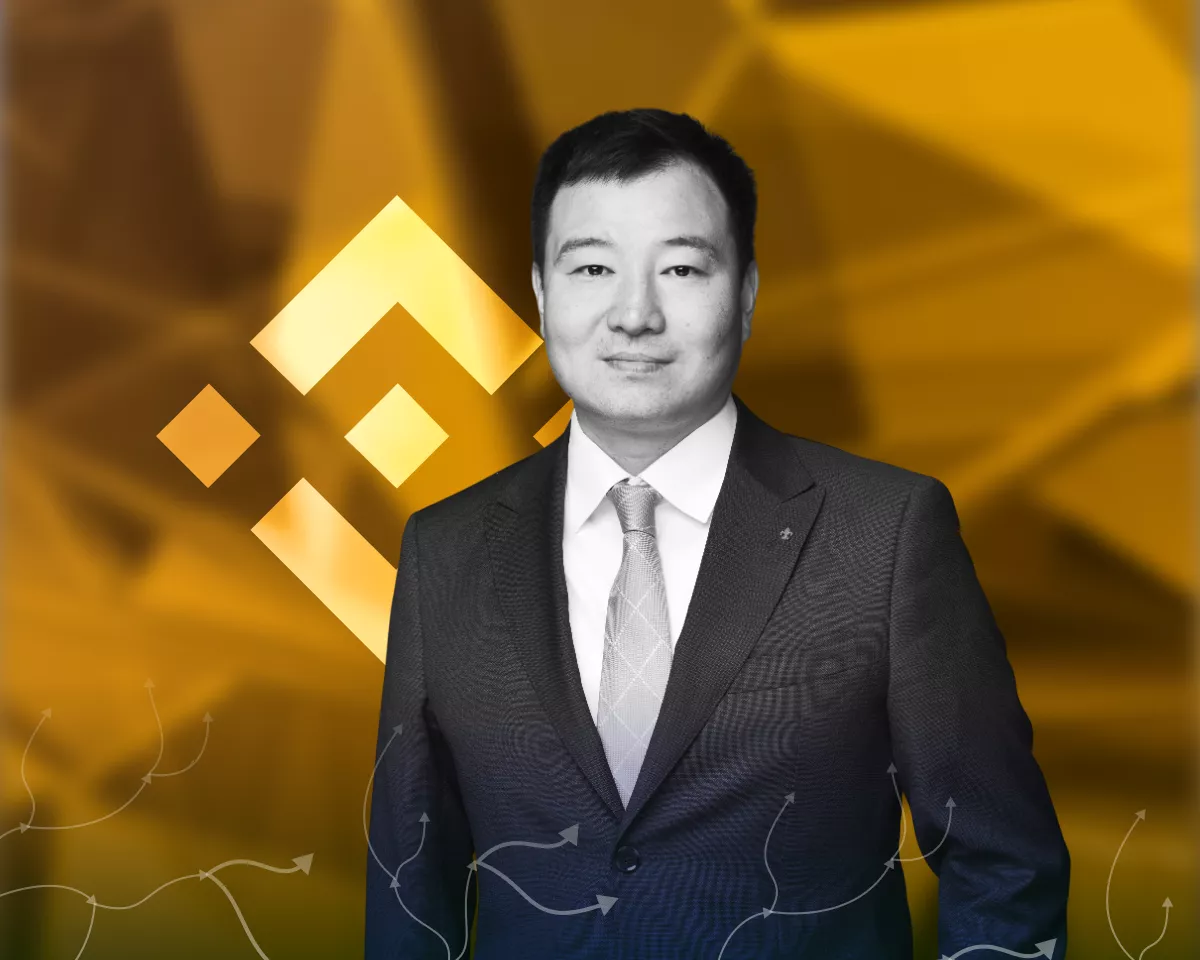
In January 2025, appointed general manager of Binance Kazakhstan was Nurkhat Kushimov, who brings nearly 20 years’ experience in legal support and finance.
In an interview with ForkLog he explained the nuances of listing on Binance’s local exchanges and whether Kazakhstan is ready to build its own bitcoin reserve.
“A cobbler in boots”
ForkLog (FL): Nurkhat, good afternoon. You recently joined the Binance team. Had you studied cryptocurrencies before? What attracted you to them?
N. K.: I did not delve into cryptocurrencies specifically—rather I tracked the general trends. In the background, of course, there was a lot of information.
At the time there was a huge polarity of opinion: from crypto-evangelists convinced that states would adopt cryptocurrencies on a par with national money (as in El Salvador), to sceptics who thought it was merely a pyramid that would soon collapse. It was interesting to watch those debates and analyse where things were heading.
At some point I came to understand that this is already a reality—a new technology that will not disappear. Cryptocurrencies will gradually become mainstream rather than remain on the periphery of the financial system.
FL: How did you receive the offer to join Binance? What interested you in the role?
N. K.: Hiring discussions began in 2024. Binance has a very rigorous approach to recruitment, a strong HR team and sound methods.
I realised that my experience in regulating the crypto market is markedly different from working in the crypto business itself. It is the eternal debate between theory and practice. I felt I had a strong theoretical base but lacked hands-on experience. So the offer from Binance appealed to me—the chance to study the business from within, dive deeper into its processes and lead the local platform in Kazakhstan.
FL: Who is on your team?
N. K.: It is compact but highly professional. We also work actively with Binance’s global office.
As expected, most staff focus on compliance and controls to combat money laundering and terrorist financing. We also cover key areas: operations, business risk management, legal support, marketing and others.
We do not disclose exact headcount, but we have sufficient resources to develop the local exchange dynamically.
FL: What aspects of Binance’s corporate culture do you personally like?
N. K.: Flexible processes and an absence of bureaucracy. We respond quickly, support one another, and avoid redundant approvals and formalities.
At the same time, standards are high: a focus on results, teamwork and deep immersion in the subject matter.
FL: Do you personally hold cryptocurrencies?
N. K.: Yes, I have an active wallet. It is small for now, but I have started my journey. I try to be a cobbler in boots.
FL: Do you have any memecoins in your portfolio?
N. K.: I wanted to buy the memecoins that were very popular for a couple of weeks, but I did not manage to.
Brainstorming with the regulator and a YouTube reality show
FL: What initiatives has the exchange undertaken to engage with Kazakhstan’s regulators over the past year?
N. K.: In general, the engagement framework was set before I joined, and I have maintained it.
Our immediate supervisory body is the AIFC’s Financial Services Regulatory Committee (AFSA), which granted us a licence. We also interact with the National Bank of Kazakhstan, the Agency for Regulation and Development of the Financial Market (АРРФР), the Financial Monitoring Agency on AML/CFT matters, the Ministry of Digital Development and other state bodies.
We have built trust-based and constructive relations with all key stakeholders. Two weeks ago we held a large round-table with the regulator, attended by representatives of major crypto exchanges and industry associations. It was a kind of brainstorming session: we shared our vision of future regulation, discussed the difficulties we encounter and mapped out directions to improve the regulatory framework.
This work is ongoing. We already see aspects that require adjustment and we will continue to engage with regulators, especially as we launch new products and expand our activities.
FL: Tell us more about the strategic directions for Binance Kazakhstan that you plan to develop.
N. K.: Until recently, Binance Kazakhstan offered only spot trading with a limited set of cryptoassets. That became the basis for further development. We now have several strategic layers.
First, increasing spot-trading volumes by adding new cryptocurrencies. This requires detailed localisation to the regulatory requirements under which we operate.
In January we launched futures trading. As of today the number of trading pairs has increased to 354. In effect, we have brought the local offering as close as possible to the global one.
Second, rolling out new products and services. We plan to launch options trading, margin trading, staking and other services. We aim to make Binance Kazakhstan a financial supermarket where users gain access to all key crypto-market instruments.
Third strategic direction—expanding fiat channels and co-operation with traditional financial institutions.
Today we operate two fiat channels:
- Integration with Freedom Bank. This channel is available in the national currency and is intended exclusively for retail clients. It supports both deposits and withdrawals.
- A fiat channel with Kazpost. In Kazakhstan, Kazpost has the status of a second-tier bank, which allows it to issue Visa and MasterCard payment cards. We launched a fiat channel in the same way: it already supports fee-free deposits, and withdrawals are planned in the near term.
Further development of fiat channels is focused on three areas:
- Broader co-operation with banks.
- Launching fiat channels for corporate users.
- Launching fiat channels in foreign currencies.
Fourth strategic direction—the launch of merchant acquiring services.
FL: You mentioned that products for Binance Kazakhstan are approved separately. So is the local coin listing different from the global one?
N. K.: Yes, because the regulator sets strict requirements for instruments available on the local exchange. They include both quantitative and qualitative criteria.
For example, we analyse an asset’s historical engagement, its market capitalisation, assess the project itself and conduct listing procedures.
Qualitative characteristics also play a key role. One important criterion is the ability to trace transactions. For instance, privacy tokens cannot be listed in Kazakhstan.
Another category of assets comprises stablecoins and other tokenised assets, including commodity tokens (pegged to gold, oil and other assets). Their listing is also governed by special requirements.
Each token faces additional requirements that we must meet within the local regulatory framework. Our listing procedure is very strict: we conduct a comprehensive analysis of each asset and send the results to the regulator. If it has no objections, we add the token to the platform.
FL: Educational programmes at the exchange. What has been done and what is planned?
N. K.: One of the most significant educational projects is Crypto School. It is a free educational programme for students and teachers, created jointly with the Ministry of Science and Higher Education of Kazakhstan. The course includes online classes and practical assignments.
Another important project is Binance Academy and the Blockchain Center. Together they developed a curriculum in blockchain engineering and compliance that has already been introduced in 22 universities in Kazakhstan. By 2026, around 40,000 students are expected to receive additional training.
Here Binance pursues several goals: developing the potential of blockchain technologies, preparing qualified specialists for the crypto industry and improving the population’s financial literacy.
In addition, Binance Academy is always available—and at the end of 2024 it was localised into Kazakh.
I would also note the latest project—the Binance Taxi Show. This is a YouTube reality format in which taxi passengers receive gifts for correct answers to questions about cryptocurrencies. The format helped attract a wider audience and convey useful knowledge in a light form.
Binance also invests significant resources in training law-enforcement personnel to work with blockchain technologies—more than 1,300 investigators from 80 countries completed it in 2024. Similar programmes were implemented in Kazakhstan.
FL: Name the most important recent legislative changes in Kazakhstan concerning cryptocurrencies.
N. K.: Broadly, significant legislative changes were adopted at the end of 2022 and the start of 2023, and in 2024 we worked within that regulatory framework. We are now analysing its practical application.
Regulation of the crypto industry in Kazakhstan spans many legal acts:
- The constitutional law on the AIFC;
- The law on digital assets;
- The AML/CFT law, which is slated for amendments;
- The law on banks and banking and its by-laws;
- The tax code;
- AIFC regulations, including the Digital Asset Activity Rulebook, which regulates most exchange activity.
There are also joint acts by several regulators:
- Currency regulation within the AIFC;
- Rules for interaction between crypto exchanges and second-tier banks.
We clearly understand which norms work well and which need improvement, and we maintain an open dialogue with regulators. A great deal has already been done—both globally and in Kazakhstan.
FL: Recently Kazakhstan’s president, Kassym-Jomart Tokayev, praised DeepSeek and called for a change in the approach to cryptocurrencies. How do you personally view the development of AI?
N. K.: I am a strong supporter of this technology. I think that artificial intelligence together with blockchain is the next technological breakthrough, which is already happening and becoming part of everyday life.
To explain a key advantage of blockchain, I offer a simple example: fifty years ago, to send $100 took five working days. In the 1990s traditional exchanges and financial institutions introduced T+2 settlement, guaranteeing that money would arrive in two days. At the time that was seen as an incredible achievement.
Blockchain enables T+0—practically instant transactions. Such a technological leap cannot be resisted.
The same is happening with artificial intelligence. What once took months and years of work is now accomplished in seconds and minutes.
FL: The Kazakh authorities are actively cracking down on illegal exchangers. How does the interaction of Binance Kazakhstan with law enforcement work to track such activity on its platform?
N. K.: We work actively with all state bodies, regulators and law-enforcement agencies.
We strictly comply with AML/CFT legislation, and this is one of our key areas. The process is similar to how traditional financial institutions operate: if we see suspicious transactions, we escalate them. We resolve part of such cases ourselves, but when we suspect high risk we notify law enforcement and take appropriate measures.
We have a robust compliance system in line with AML/CFT requirements. All Binance Kazakhstan clients undergo 100% verification—it is impossible to use the platform without full identification. We conduct client risk analysis and comply with all other regulatory requirements.
FL: Do you have statistics on processed requests over the past year and on funds frozen as part of investigations?
N. K.: In 2024 Binance as a whole responded to nearly 65,000 requests from law-enforcement agencies and provided services to more than 14,800 registered officials worldwide. In total over this period, assets previously stolen from third parties worth $88m were recovered or frozen.
Requests also come from criminal and civil courts. If a request is lawful and substantiated, we provide information.
FL: Can you give examples of civil cases? What are such disputes usually about?
N. K.: The specifics vary, but as a rule courts request information about who owns a particular wallet, what transactions were made and in what context. This may concern various property disputes or claims between users.
Sometimes civil courts need our help with methodological explanations of certain aspects of working with cryptocurrencies.
On the one hand, litigation is a negative aspect. On the other, it shows that cryptocurrency is becoming a full-fledged financial instrument, around which the same disputes arise as in the traditional market.
FL: In autumn 2024 Binance Kazakhstan obtained a full licence DATF from AFSA. How long did this process take? What was required from the exchange to obtain the authorisation?
N. K.: In 2022 Binance obtained a licence in the regulatory sandbox, which was fairly limited but gave a good start.
Even at that stage the licensing process was complex and required compliance with numerous regulatory requirements. They covered compliance procedures, KYC, AML/CFT, client onboarding, as well as technological aspects—cybersecurity, wallet operations, and the protection and segregation of assets. In addition, there were financial requirements and requirements for the appointment of key employees and company directors.
After we fully tested the system within the sandbox and successfully launched operations, we applied to transition to a full licence.
By that time the entire necessary legal framework in Kazakhstan had taken shape, so the process proved even more labour-intensive due to expanded requirements. But Binance Kazakhstan demonstrated to the regulator that it can operate under the new rules, and in September 2024 moved to the status of a company with a full licence.
FL: What was the amount of the state fee paid by Binance for the licence? What financial obligations does the platform have to local regulators?
N. K.: Within the AIFC a Fees Rules framework applies; these data are public. The application fee, or one-off fee for filing a licence application, is $70,000.
The exchange also pays an annual supervision fee, which consists of two parts: a fixed component ($25,000) and a variable one. The latter depends on the exchange’s trading turnover. This is designed so that large, medium and small crypto exchanges alike do not face excessive financial burdens.
Moreover, crypto exchanges are the only participants in the AIFC’s financial sector that are not covered by tax exemptions. Accordingly, Binance Kazakhstan pays corporate income tax in full.
A foundation for a bitcoin reserve in Kazakhstan
FL: Arguably the biggest global trend this year is crypto reserves. The United States has already set in motion the process of including a number of coins in the budget. What do you think of the idea? How close is Kazakhstan to such a decision?
N. K.: Overall I view this positively. Digital assets are penetrating traditional finance ever more deeply, as evidenced by crypto ETFs, news about using cryptoassets as reserve currencies, and moves by sovereign funds and large institutional players.
Many of them are already revising their strategies by introducing, albeit small for now, allocations to cryptocurrencies. This process will significantly change the entire industry. I think that in time “traditional finance” and the “digital-asset market” will become a single space.
Kazakhstan, in my opinion, has already made good progress in this direction. Regulators understand the market deeply and demonstrate a high level of competence. It is one of the most advanced jurisdictions in the world in terms of regulating the crypto industry.
As for the specific plans of the National Bank and other financial institutions, I cannot comment. But the foundation for such decisions is very strong.
FL: Your attitude to Binance’s litigation with the SEC, with the the Nigerian authorities, France? How strong are the exchange’s positions in each dispute?
N. K.: We do not comment on ongoing litigation, but a few things are important. We are open to dialogue with regulators around the world, as well as with law-enforcement and government bodies. Our main task is to build an ecosystem that complies with regulatory requirements in the countries where we operate.
Across all current proceedings our position is clear: we do not recognise the allegations and intend to defend our case.
FL: What qualitative changes to the global crypto market do you expect in 2025? How will the profusion of memecoins coexist with the arrival of institutional players?
N. K.: From the standpoint of financial theory, the smaller the market, the more volatile it is—because a small number of players can move the price. The deeper and more liquid the market, the more resilient it becomes.
The industry is moving precisely in that direction: as user numbers grow, trading volumes rise and institutional investors arrive, the market is becoming less volatile. That makes it more attractive to participants who are not ready to take on high risks.
Interview by Lena Jess.
Рассылки ForkLog: держите руку на пульсе биткоин-индустрии!